
Humped bladderwort
Utricularia gibba
Description
Growing requirements
The humped bladderwort, scientifically known as Utricularia gibba, is a perennial carnivorous aquatic plant within the Lentibulariaceae family. This species is unique for its lack of true roots, relying instead on specialized bladders to trap and digest tiny aquatic organisms for nitrogen supplementation.
Originating from diverse tropical and temperate regions, the plant shows a remarkable ability to colonize various freshwater habitats. It is globally recognized as a highly successful invader due to its high phenotypic plasticity, allowing it to thrive in nutrient-poor environments where other species struggle.
From an agronomical perspective, successful management requires specific water chemistry, typically favoring acidic to neutral pH levels. The plant is sensitive to water column nutrient overload, which often leads to the overgrowth of algae that outcompetes the bladderwort for essential sunlight and space.
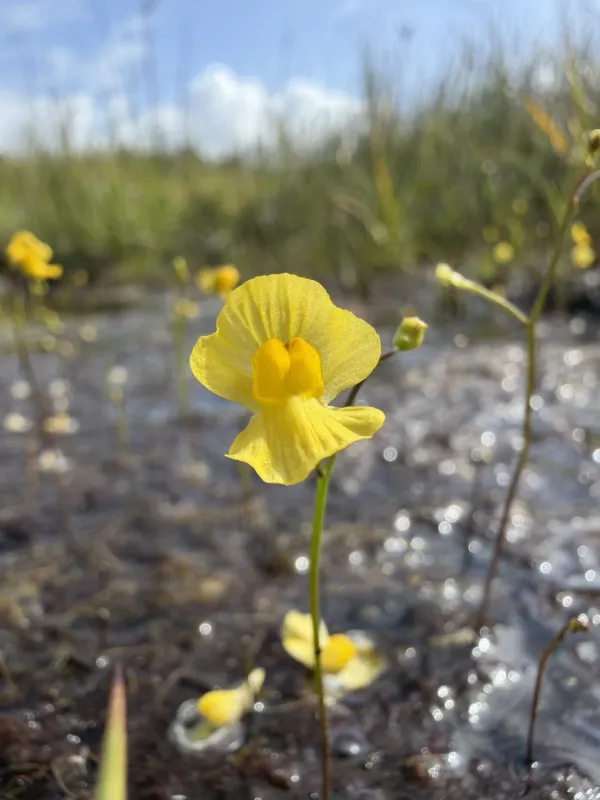
Botanically, it consists of a network of delicate, branched stems covered in traps and small yellow flowers that rise above the water surface during the reproductive phase. Its rapid growth rate is facilitated by efficient vegetative propagation, making it a popular species for ornamental aquatics and educational study.
While not a traditional food or fiber crop, its study is vital for understanding plant adaptation to oligotrophic environments. Its genomic simplicity has also made it a significant model organism in plant molecular biology research, contributing to our knowledge of gene expression in carnivorous plant life cycles.
Main diseases and pests
The primary threats to U. gibba populations include ecosystem eutrophication, caused by agricultural runoff that introduces excessive phosphates and nitrates. Such conditions fundamentally alter the aquatic habitat, encouraging rapid algal growth that shades out the bladderwort and consumes available dissolved oxygen.
Additionally, large-scale physical disruption of waterways can lead to habitat fragmentation. Maintaining healthy stands requires periodic monitoring of water quality to ensure that light penetration remains sufficient for photosynthesis and that the delicate structural balance of the aquatic community is preserved.