
Utricularia subulata
Utricularia subulata
Description
Growing requirements
Utricularia subulata, commonly known as the zigzag bladderwort, belongs to the Lentibulariaceae family. It is a highly specialized carnivorous plant that has evolved to thrive in nutrient-poor environments by supplementing its diet with soil-dwelling micro-invertebrates.
Native to the Americas, this species has established itself in various global regions. It typically occupies wetlands, marshes, and damp sandy habitats where other flora struggle to compete due to the lack of nitrogen and phosphorus in the soil.
The botanical structure is unique, characterized by a creeping network of stolons. These structures bear specialized trapping bladders that function via negative pressure, allowing the plant to capture prey in less than a millisecond.
For cultivation, the substrate must be extremely lean. A mix of peat moss and horticultural sand (or perlite) is standard. It is vital that the substrate remains acidic and completely free of commercial mineral fertilizers, which are lethal to the plant.
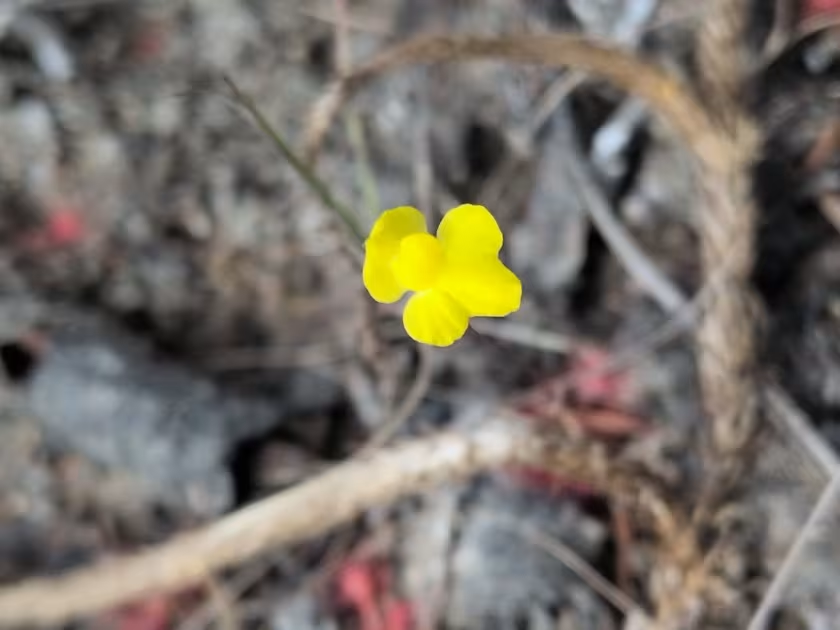
Optimal growth requires high humidity and intense lighting conditions. In a controlled agricultural or research setting, artificial lighting is often necessary to mimic the natural brightness required for the plant to produce its signature yellow flowers.
Main diseases and pests
The primary threat to the plant is mineral toxicity, caused by using hard tap water or nutrient-rich soil. This rapidly destroys the delicate root and trapping systems; therefore, only distilled, deionized, or reverse osmosis water should be utilized.
Fungal pathogens, such as mold and grey rot, pose a significant risk in stagnant air conditions. Regular airflow and avoiding excessive water accumulation on the surface are essential practices for maintaining a healthy crop of bladderworts.
Pests like aphids and mealybugs can infest the foliage and inflorescences. Standard chemical pesticides are generally avoided; instead, manual removal or organic solutions must be applied with caution to prevent chemical burns on the plant tissues.
Competition from unwanted bryophytes or algae can overwhelm the stolons, restricting their access to resources and hindering trap function. Regular maintenance and careful weeding of the container are required to ensure the plant's dominance in its pot.
Environmental stress, particularly from temperature fluctuations or insufficient light, can lead to stunted growth. This physiological weakness makes the plant significantly more susceptible to opportunistic infections, ultimately leading to a decline in population vigor.