
Golden bladderwort
Utricularia aurea
Description
Growing requirements
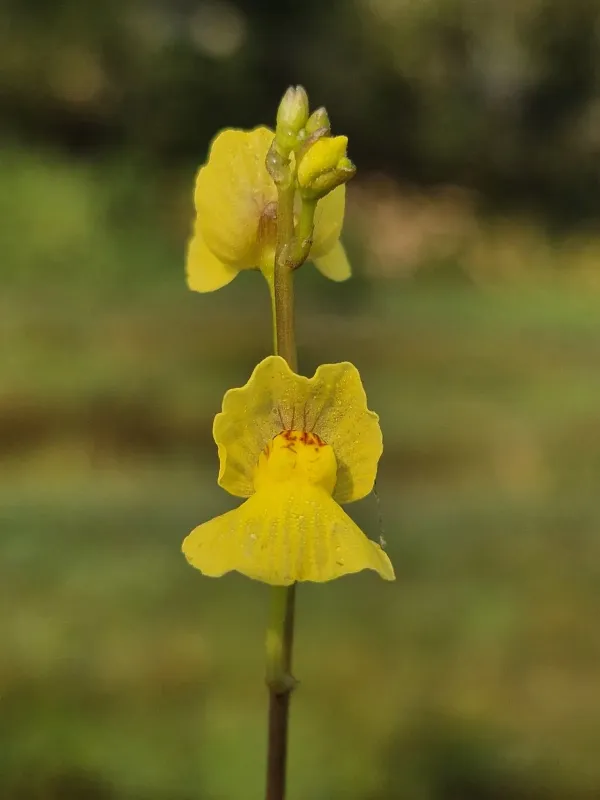
The golden bladderwort (Utricularia aurea) is a carnivorous aquatic plant belonging to the Lentibulariaceae family. It is native to freshwater habitats across tropical Asia and Australia, typically found in nutrient-poor ponds and swampy areas where it has evolved specialized survival mechanisms.
Botanically, this species is defined by its submerged, branching stems and finely dissected foliage. The most distinct feature is the presence of specialized bladders that function as traps, capable of capturing minute aquatic organisms to supplement the plant's nutrient intake.
In terms of cultivation, the plant demands high-quality, soft water with a neutral to slightly acidic pH. Sufficient lighting is critical to maintain the metabolic rate required for the development of both the vegetative parts and the characteristic golden-yellow flowers.
Agronomic management involves maintaining a stable water temperature, preferably between 20°C and 28°C. Because the plant lacks true roots, all mineral absorption occurs through the foliage, necessitating regular but careful water chemistry monitoring to prevent nutrient toxicity.
The economic and practical uses of golden bladderwort include ornamental landscaping in botanical water gardens and scientific research on plant-insect interactions. Its ability to thrive in restricted nutrient environments makes it an excellent candidate for specialized aquatic displays.
Main diseases and pests
Threats to the cultivation of Utricularia aurea primarily stem from water pollution, specifically agricultural runoff containing nitrogen and phosphorus. These pollutants encourage the growth of invasive algae, which compete for light and deplete oxygen levels.
Pathogens and pests include parasitic microorganisms that can infect the delicate bladders, rendering the plant unable to trap prey. Furthermore, common pond snails may consume stems, so habitat management must focus on keeping these populations under control.