
Climbing bladderwort
Utricularia scandens
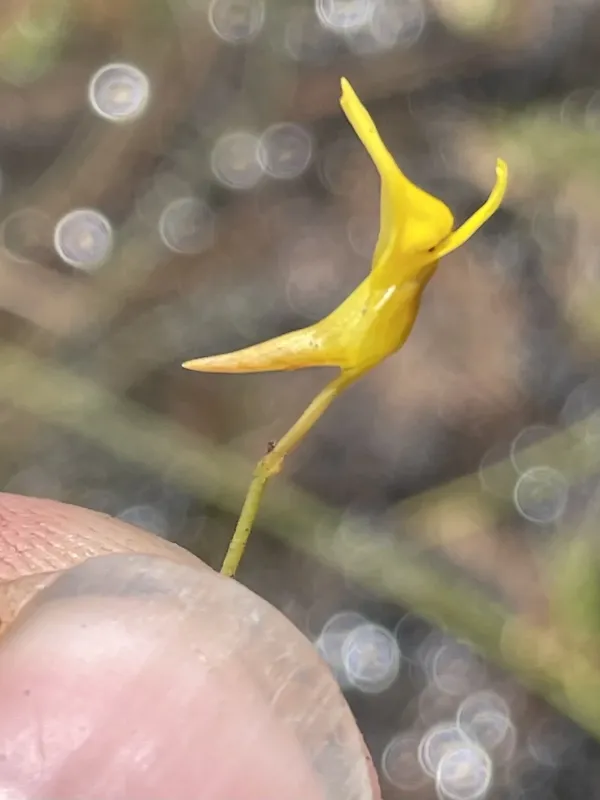
Description
Growing requirements
Climbing bladderwort (Utricularia scandens) is a fascinating carnivorous plant species belonging to the Lentibulariaceae family. Unlike many of its aquatic relatives, this species often exhibits a terrestrial or semi-aquatic growth habit, climbing over damp substrates using its modified stems.
The plant originates from tropical regions across Asia and Africa. It naturally inhabits nutrient-poor wetlands, seepage areas, and marshy grasslands. Its primary adaptation is the production of specialized bladder-like traps that capture microscopic prey to supplement the plant's nutritional intake.
Successful cultivation requires a specialized growing medium, typically composed of nutrient-free peat, sphagnum moss, and perlite. The medium must remain consistently saturated with water, as the plant lacks the ability to withstand even brief periods of dehydration in its root zone.
Environmental conditions must mimic tropical habitats, maintaining temperatures between 20°C and 28°C. High ambient humidity is essential for the healthy development of its delicate climbing foliage, and the plant should be shielded from arid winds or sudden drops in humidity.
Water quality is of paramount importance for this species. It is strictly intolerant of hard water containing high concentrations of minerals, chlorine, or fertilizers. Distilled water, reverse osmosis water, or clean rainwater should be the only sources of hydration to ensure long-term survival.
Main diseases and pests
The most significant threats to Utricularia scandens are fungal pathogens, specifically those causing root rot and damping-off. These usually occur when the growing medium becomes stagnant and lacks sufficient gas exchange, promoting the growth of harmful bacteria and mold.
Common pests that frequently infest this culture include aphids and spider mites. Because the plant is highly sensitive to standard chemical pesticides, control strategies must prioritize gentle mechanical removal or the use of specific biological controls that are safe for sensitive carnivorous foliage.