
Intermediate bladderwort
Utricularia intermedia
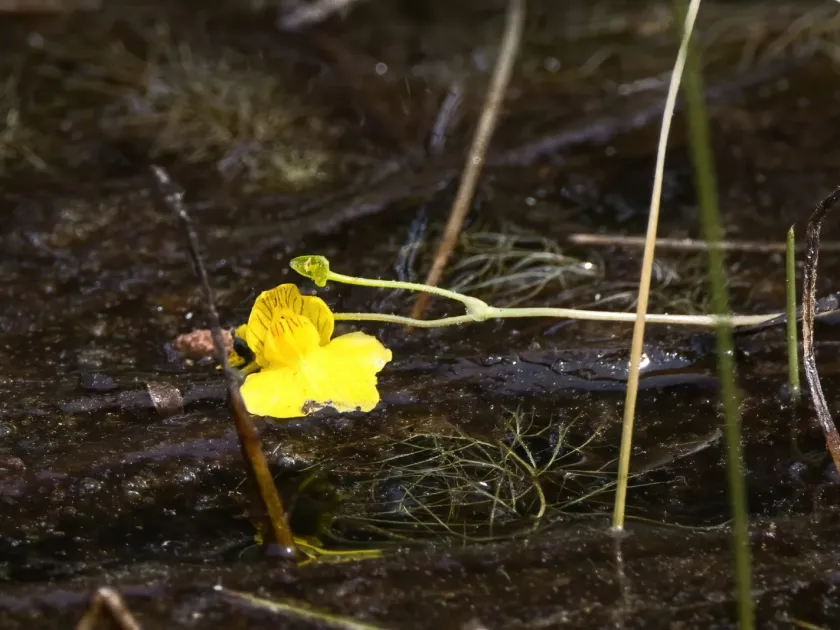
Description
Growing requirements
Intermediate bladderwort (Utricularia intermedia) is a fascinating perennial carnivorous aquatic plant within the Lentibulariaceae family. While not a conventional agricultural crop, it serves as a critical indicator species for the health of wetland ecosystems and peatlands throughout the Northern Hemisphere.
The plant exhibits a unique morphology, with distinct green photosynthetic shoots that float and specialized colorless, submerged shoots that anchor into the substrate. These submerged parts carry the iconic bladders that function as suction traps, capturing tiny aquatic invertebrates to supplement nutrient intake in nutrient-poor environments.
Regarding environmental requirements, this species thrives in shallow, stagnant, or slow-moving water bodies. It prefers acidic to neutral environments with high concentrations of organic matter, typically found in fens and moorlands where nitrogen levels in the water are naturally low.
Optimal growth depends on stable water levels. The plant is sensitive to desiccation, which disrupts its specialized trapping mechanism and its complex physiological balance between photosynthesis and carnivory. It requires ample sunlight for its aerial parts to sustain vigorous growth.
In conservation or controlled environments, it is essential to replicate the natural water chemistry of oligotrophic to mesotrophic wetlands. Maintaining water clarity and preventing stagnant conditions that promote excessive algal growth are fundamental for its survival.
Main diseases and pests
The primary threat to Utricularia intermedia is eutrophication, which often results from agricultural runoff containing fertilizers. An influx of nitrogen and phosphorus stimulates the growth of competing aquatic vegetation, ultimately suffocating the bladderwort and destroying its niche.
Habitat destruction via drainage and land reclamation represents a significant risk to the species. Alteration of the hydrological landscape can lead to rapid drying of ponds, leaving the plant unable to complete its vegetative cycle and hibernate correctly during dormant periods.
Pesticide and herbicide drift from nearby agricultural spraying poses a severe danger. These chemicals can act as toxins, inhibiting the delicate biological triggers that control the suction bladders, thereby rendering the plant unable to feed and eventually killing it.
Natural stressors include grazing by aquatic snails and competition from aggressive invasive species that alter the light penetration in the water column. Pathogenic fungi or bacteria can also pose a risk if the water quality deteriorates significantly due to pollution.
Effective management requires strict adherence to buffer zone regulations around known habitats, ensuring that no industrial or agricultural waste enters the water system. Protecting the natural hydrology is the most effective way to prevent the decline of this specialized plant.