
Utricularia foliosa
Utricularia foliosa
Description
Growing requirements
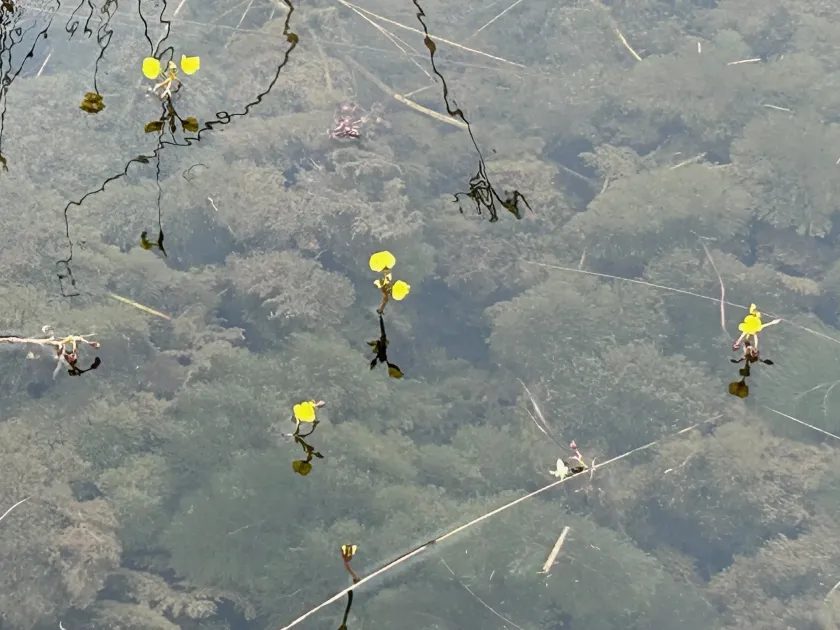
Utricularia foliosa is a prominent species of aquatic carnivorous plant belonging to the Lentibulariaceae family. Unlike typical land plants, it is free-floating and lacks true roots, relying entirely on specialized bladder structures to trap small aquatic prey for essential nutrients.
This species is native to tropical and subtropical areas of the Americas, where it thrives in freshwater habitats. It is commonly found in lakes, ponds, marshes, and drainage channels where the water is still or very slowly flowing, allowing the delicate stems to spread safely.
The environmental requirements for Utricularia foliosa center on high light intensity. Being a photosynthetic organism, it requires significant sun exposure to fuel its growth and flowering cycles. Therefore, it typically avoids densely shaded or murky water that limits light penetration.
Water chemistry is another vital factor for its survival. The species prefers slightly acidic to neutral water conditions. It is specifically adapted to nutrient-poor environments, where its carnivorous behavior provides a competitive advantage over non-carnivorous plant species.
Reproduction is primarily vegetative, involving the fragmentation of its branched stems. Under optimal climatic conditions, it can rapidly colonize large areas of open water. The plant's structure includes numerous traps that operate via a negative pressure suction mechanism to ingest prey.
Main diseases and pests
Environmental degradation, particularly eutrophication, poses a major threat to Utricularia foliosa populations. Excess nutrients from fertilizers lead to algal blooms, which reduce light availability and alter the oxygen levels in the water, often killing the sensitive bladderwort.
Pests and herbivores, including specific aquatic insects and snails, can cause damage to the foliage and trap structures. While limited herbivory is natural, high concentrations of these organisms can weaken the plant colony and hinder its reproductive capability.
Fungal infections are a frequent concern in stagnant or heavily polluted water systems. These pathogens thrive on decaying organic matter, and if the water quality is poor, they can spread rapidly through the interconnected stems, causing significant colony loss.
Competition from invasive aquatic weeds, such as water hyacinth, is a serious ecological pressure. These fast-growing species physically cover the water surface, blocking the sunlight required for Utricularia foliosa, which eventually leads to its local extinction.
Land development and water management projects, such as wetland drainage or dredging, represent the most immediate threats to the existence of this species. Loss of habitat is the primary driver for the decline of Utricularia populations in various parts of its historical range.