
Dotted bladderwort
Utricularia punctata
Description
Growing requirements
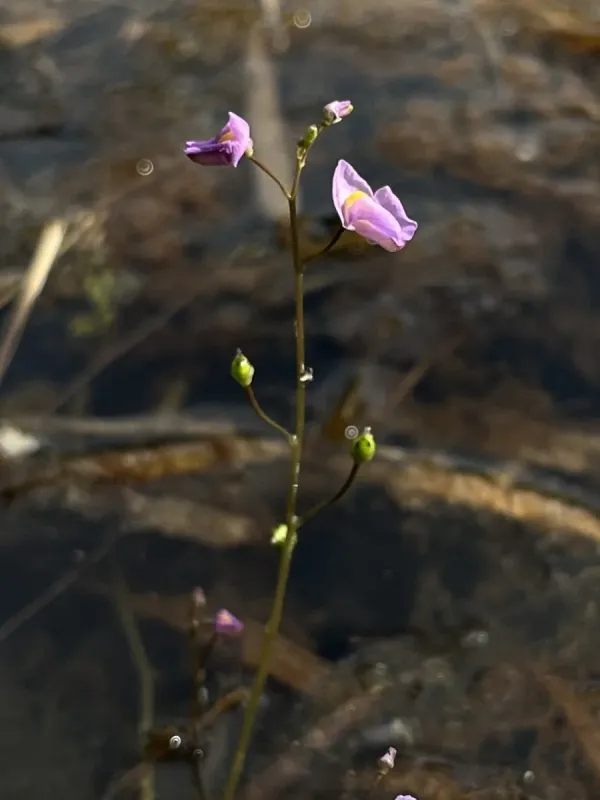
Dotted bladderwort (Utricularia punctata) is a fascinating carnivorous plant belonging to the Lentibulariaceae family. It is a free-floating aquatic species that has evolved complex mechanisms to survive in nutrient-poor environments where traditional vegetation struggles to thrive.
The plant originates from tropical Asian regions, inhabiting wetlands, marshes, and ponds. Its primary adaptation is the presence of small, bladder-like traps that suck in prey using negative pressure, allowing the plant to obtain necessary nitrogen and phosphorus from aquatic microfauna.
In terms of environmental requirements, this species thrives in stagnant or slow-moving water bodies. It prefers clean, soft water with a slightly acidic pH level, as high levels of dissolved salts or agricultural runoff can be detrimental to its growth and trapping mechanism efficiency.
Light exposure is another critical factor for the healthy development of this plant. It prefers bright, indirect sunlight, which supports robust vegetative growth. Maintaining a stable temperature range between 20°C and 28°C is essential for maintaining its metabolic activity throughout the year.
While not a traditional agricultural crop, Utricularia punctata serves an important role in ecological research and aquatic botanical collections. Its study contributes to our understanding of plant evolution, adaptation to low-nutrient niches, and the biology of carnivorous species in aquatic ecosystems.