
Small swollen bladderwort
Utricularia radiata
Description
Growing requirements
Small swollen bladderwort (Utricularia radiata) is a species belonging to the family Lentibulariaceae. It is a carnivorous aquatic plant that thrives in freshwater environments, floating near the surface of the water without permanent soil attachment.
The native range of this species is North America, where it inhabits ponds, marshes, and slow-moving streams. These habitats are typically acidic and nutrient-poor, which is where the plant's carnivorous strategy provides an advantage.
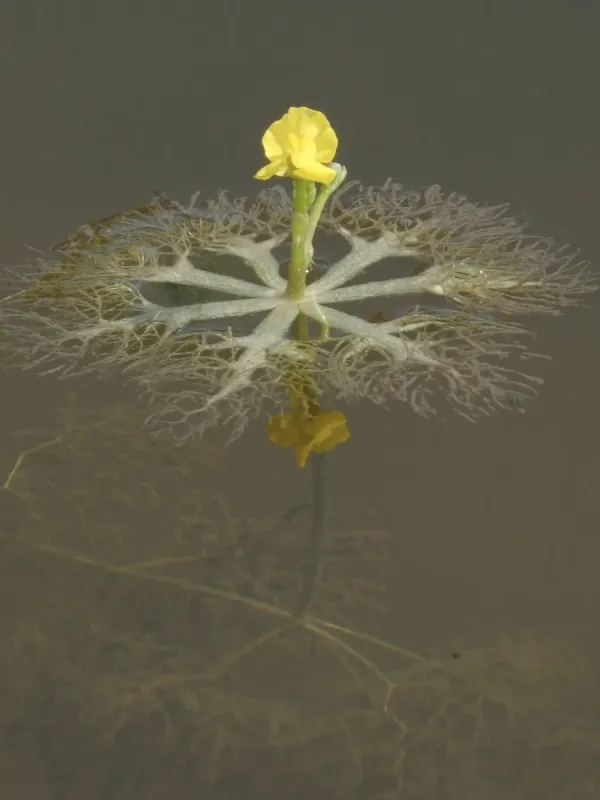
Botanically, it is recognized by its radial, inflated petioles that act as floats. These structures keep the plant's yellow flowers above the water line, facilitating pollination, while the submerged parts are covered in tiny bladders.
The cultivation of this species requires clean, soft water and consistent light exposure. Unlike terrestrial crops, it does not require conventional fertilization; instead, it derives its minerals from capturing small aquatic organisms.
Host use is limited to ornamental ponds and specialized botanical collections. Due to its unique ecological role, it is often kept by enthusiasts interested in carnivorous plants and aquatic ecosystem management.
Main diseases and pests
The primary threat to the species is eutrophication, caused by runoff from agricultural lands. Increased levels of nitrogen and phosphorus in the water disrupt the plant's ability to survive in its natural low-nutrient habitat.
Fungal infections can be a significant issue in stagnant water conditions. Poor circulation or excessive warmth can promote the growth of pathogens that rot the delicate aquatic stems.
Competition from aggressive aquatic invasive species, such as certain pondweeds or filamentous algae, can overwhelm the bladderwort, reducing the light penetration necessary for its survival.
Destruction of habitat due to drainage projects or development poses a constant risk to wild populations. As an aquatic specialist, it cannot survive the loss of its wetland environment.
Herbivory or damage by aquatic invertebrates and small fish can cause structural damage to the floatation bladders, which may lead to the plant sinking or losing its ability to position flowers properly.