
Striped bladderwort
Utricularia striatula
Description
Growing requirements
The Striped bladderwort (Utricularia striatula) is a fascinating member of the Lentibulariaceae family. Unlike common crops, this is a specialized carnivorous plant that has evolved to thrive in nutrient-poor environments by trapping small organisms through its unique bladder-like structures.
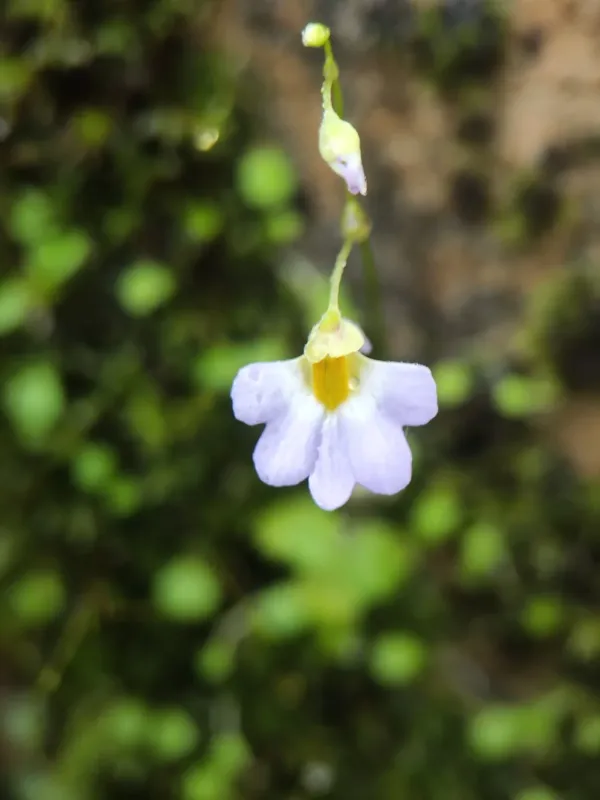
Botanically, Utricularia striatula is characterized by its tiny, ephemeral flowers and a creeping habit. It is primarily an epiphyte or lithophyte, frequently found growing on damp rock faces, cliffs, or mossy tree trunks throughout its native tropical ranges in Asia and Africa.
The cultivation of this species requires meticulous attention to humidity levels. It demands a constantly moist environment to prevent the delicate rhizoids and stolons from desiccating. Growers often cultivate it on living moss substrates to mimic the natural ecological niche it occupies in the wild.
Water quality is a non-negotiable factor for this culture. Only distilled, reverse osmosis, or pure rainwater should be used, as the plant is highly sensitive to mineral salts, chlorine, and other chemicals commonly found in municipal tap water sources.
Light requirements for this species are specific: it thrives under bright, filtered light. Providing adequate light is essential for inducing flowering, which displays the plant's delicate, striped petals. However, intense direct sun exposure must be avoided to prevent damage to the photosynthetic tissues.