
Hairy bladderwort
Utricularia hirta
Description
Growing requirements
The Hairy bladderwort (Utricularia hirta) is a carnivorous plant species belonging to the Lentibulariaceae family. It is native to various regions of Southeast Asia and Japan, where it typically colonizes open wetlands, bogs, and shallow, stagnant waters that are low in nutrients.
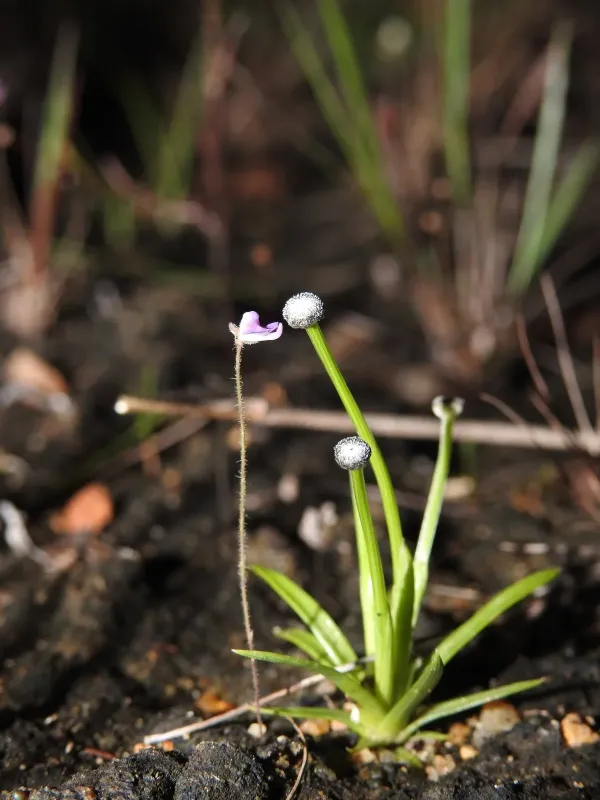
Botanically, it is characterized by its tiny, specialized bladders acting as traps for aquatic prey, such as daphnia or protozoa. The stems and leaves are covered in distinct hairs, giving the plant its specific epithet, and these structures play a role in moisture retention and protection against small insects.
Regarding growth requirements, this species demands highly acidic, nutrient-poor conditions. It thrives in substrates consisting primarily of peat moss or silica sand, avoiding any commercial potting soils that contain fertilizers, as the presence of excessive minerals can be lethal to the plant.
The plant requires full sun to partial shade, depending on the ambient temperature. It is strictly dependent on pure water sources, such as rainwater or deionized water, because its root system is extremely sensitive to alkalinity and dissolved salts commonly found in tap water.
While not a traditional agricultural crop, Utricularia hirta is valued for its unique biological mechanism of predation and its role in biodiversity. Cultivation is primarily conducted in controlled hobbyist environments, such as terrariums or specialized ponds, to study its development cycle.
Main diseases and pests
The main threats to Hairy bladderwort include the destruction of wetland habitats due to urbanization and industrial agriculture. Eutrophication, caused by agricultural runoff, is particularly harmful as it encourages algal blooms that smother and outcompete the bladderwort in its native environment.