
Common bladderwort
Utricularia vulgaris
Description
Growing requirements
Common bladderwort (Utricularia vulgaris) is a perennial aquatic carnivorous plant belonging to the Lentibulariaceae family. It lacks true roots and floats freely in the water, deriving its mineral nutrition from both photosynthesis and the digestion of small aquatic organisms.
The species is widely distributed across temperate and tropical regions of Eurasia. It prefers slow-moving or stagnant water bodies such as lakes, ponds, and marshy ditches that are rich in organic matter but often deficient in nitrogen.
Temperature and light are critical environmental factors for its growth. It thrives in warm, shallow waters where sunlight can penetrate, facilitating the photosynthesis required for its complex metabolic processes.
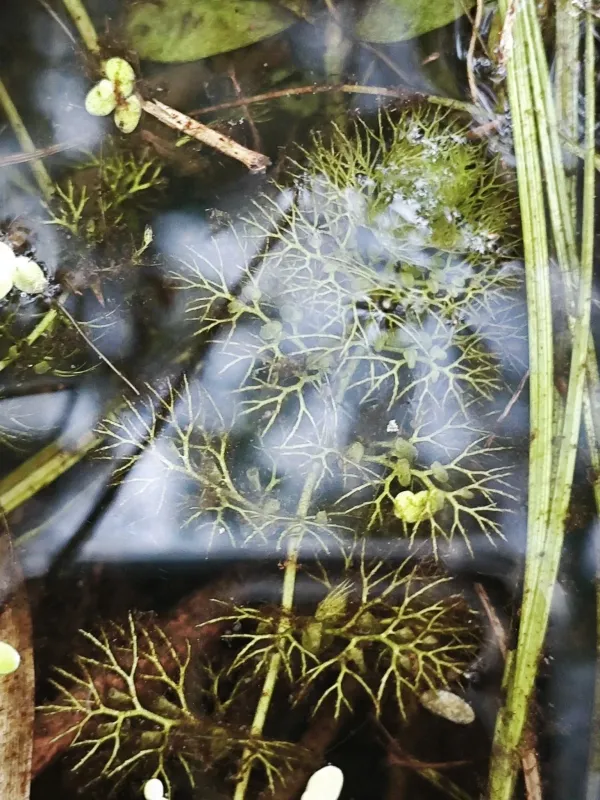
The plant is anatomically complex, featuring highly dissected leaves that bear numerous tiny, bladder-like traps. These bladders function as suction mechanisms, trapping microscopic prey such as water fleas and mosquito larvae, which provides essential supplemental nitrogen.
To survive seasonal changes, the plant produces specialized wintering buds known as turions. These structures sink to the bottom of the water body to overwinter, protecting the plant from freezing temperatures until the next growing season.
Main diseases and pests
Eutrophication is the primary threat to the common bladderwort. Excess runoff of phosphorus and nitrogen from agricultural fields leads to excessive algal blooms, which choke the water body and block the sunlight necessary for the plant's survival.
Habitat loss resulting from the drainage of wetlands and the destruction of natural ponds significantly affects its distribution. Fragmentation of these ecosystems prevents the plant from colonizing new areas and recovering from environmental stresses.
Pests, particularly aphids, can infest the emerged flowering stalks of the plant, sucking sap and reducing the overall vigor. Additionally, fungal pathogens can compromise the structural integrity of the traps, especially in stagnant or poorly aerated water.
Competition from invasive aquatic macrophytes represents a severe challenge. Fast-growing species often outcompete the bladderwort for space and resources, leading to a decline in population density within local water bodies.
Human activities, such as dredging or the application of herbicides for pond management, often inadvertently eliminate local bladderwort populations. Because of its sensitivity to chemical changes in the water, it often serves as an indicator species for water quality.