
Blue Bladderwort
Utricularia caerulea
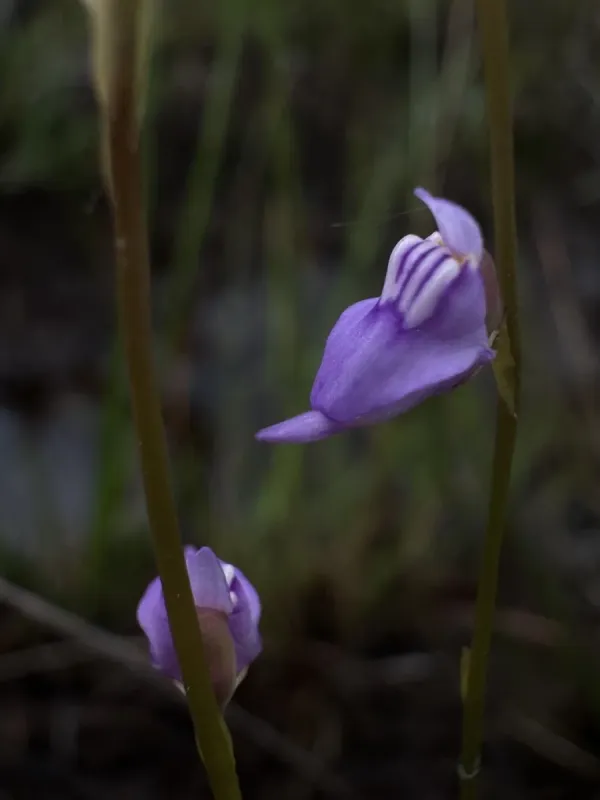
Description
Growing requirements
Utricularia caerulea, commonly known as the Blue Bladderwort, is a member of the Lentibulariaceae family. It is a carnivorous plant native to tropical and subtropical regions of Asia, Africa, and Australia, typically found in wet, boggy environments.
The cultural requirements for this plant focus on a highly specific moisture regime. It thrives in an environment with constant high humidity and consistent moisture in the growing medium, mimicking its natural wetland habitat.
The substrate must be nutrient-poor and acidic, as the plant is adapted to soils where nutrients are scarce and derived primarily from trapped prey. A mix of sphagnum peat moss and perlite or sand is standard for successful cultivation.
Lighting should be bright but indirect; direct, intense sunlight can stress the plant and desiccate its delicate foliage. Providing 10 to 12 hours of light per day, preferably using specialized grow lights, ensures vigorous growth and consistent flowering.
Water quality is of the utmost importance for Utricularia caerulea. Only distilled, reverse osmosis, or rainwater should be used, as tap water contains minerals that quickly damage the sensitive root system and disrupt the carnivorous mechanism.
Main diseases and pests
Fungal infections, particularly grey mold (Botrytis), are significant threats to the Blue Bladderwort. These often manifest in environments with poor air circulation or stagnant water, necessitating better ventilation within the plant's growing area.
Pests such as aphids and spider mites can attack the delicate flower stalks. Treatment must be handled with extreme caution, as the plant is highly sensitive to most common synthetic pesticides and fertilizers which can be lethal to the specimen.
Root rot is a frequent issue caused by excessive waterlogging without proper oxygenation or the use of improper media. Once the roots begin to degrade, the plant shows signs of chlorosis and wilting that are often difficult to reverse.
Mineral buildup in the substrate due to poor quality water acts as a silent threat, gradually poisoning the plant. Periodic flushing with distilled water can help mitigate salt accumulation, though replacing the media is the most effective solution.
Incorrect humidity levels during the development phase can lead to deformed growth and a lack of trap formation. Maintaining a stable environment is essential to keep the plant in a healthy, vegetative state throughout the entire year.