
Swollen bladderwort
Utricularia inflata
Description
Growing requirements
Swollen bladderwort (Utricularia inflata) is a fascinating carnivorous aquatic plant belonging to the Lentibulariaceae family. Native to the southeastern United States, this perennial species has adapted to nutrient-poor freshwater environments such as bogs, ponds, and slow-moving streams.
The plant lacks a true root system. Instead, it features a complex network of submerged stems covered in tiny bladders. These bladders act as sophisticated vacuum traps, allowing the plant to capture small microorganisms, which compensates for the lack of available soil nutrients in its habitat.
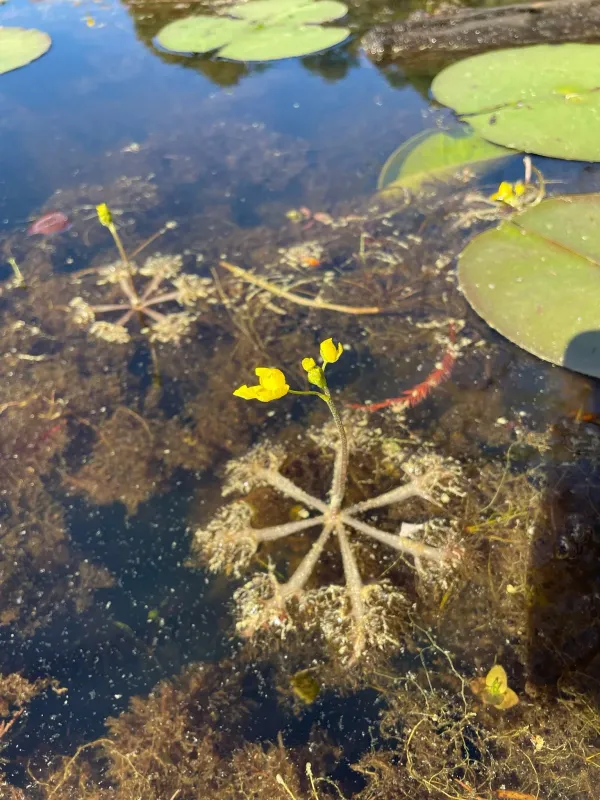
A distinctive feature of this species is its flowering structure. It produces a rosette of leaves at the base of the inflorescence that floats on the surface. These leaves possess inflated, air-filled petioles that act as floats, providing the buoyancy necessary for the plant to keep its flowers above the water level.
Regarding growth requirements, this species thrives in clean, stagnant, or slow-flowing water with a slightly acidic to neutral pH. It requires substantial sunlight to fuel photosynthesis and drive the complex physiological processes associated with its carnivorous lifestyle.
In cultivation, it is essential to mimic natural conditions by maintaining stable water levels and ensuring the water is free from heavy fertilizer runoff. Providing a large surface area for the plants to spread is crucial for maintaining a healthy and vigorous population in artificial settings.
Main diseases and pests
The primary threat to the swollen bladderwort is habitat degradation caused by agricultural runoff, which leads to eutrophication. Excessive nitrogen and phosphorus levels promote algal blooms, which deplete the light and oxygen needed by the bladderwort to survive.
Fungal infections pose a significant risk, particularly in conditions with poor water circulation. These pathogens can cause stem rot, leading to rapid tissue death and the potential loss of entire colonies if not addressed through improved aeration or water replacement.
Invasive plant species can quickly outcompete the bladderwort for resources, reducing the space available for its floating rosettes to expand. Regular monitoring and manual removal of aggressive aquatic weeds are necessary to protect the bladderwort population.
Herbivory by various aquatic insects and larvae can damage the delicate bladder structures, directly impacting the plant's ability to feed. Maintaining a balanced ecosystem where natural predators keep these insect populations in check is an effective management strategy.
Climate change and subsequent water level fluctuations represent a major threat. Prolonged droughts or excessive drying of the water surface can lead to the desiccation of the plant, as it relies entirely on the aquatic environment for hydration and nutrient uptake.