
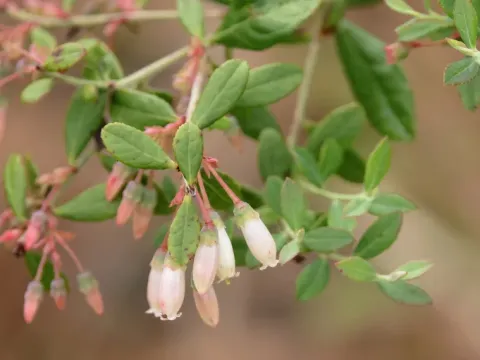
Darrow's blueberry
Vaccinium darrowii Camp
Darrow's blueberry (Vaccinium darrowii) is a perennial shrub belonging to the Ericaceae family, native to the southeastern United States. It is a compact, evergreen or semi-evergreen shrub, highly valued for its ability to thrive in sandy soils where other blueberry species might struggle.
What the section contains
Darrow's blueberry
Botanically, this species is distinct due to its small, leathery leaves and a complex root system that relies heavily on ericoid mycorrhiza. It serves as a vital genetic resource in breeding programs aimed at developing heat-tolerant and drought-tolerant blueberry varieties.
Successful cultivation requires strict adherence to soil acidity, typically ranging from pH 4.0 to 5.5. The planting medium must be rich in organic matter and possess excellent drainage capabilities to prevent root hypoxia, which is lethal to the plant.
The climate requirements involve plenty of direct sunlight, although some protection from extreme afternoon heat is beneficial in hotter regions. While more drought-tolerant than the highbush blueberry, it still requires consistent irrigation during critical growth stages.
Standard horticultural practices include the application of pine bark or needle mulch to maintain soil moisture and acidity levels. Growers should avoid using standard garden fertilizers, opting instead for acidic formulations designed specifically for acid-loving shrubs.
The yield of Darrow's blueberry is generally modest compared to commercial blueberry cultivars. However, the berries are known for their concentrated flavor and high nutritional content, making the species an interesting candidate for niche markets and specialized fruit production.
Fungal diseases like Botryosphaeria stem blight represent the primary threat to plantation health, often exacerbated by physical injury to the stems. Insect pests such as scale insects and various larvae require integrated pest management strategies to protect the foliage and developing fruit clusters.