
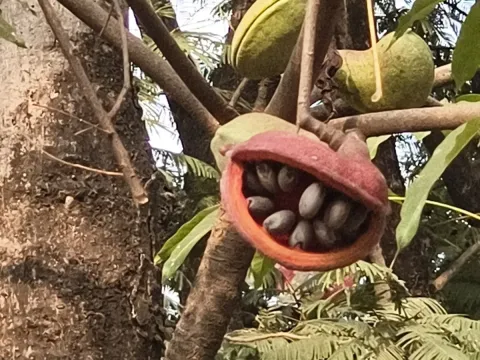
Eribroma
Eribroma
Eribroma, a member of the Malvaceae family, is a tropical crop that requires precise environmental management during its early growth stages. Sowing is typically conducted in controlled nursery environments to ensure high germination rates.
What the section contains
Eribroma
Seeds of the Eribroma species often require scarification to break dormancy before being planted in a nutrient-rich, well-aerated substrate, ensuring they receive consistent moisture without being waterlogged.
The timing of sowing is critical, ideally aligning with the start of the warm season, which allows seedlings to develop strong root systems before facing any environmental stress.
When transplanting, it is important to provide sufficient spacing between plants, as Eribroma develops a significant canopy over time that requires ample air circulation.
Success in the initial growth phase relies heavily on maintaining a stable temperature, ideally between 22 and 26 degrees Celsius, during the entire germination process.
As a tropical plant, Eribroma thrives in climates characterized by high temperatures and significant air humidity, struggling if exposed to prolonged cold or frost.
Soil quality must be high, with an emphasis on organic matter content and excellent drainage. The plant is particularly sensitive to heavy, clay-based soils that retain too much moisture.
Adequate sunlight is essential for the healthy development of Eribroma; it performs best in full sun or light shade conditions, promoting robust stem growth and leaf production.
Water management involves keeping the soil consistently moist but never soggy. In areas with unpredictable rainfall, irrigation systems must be utilized to maintain steady growth.
Fertilization regimes should be balanced, focusing on nitrogen during the vegetative phase and phosphorus and potassium during the pre-flowering and maintenance periods.
Fungal pathogens represent the most significant threat to Eribroma, particularly in environments with stagnant air and high humidity, which favor the spread of leaf spots and rots.
Pest pressures primarily come from sap-sucking insects like spider mites and scale insects, which can severely weaken young plants if left unchecked for an extended period.
Maintaining cleanliness around the root zone and pruning away dead or overcrowded branches are essential practices to minimize the risk of infection and pest colonization.
The use of integrated pest management strategies, such as introducing natural predators or applying organic-based sprays, is highly recommended for maintaining healthy crops.
Regular monitoring of the plantation is vital for early detection of issues, allowing for rapid intervention before any potential infestation causes substantial damage to the plant's health.