
Evergreen huckleberry
Vaccinium ovatum Pursh
Description
Growing requirements
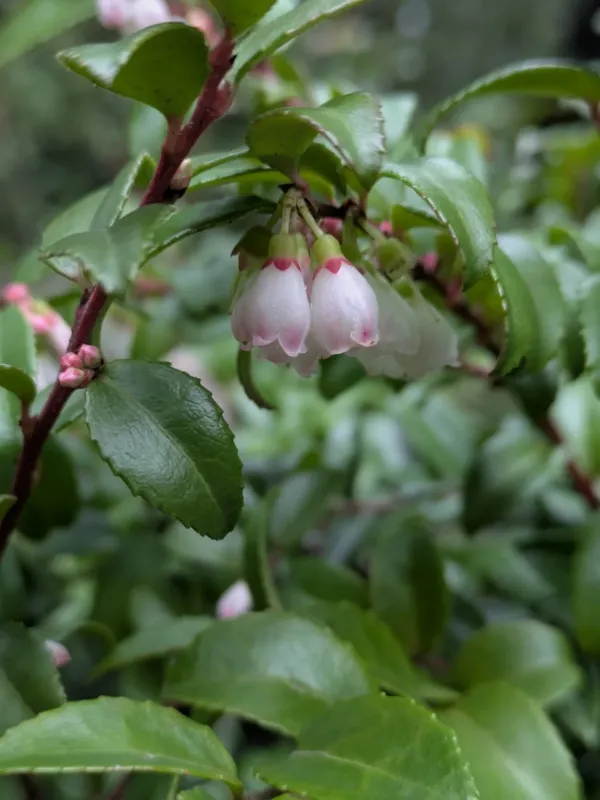
Evergreen huckleberry (Vaccinium ovatum) is a prominent member of the Ericaceae family, native to the Pacific Coast of North America. It is highly valued for its year-round glossy, dark green foliage and its edible, delicious berries.
This species thrives in acidic, well-draining soils rich in organic matter. Soil pH should ideally be maintained between 4.5 and 5.5 to ensure proper nutrient uptake and vigorous growth of the shrub.
It prefers climates with mild summers and moist winters. While it is remarkably shade-tolerant compared to other Vaccinium species, providing some light exposure will significantly improve berry production and fruit flavor.
Proper agricultural practice involves mulching the base with conifer needles or peat moss to mimic its native woodland habitat. This helps regulate soil moisture, temperature, and suppresses invasive weed species.
Beyond fruit production, the plant is extensively used in the floral industry due to its long-lasting, attractive foliage. In gardening, it serves as an excellent hedge plant that offers both aesthetic appeal and a tasty harvest.
Main diseases and pests
Common fungal diseases, such as leaf spot and powdery mildew, are the primary threats to Vaccinium ovatum, especially in regions with high humidity and poor airflow.
Pest issues often include infestations by aphids, scale insects, and various caterpillars that can cause significant damage to the plant's delicate foliage during the growth cycle.
Root rot is a major danger if the soil drainage is inadequate, requiring careful site selection and management of irrigation schedules to prevent waterlogging.
Pruning is an essential maintenance task to prevent disease outbreaks, as it opens up the canopy for better sunlight penetration and air circulation.
Integrated pest management, including the use of neem oil or horticultural soaps, is recommended to manage infestations without harming the plant's health or fruit quality.