
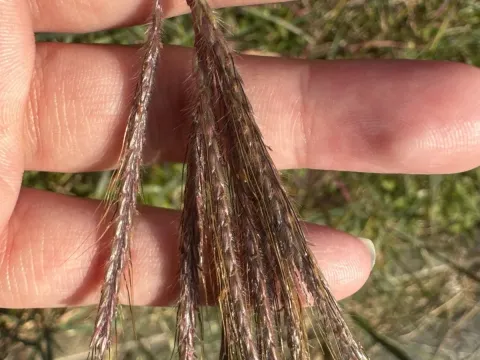
Eremopogon
Eremopogon
Eremopogon, a member of the Poaceae family, is a perennial grass species that requires specific conditions to establish a vigorous stand. Seeds are known for their high viability, provided they are sown during a period when soil temperatures support rapid germination and early root development.
What the section contains
Eremopogon
The optimal sowing time is early spring, allowing the plant to take advantage of soil moisture reserves. In arid regions, late autumn sowing is also a viable practice, enabling the seeds to germinate immediately upon the arrival of spring rains, thus giving the crop a head start against potential summer droughts.
Precise seed placement is critical; sowing depth should be maintained at a shallow level to ensure successful seedling emergence. Following the sowing process, soil compaction using light rollers is highly recommended to improve seed-to-soil contact and minimize desiccation in the topsoil layer.
During the establishment phase, the crop allocates significant energy to developing its root system, which may result in slower early-season vegetative growth. Maintaining a weed-free environment is essential during these initial months to ensure the crop is not outcompeted for nutrients and water.
Sowing density varies depending on the intended use: lower densities are suitable for hay production where individual plant vigor is preferred, while higher densities are recommended for pastures to create a resilient sod that can withstand grazing pressure.
Eremopogon is remarkably well-adapted to hot and dry environments, making it a valuable crop for semi-arid regions where conventional grasses might fail. Its deep root system allows it to tap into moisture reserves deep within the soil profile, ensuring survival through prolonged dry spells.
Being a heliophytic plant, Eremopogon requires full sun exposure for optimal growth and development. Any degree of shading negatively impacts the plant's photosynthetic efficiency, leading to etiolated stems and a significant decline in overall biomass production.
The crop is not particularly demanding regarding soil type, showing strong adaptability to diverse conditions, including sandy and rocky substrates. However, it thrives best on well-drained soils with good aeration, avoiding areas susceptible to prolonged waterlogging.
The temperature tolerance of Eremopogon is broad, allowing it to withstand the extreme heat typical of steppe climates. During winter months, the plant enters a dormant state, exhibiting sufficient cold hardiness to survive in regions with moderate winter temperatures without compromising its spring regrowth.
Agronomic management includes basic maintenance practices such as loosening the soil in the inter-rows during the first few years to enhance water infiltration. Strategic nitrogen fertilization can significantly boost biomass accumulation if the crop is managed under intensive production systems.
As a member of the Poaceae family, Eremopogon can be susceptible to various fungal pathogens, particularly in years characterized by high humidity or poor air circulation. Rust diseases are among the most common issues, manifesting as pustules on the leaf blades and stems.
Powdery mildew may also occur, especially in dense stands where humidity builds up within the canopy. Effective management involves ensuring adequate plant spacing and removing crop residues that might serve as a reservoir for fungal spores between growing seasons.
Insect pests that target stems and reproductive organs can cause considerable damage, particularly during mass outbreaks. Damage to the seed heads can significantly reduce yield, making it harder to maintain a sustainable seed supply for future plantings.
Soil-borne pests, such as nematodes, can compromise root health, reducing the plant's ability to tolerate environmental stress. Regular field inspections and the use of integrated pest management practices are essential to keep these populations under control.
Crop rotation is a fundamental tool for managing the risk of long-term soil-borne disease accumulation. By alternating with non-host crops, farmers can disrupt the life cycles of specific pathogens and pests, ensuring the longevity and health of the Eremopogon stand.
For high-quality hay production, harvesting should be performed during the booting or early heading stage. This timing ensures that the forage contains an optimal balance of crude protein and digestible fiber, providing excellent nutritional value for livestock.
Delaying the harvest beyond the optimal phase results in rapid stem lignification, which decreases the feed quality and digestibility of the crop. Therefore, producers must coordinate their harvesting schedule carefully with the crop’s development to achieve the best forage outcome.
Modern harvesting technologies, such as mower-conditioners, are recommended to expedite the drying process. This mechanical conditioning helps moisture escape from the stems, allowing for faster curing and reducing the risk of spoilage or mold development within the hay bales.
After reaching the appropriate moisture content, the forage should be baled and stored in dry conditions to preserve its quality throughout the winter months. Proper storage techniques are vital to prevent nutrient loss caused by rain exposure or excessive humidity.
When harvesting for seed, the operation should commence once full physiological maturity is reached, identified by seed hardness and characteristic coloration. Careful calibration of harvesting equipment is necessary to minimize seed loss and ensure the highest purity of the harvested lot.