
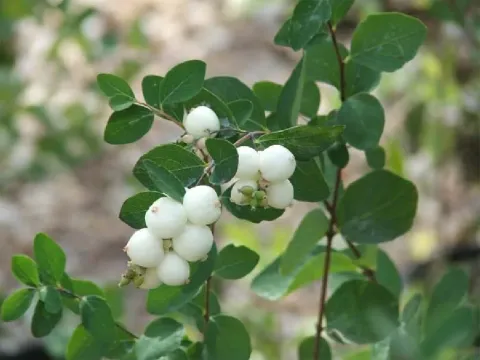
Common snowberry
Vaccinium racemosum
The common snowberry (Symphoricarpos albus) is a deciduous shrub belonging to the Caprifoliaceae family. It is widely recognized for its ornamental white berries that persist on the branches well into the winter months.
What the section contains
Common snowberry
This shrub is highly adaptable to various lighting conditions, though it performs best in full sun to partial shade. Its ability to tolerate low-light environments makes it a versatile choice for planting under tree canopies.
In terms of soil requirements, the plant is remarkably flexible. It thrives in well-drained loamy soils but displays significant tolerance for dry, rocky, and alkaline conditions where other ornamental shrubs might struggle.
The species is exceptionally hardy, capable of surviving harsh winters and periods of drought without specialized care. This resilience makes it a preferred plant for urban landscaping and highway screening.
Agrotechnical maintenance primarily involves pruning. Since the shrub produces suckers, periodic thinning is necessary to keep the growth controlled and to maintain an aesthetically pleasing shape throughout the growing season.
One of the primary benefits of the common snowberry is its robust resistance to common plant diseases. It is rarely bothered by significant fungal or bacterial infections under standard gardening conditions.
Powdery mildew may occasionally appear on foliage in environments with very poor airflow and excessive humidity. Regular thinning of the branches helps maintain the necessary ventilation to prevent this issue.
Insect pests typically do not pose a serious threat to the vitality of the plant. While aphids might occasionally appear on young, succulent shoots, they rarely require chemical intervention or treatment.
Gardeners should note that the attractive white berries are toxic to humans if ingested, as they contain saponins. While they serve as a food source for some bird species, they should be kept away from children and pets.
The aggressive root system is a factor to consider during planting. Without containment, the shrub can spread rapidly via underground runners, making it more suitable for wilder garden areas or as a naturalizing ground cover.