
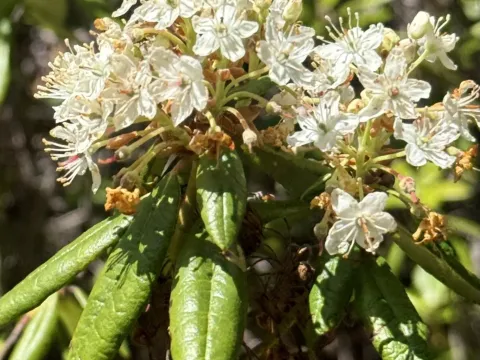
Colombian Labrador tea
Ledum columbianum
Colombian Labrador tea (Ledum columbianum), classified within the Ericaceae family, is an evergreen shrub native to the Pacific Northwest of North America. It thrives in high-moisture environments such as peat bogs and boggy forest borders.
What the section contains
Colombian Labrador tea
The botanical structure of this species includes thick, leathery leaves with a dense coating of glandular hairs on the underside. This adaptation helps the plant manage moisture retention and temperature regulation in its native cool, misty habitat.
To cultivate Ledum columbianum, one must provide a soil mixture that is highly acidic, with a pH ranging from 3.5 to 5.0. Sphagnum moss and coniferous peat are ideal components to simulate the natural bog substrate requirements.
The plant requires a sheltered location with partial shade to thrive. Excessive exposure to direct sunlight can stress the plant, while adequate airflow is essential to prevent the buildup of humidity around the foliage.
Consistent moisture is vital for the survival of this shrub, as it lacks deep root systems. Providing a thick layer of pine needle mulch helps maintain the acidity of the soil and protects the shallow roots from temperature fluctuations.
Phytophthora root rot is the most significant threat to the plant, particularly in poorly drained soils. Once established, this pathogen can quickly destroy the root system, leading to rapid yellowing and wilting of the foliage.
Spider mites are common pests in greenhouse conditions or during periods of drought. Their feeding on the underside of the leaves causes mottling and eventual leaf drop, which can severely weaken the plant.
Nutrient imbalances, particularly iron deficiency, are frequent issues due to the narrow tolerance for pH levels. This leads to interveinal chlorosis, which can be mitigated with specific acidic fertilizers formulated for Ericaceous species.
In humid, stagnant conditions, powdery mildew can appear on the leaves. Reducing humidity levels around the plant canopy and improving air circulation are standard practices to prevent fungal proliferation.
Slugs and snails may damage younger plants, particularly in wet spring conditions. Implementing barrier methods or organic repellents is safer than using harsh chemicals, which the plant is highly sensitive to due to its evergreen nature.