

Reference · Crops
Cranberry
Vaccinium L.
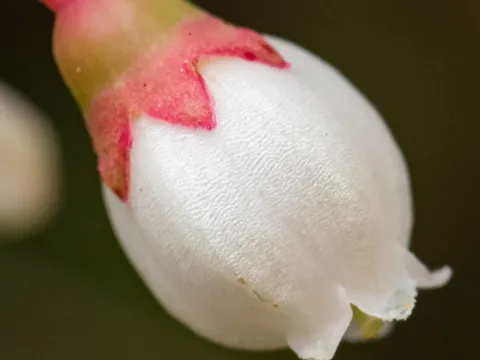
Cranberry is a perennial evergreen dwarf shrub belonging to the Ericaceae family. It is a highly specialized agricultural crop, with the most cultivated species being the large-fruited cranberry, Vaccinium macrocarpon.
23
items
What the section contains
 Lingonberry
Vaccinium vitis-idaea L.
4 products
Lingonberry
Vaccinium vitis-idaea L.
4 products
 Bilberry
Vaccinium myrtillus L.
1 product
Bilberry
Vaccinium myrtillus L.
1 product
 American cranberry
Vaccinium macrocarpon Aiton
American cranberry
Vaccinium macrocarpon Aiton
 Bog bilberry
Vaccinium uliginosum L.
Bog bilberry
Vaccinium uliginosum L.
 Bog cranberry
Vaccinium oxycoccos L.
Bog cranberry
Vaccinium oxycoccos L.
 Darrow's blueberry
Vaccinium darrowii Camp
Darrow's blueberry
Vaccinium darrowii Camp
 Deerberry
Vaccinium stamineum L.
Deerberry
Vaccinium stamineum L.
 Elliott's blueberry
Vaccinium elliottii Chapm.
Elliott's blueberry
Vaccinium elliottii Chapm.
 Evergreen huckleberry
Vaccinium ovatum Pursh
Evergreen huckleberry
Vaccinium ovatum Pursh
 Farkleberry
Vaccinium arboreum Marshall
Farkleberry
Vaccinium arboreum Marshall
 Half-highbush blueberry
Hybrids between Vaccinium corymbosum and Vaccinium angustifolium
Half-highbush blueberry
Hybrids between Vaccinium corymbosum and Vaccinium angustifolium
 Highbush blueberry
Vaccinium angustifolium x Vaccinium myrsinites x Vaccinium corymbosum
Highbush blueberry
Vaccinium angustifolium x Vaccinium myrsinites x Vaccinium corymbosum
 Highbush blueberry
Vaccinium corymbosum L.
Highbush blueberry
Vaccinium corymbosum L.
 Hybrid highbush blueberry
Vaccinium corymbosum x Vaccinium angustifolium x Vaccinium virgatum
Hybrid highbush blueberry
Vaccinium corymbosum x Vaccinium angustifolium x Vaccinium virgatum
 Hybrid of highbush blueberry and deerberry
Vaccinium corymbosum x Vaccinium stamineum L. hybrid
Lowbush blueberry
Vaccinium angustifolium Aiton
Hybrid of highbush blueberry and deerberry
Vaccinium corymbosum x Vaccinium stamineum L. hybrid
Lowbush blueberry
Vaccinium angustifolium Aiton
 Rabbit-eye blueberry
Vaccinium virgatum Aiton
Rabbit-eye blueberry
Vaccinium virgatum Aiton
 Shiny blueberry
Vaccinium myrsinites Lam.
Shiny blueberry
Vaccinium myrsinites Lam.
 Southern highbush blueberry
hybrids between Vaccinium corymbosum L. and Vaccinium darrowii Camp
Southern highbush blueberry
hybrids between Vaccinium corymbosum L. and Vaccinium darrowii Camp
 Vaccinium bracteatum
 Thunb.
Vaccinium formosum
Vaccinium formosum Andrews
Vaccinium simulatum
Vaccinium simulatum Small
Vaccinium bracteatum
Vaccinium bracteatum Thunb.
Vaccinium formosum
Vaccinium formosum Andrews
Vaccinium simulatum
Vaccinium simulatum Small
 Velvet-leaf blueberry
Vaccinium myrtilloides Michx.
Velvet-leaf blueberry
Vaccinium myrtilloides Michx.
Marketplace
Products in this section · 12


Cranberry
The plant originates from the wetlands of North America. Successful cultivation requires a specific environment, primarily acidic soils with a pH level between 3.2 and 4.5, which is essential for nutrient uptake.
Cranberries require a sophisticated water management system. While they grow in bogs, the root system needs a balance of water and oxygen, necessitating drainage management during the growing season.
Climate requirements include a distinct cold dormancy period. The plants are remarkably cold-hardy, although early spring frosts can damage floral buds, requiring frost protection measures like sprinkling or flooding.
The commercial utility of cranberries is vast, ranging from fresh market sales to food processing industries. They are highly valued for their high concentrations of polyphenols and antioxidants, used in juices, jams, and medicinal supplements.
Cranberry plants are susceptible to various fungal pathogens. Common diseases include Alternaria rot, Anthracnose, and Monilinia berry blight, which affect both the foliage and the developing berries.
Rotting pathogens such as Ashy rot, Gray mold, and Penicillium rot are prevalent in poorly ventilated areas or fields with excessive moisture levels. These diseases can quickly decimate harvested yields.
Viral threats, including Tomato mosaic virus and Tobacco mosaic virus, can impact plant vigor and productivity. These viruses often spread through mechanical injury or insect vectors present in the fields.
Pest management is a critical component of cranberry cultivation. Larvae of various moth species, such as fireworms and spanworms, can significantly damage leaves and buds, requiring integrated pest management (IPM) strategies.
- Regular application of fungicides during bloom.
- Maintaining proper drainage and air circulation.
- Scouting for insect pests on a weekly basis.
- Culling infected plants to prevent virus spread.