
Crowberry
Empetrum
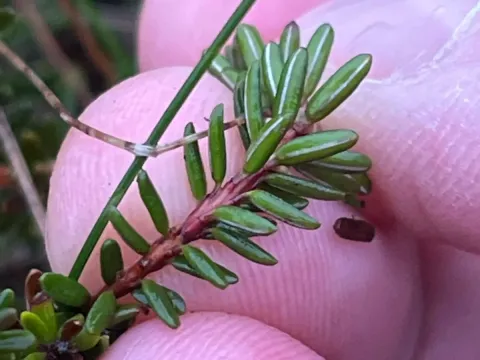
Crowberry (Empetrum) is a perennial evergreen dwarf shrub belonging to the Ericaceae family. It is a highly resilient plant, naturally adapted to the harsh conditions of subarctic and arctic regions across the northern hemisphere.
What the section contains
Crowberry
The plant thrives in acidic, well-drained soils, specifically preferring peaty, sandy, or stony substrates. It is extremely intolerant of waterlogged soil, making site selection with excellent natural or artificial drainage critical for cultivation.
As a light-loving species, it performs best in open areas, although it can tolerate partial shade under conifers. In nature, it forms dense mats on tundra, heathlands, and within coniferous forests, functioning as a hardy groundcover.
For successful agriculture, the pH level must be maintained between 4.0 and 5.0. Gardeners should incorporate organic matter such as pine needles or sphagnum peat into the planting hole to replicate its native acidic environment.
The plant requires consistent moisture during the establishment phase but should never be left in standing water. Mulching with wood chips or needles is highly recommended to regulate soil temperature and retain necessary humidity.
Crowberry cultivation is valued for its nutritional profile, as the berries are rich in anthocyanins, vitamin C, and polyphenols. These compounds offer significant antioxidant properties, making them a premium health food ingredient.
Commercially, the berries are processed into jams, juices, wines, and syrups. Their distinct, slightly acidic flavor and dark purple pigment make them an excellent additive in various culinary applications and natural food coloring.
Beyond fruit production, crowberry is used in landscaping as an ornamental plant. Its evergreen nature and tolerance for extreme cold make it a top choice for rock gardens, ground cover in alpine-style landscapes, and soil stabilization.
While large-scale industrial plantations are rare, the crop is gaining interest among boutique growers specializing in boreal berries. Success depends on the slow initial growth rates typical of this species, requiring patience from farmers.
In traditional medicine, parts of the plant are utilized for their diuretic and anti-epileptic effects. These medicinal qualities add an extra layer of economic value, appealing to the growing herbal supplements market.
The most significant threat to crowberry is root rot, which typically occurs when soils are too heavy or poorly drained. Proper airflow around the plant base is vital to prevent fungal infections and mildew outbreaks.
Pest issues are generally minimal due to the plant's natural chemical defenses. However, in enclosed or overly humid environments, slugs or snails may occasionally feed on young, succulent shoots during early spring.
Soil nutrient imbalances, particularly an increase in pH level towards alkaline, can cause severe chlorosis. It is vital to avoid any form of lime application near the plants, as this will lead to rapid decline and death.
Wildlife, such as birds or small mammals, may forage on the berries during the ripening season. In production fields, protective netting is often required to ensure that the yield remains high for the intended harvest.
Sanitation is key; removing dead twigs and debris during early spring helps maintain plant health, reduces the risk of harboring pathogens, and promotes new, vigorous vegetative growth throughout the season.
Harvesting usually occurs from late summer through autumn. Unlike many berries that drop quickly, crowberries remain firmly attached to the branch, allowing for a flexible harvest window that can extend into the first frosts.
Manual picking is the only practical method for harvesting, as the delicate structure of the trailing stems does not currently support mechanical harvesting equipment without significant damage to the plant's health.
Berries should be collected in shallow crates to prevent crushing, as their juice is highly pigmented and can stain. Proper ventilation during storage is essential to prevent moisture buildup and premature spoilage of the crop.
After collection, the berries should be cleaned of twigs and dried leaves. On a small scale, this is done by hand or through simple screening, ensuring that the fruit remains intact for storage or immediate processing.
Freezing is the industry standard for long-term storage, as it preserves the antioxidant profile and overall quality of the berries. Properly frozen crowberries can maintain their value for up to a year, providing a steady supply for market.