
Common heather
Calluna
Description
Growing requirements
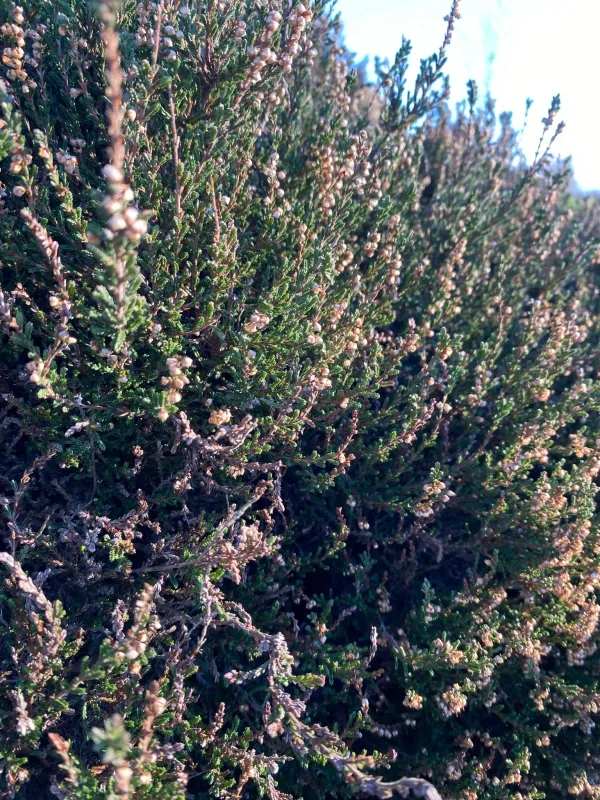
Common heather (Calluna vulgaris) is the sole member of the genus Calluna within the Ericaceae family. It is an evergreen, low-growing shrub featuring tiny scale-like leaves and triangular stems, native to Europe, Western Asia, and North Africa.
The crop demands specific environmental conditions, thriving in acidic, nutrient-poor soils such as peaty soils, sandy loams, or rocky substrates. It is extremely sensitive to lime content and waterlogging, requiring excellent drainage for healthy root development.
As a light-loving species, heather requires open, well-illuminated sites to achieve full flowering potential. Excessive shading leads to elongated, weak stems and significantly reduced flower color intensity, which decreases its commercial value.
The ideal temperature range is a cool, moderate climate with sufficient atmospheric humidity. While the plant is highly frost-tolerant, it may require light protection in snowless, windy winters to prevent tissue desiccation.
In agricultural applications, heather is valued primarily as a key honey plant, producing aromatic heather honey, as well as a raw material for the pharmaceutical industry, owing to its high content of flavonoids, tannins, and organic acids.
Main diseases and pests
The most frequent ailment is powdery mildew, which affects the aerial parts of the plant under high humidity and poor ventilation. Management strategies involve the use of sulfur-based or copper-based fungicides.
Over-irrigation often leads to the onset of phytophthora and gray mold, which cause root and shoot decay. Prevention relies on strict moisture control and the maintenance of a porous, well-draining soil structure.
Among pests, leaf beetles and spider mites pose the greatest threat, particularly during hot and arid spells. In cases of severe infestation, the application of systemic insecticides or acaricides is recommended.
Nematode infections are also possible, resulting in foliage deformation and stunted growth. Affected specimens must be promptly removed and disposed of outside the production area to prevent spread.
Routine sanitary pruning is a critical agronomic practice, as it prevents canopy overcrowding and improves air circulation, thereby significantly reducing the risk of fungal infections within the foliage.
Harvesting
Raw material collection (apical shoots with inflorescences) occurs during peak bloom, typically from late summer to early autumn. Harvesting must be performed in dry weather to ensure high quality and prevent spoilage.
Cut plant parts are tied into small bundles or spread thinly on drying racks within well-ventilated, shaded rooms. This slow drying process is essential to preserve the bioactive compounds of the plant.
For industrial-scale production, heather can be harvested mechanically from dedicated plantations. Managed pruning allows for sustainable regrowth, ensuring consistent yields over subsequent production cycles.
Once sufficiently dry, the material is threshed to separate the flowers from the stems, followed by purification and the removal of impurities using air-based separation systems.
Storage should be conducted in paper bags within dry, dark warehouses with a humidity level not exceeding 14%, which ensures the stability of the medicinal properties for up to two years.