
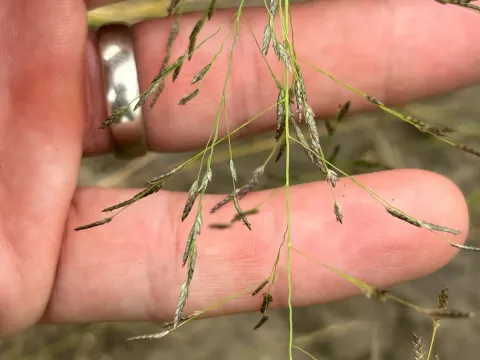
Eragrostis diffusa
Eragrostis diffusa
Sowing Eragrostis diffusa is best performed during the spring season, once the soil has consistently reached temperatures between 12 and 15 degrees Celsius for optimal germination.
What the section contains
Eragrostis diffusa
Due to the small size of the seeds, they should be sown at a shallow depth of approximately 1 to 2 centimeters to ensure they do not exhaust their energy reserves before reaching the surface.
The seeding rate typically ranges from 5 to 8 kilograms per hectare, depending on soil quality, seed viability, and the specific intended use for the forage crop.
Utilizing specialized precision seeders is recommended to achieve a uniform distribution across the field, which prevents competition between emerging seedlings.
Post-sowing soil compaction is a crucial step; rolling the field helps improve moisture capillary action from lower soil layers, significantly increasing the success rate of the stand.
Belonging to the Poaceae family, Eragrostis diffusa is a drought-tolerant grass species that thrives in challenging environmental conditions where other crops might fail.
The crop performs best in light, sandy or loamy soils that allow for excellent aeration and proper drainage, preventing roots from suffering in waterlogged environments.
This grass is highly photophilic and requires full sun exposure to achieve its peak growth rate and maximum biomass production during the vegetative cycle.
The ideal soil pH for cultivation ranges from neutral to slightly acidic, supporting efficient nutrient uptake and overall plant vigor throughout the growing season.
It features a deep, well-developed root system that grants the plant superior resilience against short-term droughts and high atmospheric temperatures during mid-summer.
The yield of green matter is heavily dependent on management practices, including optimal fertilization schedules and the effective utilization of available rainfall.
Productivity typically peaks during the second and third years of establishment as the root system matures and the stand becomes more densely established.
Nitrogen fertilization is essential for maximizing yield, especially when applied at the start of the season or immediately after harvesting a cutting to encourage regrowth.
In regions with irrigation capabilities, Eragrostis diffusa can produce multiple cuts per season, significantly increasing the total tonnage of forage produced per hectare.
Mixed cropping with legumes can further enhance total yield, as legumes provide a natural source of nitrogen, which boosts the growth and quality of the grass.
The primary pathological threats include various fungal infections, such as rusts and leaf spots, which thrive in conditions of excessive moisture and poor air circulation.
Insects like cereal flies, aphids, and various weevils can cause significant damage during the vegetative stage, necessitating proactive monitoring and field scouting.
Effective pest management relies on sound agronomic practices, such as rigorous crop rotation and keeping the fields clear of competitive weed species.
Over-seeding or excessive stand density creates an environment conducive to pathogen spread; therefore, maintaining appropriate density is vital for crop health.
Chemical control measures should be considered a last resort, strictly managed to minimize environmental impact and protect beneficial populations of predatory insects.
Harvesting should ideally commence at the early heading stage to capture the highest nutritional value before the plant diverts energy toward seed production.
Delaying the harvest results in the lignification of the stems, which decreases the digestibility and overall quality of the resulting hay for livestock consumption.
Maintaining a cutting height of at least 5 to 7 centimeters is critical for the long-term health of the stand, ensuring rapid regrowth and sustained productivity.
Immediately after cutting, the material should be tedded to ensure even moisture loss, which is key to preserving the nutrient density and color of the forage.
Proper curing and drying techniques allow for high-quality baled hay production, which is a stable and efficient way to store forage for long-term use.