
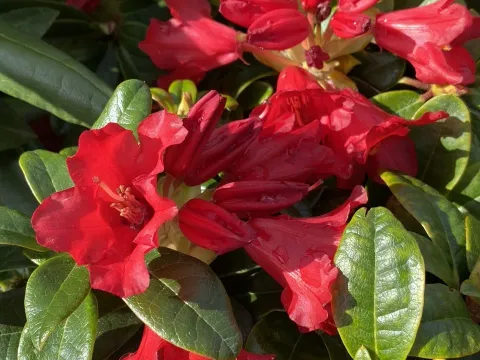
Creeping rhododendron
Rhododendron repens
The creeping rhododendron (Rhododendron repens, often classified as Rhododendron forrestii) belongs to the Ericaceae family. It is a procumbent evergreen shrub native to the high-altitude rocky regions of China.
What the section contains
Creeping rhododendron
This species requires specific environmental conditions to thrive. It performs best in partial shade, where it is protected from intense sunlight that can scorch the thick, leathery leaves and dry out the sensitive root system.
The soil must be highly acidic, with a pH range of 4.5 to 5.5. A mix of peat, pine bark, and coarse sand provides the necessary aeration and moisture retention that the shallow root system of this plant demands.
Climatic requirements focus on cool, humid conditions. Rhododendron repens does not tolerate high temperatures or arid environments well; therefore, consistent soil moisture and atmospheric humidity are crucial for its development.
Its primary agricultural and ornamental use is in rock gardens and alpine designs. Its creeping growth habit makes it a superior choice for ground cover in shaded areas, effectively suppressing weeds while maintaining year-round greenery.
The main threats to the health of the creeping rhododendron are soil-borne pathogens, particularly Phytophthora species, which thrive in poorly drained, waterlogged substrates.
These diseases often manifest as root rot or wilting, which can be fatal if not managed early. Improving drainage and using proper fungicides can mitigate these risks effectively.
Pests such as the rhododendron lace bug and spider mites are common concerns. They cause damage to the leaves by piercing the plant tissue and extracting cellular fluids, resulting in chlorosis.
Integrated pest management, including regular inspection and the application of targeted insecticides, is recommended to keep the plants healthy and aesthetically pleasing throughout the growing season.
Maintaining proper mulch layers around the base of the plant helps to regulate soil temperature and inhibit the emergence of certain soil-dwelling pests, contributing to the overall vigor of the species.