
Creeping blueberry
Vaccinium crassifolium
Description
Growing requirements
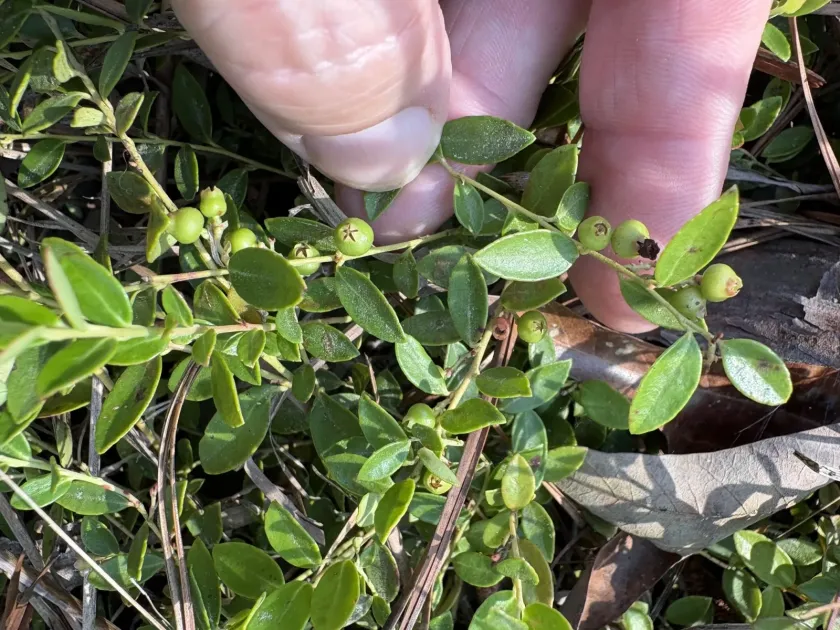
Vaccinium crassifolium, commonly known as creeping blueberry, is an evergreen shrub belonging to the Ericaceae family. Native to the southeastern United States, specifically the Carolinas, it is well-regarded for its mat-forming growth habit and glossy leaves.
This plant thrives in acidic soil conditions, requiring a pH between 4.5 and 5.5. In agricultural or garden settings, ensuring these acidity levels is the most critical factor for successful growth and leaf health.
The species prefers moist, well-drained, sandy-organic soils. While it loves moisture, it is susceptible to root rot if waterlogged, making adequate soil drainage a non-negotiable requirement for sustainable cultivation.
In terms of light exposure, creeping blueberry performs best in partial shade. While it can tolerate some sun in cooler climates, it typically requires protection from intense midday heat to prevent leaf scorch and dehydration.
Maintenance involves frequent mulching with pine needles or acidic peat moss. This practice mimics the natural forest floor environment, maintains the necessary soil moisture, and suppresses weed competition effectively.
Yield
While Vaccinium crassifolium produces small, edible black berries, it is not primarily cultivated for commercial fruit production. Its main utility in agriculture and horticulture lies in its ornamental value and its effectiveness as an erosion-control ground cover.
The shrub is highly valued for its dense, leathery foliage that remains evergreen throughout the year. During the flowering season, the plant produces small, delicate bell-shaped blossoms that add significant aesthetic appeal to garden beds.
Farmers and landscapers utilize this species to create living mulches or decorative borders in acidic soil garden zones. Its ability to spread laterally via underground runners makes it an excellent choice for stabilizing slopes or filling empty spaces.
The yield of this plant is measured in terms of ground coverage rather than fruit weight. Under optimal conditions, the plant forms a thick, weed-resistant carpet that reduces the overall maintenance cost of the landscape area.
For best results, it is recommended to plant specimens in clusters spaced according to the desired speed of coverage. With proper spacing and moisture, the plant establishes a persistent green cover that thrives for many years.
Main diseases and pests
The creeping blueberry is generally robust, but it can be susceptible to fungal diseases if air circulation is poor or if the humidity remains excessively high for extended periods. Monitoring for signs of leaf spots is recommended.
Pests are generally not a major threat, though aphids or scale insects may occasionally infest the foliage. Integrated pest management using insecticidal soaps is usually sufficient to handle minor outbreaks without damaging the plant.
Root pathogens, such as Phytophthora, can become a significant threat if the soil remains waterlogged. Preventing compaction and ensuring excellent drainage are the primary defense strategies against these soil-borne issues.
Nutrient deficiencies, particularly iron chlorosis, occur if the soil pH rises above the optimal range. Regular testing of the soil and the application of chelated iron can help correct yellowing foliage promptly.
Environmental stress, such as severe winter desiccation in colder zones, can damage the evergreen foliage. Protecting the plants from harsh, drying winds during the winter months can help preserve the aesthetic appearance of the carpet.