
Lowbush blueberry
Vaccinium angustifolium Aiton
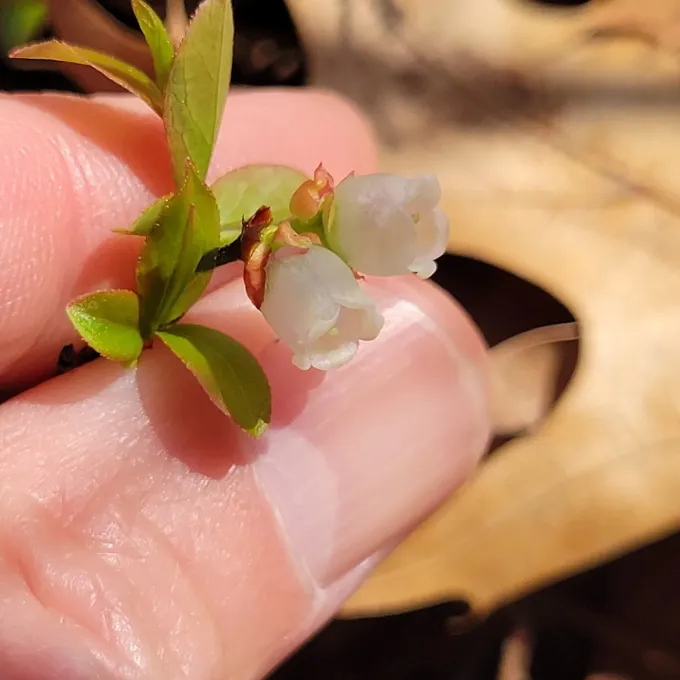
Description
Sowing dates
Vaccinium angustifolium, commonly known as the lowbush blueberry, is a deciduous shrub native to northeastern North America. Unlike highbush varieties, this species thrives through an extensive underground rhizome system, which allows it to regenerate and spread naturally in managed fields.
Commercial plantations are often established through the propagation of existing clones or tissue culture plants. Successful field establishment requires careful site preparation to ensure that the rhizomes are well-distributed and that the soil conditions are optimal for deep root development.
Planting typically takes place in early spring, before the onset of vegetative growth. For larger operations, mechanical transplanters are used, ensuring appropriate spacing to facilitate future maintenance and the efficient use of mechanical harvesting equipment.
In many regions, lowbush blueberry production involves the management of wild stands rather than traditional sowing. Farmers clear unwanted brush and weeds, allowing the naturally occurring blueberry rhizomes to dominate the landscape over several growing seasons.
The plant is remarkably winter-hardy, having evolved to survive the harsh climates of northern latitudes. Its low stature allows it to be protected by a blanket of snow during the winter, which insulates the dormant buds from extreme temperature drops.
Growing requirements
The success of Vaccinium angustifolium is strictly dependent on soil acidity, with an optimal pH range between 4.0 and 5.2. Soils that are not sufficiently acidic will prevent the plant from absorbing necessary micronutrients, leading to severe chlorosis and stunted growth.
Well-drained, sandy, or peaty soils are preferred. The root system is shallow and fibrous, meaning it requires high levels of organic matter to retain moisture while ensuring that water does not pool, which could lead to root rot and other physiological stressors.
Full sun is essential for high-quality fruit production. While the plants can survive in partial shade, yield and berry quality are significantly reduced in such conditions. Adequate light penetration is crucial for the photosynthesis needed for sugar accumulation in the berries.
Moisture management is key, especially during the critical periods of flowering and fruit set. Because the roots are close to the surface, the plants are susceptible to drought, making irrigation systems highly recommended for commercial production in drier regions.
Mulching with organic materials such as wood chips or sawdust is a standard practice to suppress weeds and maintain consistent soil moisture. This practice also helps preserve the acidic nature of the topsoil, which is vital for long-term plant health.
Yield
Yields for the lowbush blueberry can vary significantly based on site management and environmental conditions. On average, well-managed fields can produce between 2 and 5 tons per hectare, though productivity can fluctuate due to the biennial bearing nature of some wild stands.
To maximize yields, growers often employ a pruning system that involves cutting the plants back to ground level every few years. This process stimulates the production of new, vigorous shoots that will bear fruit in subsequent growing seasons, ensuring a cycle of consistent production.
The berries are highly sought after for their intense flavor and high antioxidant content. They are widely utilized in both the fresh market and the frozen food industry, where they serve as a premium ingredient for bakeries, health supplements, and beverage manufacturers.
Pollination efficiency is a critical determinant of final yield. Since these plants rely on insects for cross-pollination, the introduction of honey bee or bumblebee hives into the field during the bloom period is a standard practice to ensure maximum berry set.
Technological advancements in irrigation and frost protection have helped stabilize yields for commercial growers. By preventing spring frost damage, farmers can protect the delicate flower buds and ensure a more predictable harvest volume from year to year.
Main diseases and pests
Common fungal diseases such as powdery mildew, Botrytis blight, and mummy berry disease can significantly impact crop health. These pathogens thrive in humid conditions, making proper field ventilation and moisture management the first line of defense.
Insect pests, including the blueberry maggot and various leaf rollers, pose a threat to fruit quality. Integrated Pest Management (IPM) strategies, involving monitoring traps and timely biological or chemical interventions, are necessary to maintain a marketable harvest.
Weed control is perhaps the greatest challenge in lowbush blueberry farming, as competing vegetation can quickly outpace the blueberry plants. Traditional methods include mowing and controlled burning, while modern farms may use selective herbicides to keep the rows clean.
Vigilant monitoring throughout the season is required to detect signs of disease or pest infestation early. Early intervention is significantly more effective and often cheaper than attempting to treat an established outbreak in a dense field.
Developing resistance to common pests is a goal of ongoing research. Breeders focus on creating varieties that exhibit better natural defenses, which ultimately reduces the reliance on synthetic inputs and supports more sustainable agricultural practices.
Harvesting
Harvesting is a critical operation performed when berries have reached full maturity, characterized by a deep blue color and high sugar content. Because the fruit is delicate, extreme care is taken to avoid bruising during the collection process.
In modern commercial settings, specialized mechanical harvesters are used to gather the fruit. These machines are designed to comb the low shrubs, collecting the berries while leaving the foliage and stems as undisturbed as possible for future growth.
Post-harvest handling requires rapid cooling to remove field heat, which significantly extends the shelf life of the berries. Cooling the fruit to 2–4 degrees Celsius is standard practice before shipping to retail markets or processing facilities.
Sorting and cleaning are conducted at the processing site to remove debris such as twigs and leaves collected during the harvest. Modern electronic sorters use advanced imaging to identify and remove imperfect berries, ensuring that only top-quality fruit reaches the consumer.
Logistics are vital, as the fresh shelf life of wild blueberries is relatively short. Most of the harvest is directed toward deep-freezing shortly after collection, which preserves the nutritional integrity and flavor profile of the fruit for year-round availability.