


Description
Sowing dates
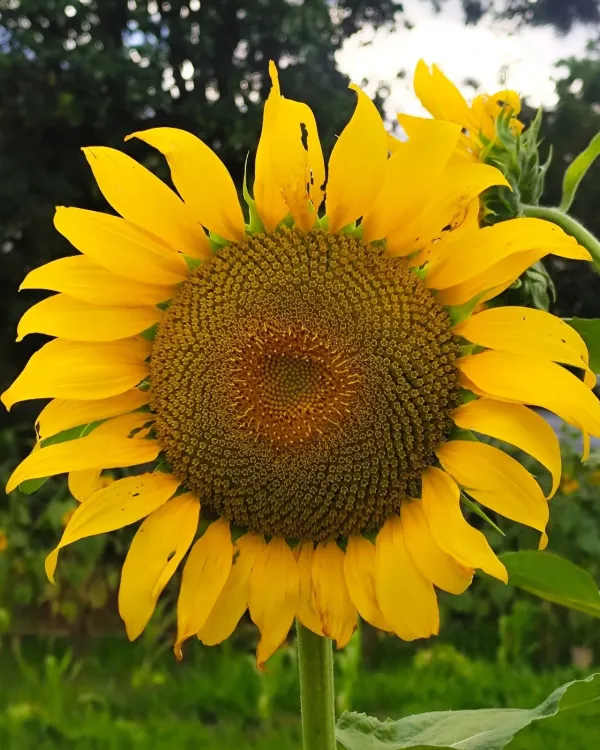
Common sunflower (Helianthus annuus L.) is a prominent oilseed crop belonging to the Asteraceae family, widely grown for its seeds, oil, and forage value.
Sowing begins when soil temperatures reach 8–12°C at a depth of 10 cm, ensuring rapid germination and uniform establishment of the crop across the field.
Planting density is crucial and typically ranges from 40,000 to 60,000 plants per hectare, depending on the specific hybrid's characteristics and the regional climate.
Precision seeding at a depth of 4–6 cm is recommended to ensure that seeds are placed in moist soil, promoting vigorous root development from the very beginning.
Adhering to a strict crop rotation cycle of 7–8 years is an essential agronomic practice to reduce the incidence of soil-borne pathogens and parasitic weeds.
Growing requirements
Sunflowers are thermophilic plants, requiring a total active temperature sum of 1800–2500°C for optimal growth and development through the growing season.
Deep, fertile chernozem soils with a neutral pH (6.0–7.5) and excellent moisture-holding capacity provide the best environment for maximizing the plant's biological potential.
The plant possesses a highly efficient taproot system capable of extracting water from depths of up to 3 meters, making it highly resilient to drought.
Nutrient management focuses on balanced applications of nitrogen, phosphorus, and potassium, tailored to soil test results to support high-yield production.
Boron is a critical micronutrient for sunflowers, essential for flower pollination and seed filling, especially in soils where availability might be limited.
Yield
Yield potential of modern sunflower hybrids is significant, often reaching 2.5–4.0 tons per hectare under ideal growing conditions and effective crop management.
Oil content is a vital quality parameter, with high-quality commercial hybrids typically achieving oil percentages ranging from 48% to 52%.
To achieve high yields, producers must focus on optimal plant population, effective weed control in the early growth stages, and robust disease management programs.
Harvesting efficiency is a major factor in net yield; minimizing losses during the cutting and threshing process is essential for achieving the highest economic return.
By-products such as sunflower meal, rich in protein, serve as a valuable resource in the livestock feed industry, adding value beyond oil production.
Main diseases and pests
The crop is vulnerable to various biological threats, including fungi like Alternaria leaf blight, Verticillium wilt, Rhizoctonia, Sclerotinia, Charcoal rot, and Gray mold.
Viral threats such as Tobacco mosaic virus can severely impact plant physiology, while root-knot nematodes can compromise nutrient uptake by damaging the root system.
Insect pests pose significant challenges, including wireworms, false wireworms, the sunflower stem weevil, cabbage white butterflies, and the European corn borer.
Integrated Pest Management (IPM) strategies, including the use of treated seeds and timely fungicide or insecticide applications, are necessary for crop protection.
- Monitoring for pest thresholds and disease symptoms allows for proactive intervention, protecting the crop from potential yield-limiting damage throughout the season.
Harvesting
Harvesting generally occurs when the back of the sunflower head turns yellow-brown and moisture content in the seeds drops to approximately 12–14%.
Using specialized header attachments for combines is necessary to reduce seed shattering and ensure efficient grain recovery during the harvesting operation.
Desiccation is a common practice used to promote uniform drying across the field, allowing for a more efficient and timely harvest window for farmers.
Post-harvest conditioning, including drying to 7–8% moisture content and cleaning, is critical to prevent spoilage and ensure the quality of oil during storage.
Efficient logistics during the peak harvest period ensures that the crop is collected and processed before any adverse weather conditions can occur.
In brief
36
Crop diseases
27
Crop pests
Content graph
Crop diseases · 36
Alternaria leaf spotAster yellowsBacterial canker of tomatoBacterial leaf spotCharcoal rotCrown gallCucumber mosaicFusarium stalk rotFusarium wiltFusarium wiltGray moldLate blightLeaf smutMyrothecium leaf spotPeronosporosisPhialophora wiltPhoma black stemPhoma leaf spotPhomopsisPhymatotrichum root rotPlant RustPowdery mildewPythium root rotReniform nematodeRhizoctonia root rotRoot-knot nematodeSclerotinia rotSeptoriaSpiral nematodeStunt nematodeSunflower chlorotic mottleSunflower phyllodyTobacco mosaic virusVerticillium wiltWhite rustZonal leaf spot of pelargonium
Content graph
Crop pests · 27
AphidBean aphidBeet flea beetleBeet webwormBeet weevilCereal leaf beetleChloropid fliesCodling mothComplex of soil-borne and surface seedling pestsCotton bollwormCrucifer flea beetleEuropean apple sawflyEuropean corn borerFrit flyGrey beet weevilHemp flea beetleLarge whiteLeafhoppersLeaf miner mothLeaf minersPea aphidPea weevilPollen beetleSeedling PestsSunflower stem weevilSunn pestWeevil
Content graph
Connections · Common sunflower
Most often together:
Marketplace
Products · 2714
All 2714
Herbicides, Desiccants 1372
Fertilizers 533
Fungicides 316
Insecticides, Acaricides 241
Plant Growth Regulators 139
Sunflower 89
Biological Products 18
Adjuvants 3
Rodenticides 2
Adjuvants/Surfactants 1


Acenta A 880
F.A.GAN Chemical Manufacturers Ltd. Israel, member
Herbicides
0
0
·
1.3K
3 offers
10.22 €per 1 l
Buy


Sarfun 500 SC
Хімічні заводи «Органіка-Сажина»С.А., Нова Сажина, Польща
Fungicides
0
0
·
1.2K
1 offer
26.74 €per 1 l
Buy


Ammonium nitrate, kg
North Donetsk Azot Union, LLC
Fertilizers
0
0
·
1.2K
40 offers
0.62 €per 1 kg
Buy

Fertigrain Start
AgriTecno Fertilizantes SL, Spain
Fertilizers
0
0
·
1.2K
6 offers
22.26 €per 1 kg
Buy


Terramidin
Nanjing No.1 Pesticide Factory of Red Sun Group Co., Ltd.
Herbicides
0
0
·
1.1K
1 offer
7.61 €per 1 l
Buy


Antizlak
Jiangsu Good Harvest-Wayen Agrochemical Co., Ltd.
Herbicides
0
0
·
1K
3 offers
20.63 €per 1 l
Buy


Barkley Gallap 360
рклей Кемікаоз Лтд, м.Дублін Ірландія
Herbicides
0
0
·
921
2 offers
8.15 €per 1 l
Buy


Segment
Три Дельта Компані Інтернешнл, Гонконг, Китай.
Herbicides
0
0
·
898
2 offers
4.44 €per 1 l
Buy

