
Reniform nematode
Rotylenchulus spp.
Description
Symptoms
Symptoms of reniform nematode infestation are frequently non-specific and are often mistaken for nutrient deficiencies, soil compaction, or inadequate water supply.
Infested plants typically display stunted growth, chlorosis (yellowing of the leaves), and overall reduced vigor, especially during periods of high environmental stress.
Below the surface, the root system is often characterized by damaged or necrotic feeder roots, which prevents the plant from effectively absorbing water and essential nutrients from the soil.
In the field, infestations often appear in patchy, irregular zones where crop emergence and development are significantly slower and less uniform compared to healthy parts of the field.
Accurate detection requires specialized laboratory analysis, such as soil or root tissue extraction, to confirm the presence and population density of the nematode.
Pathogen
The reniform nematode, scientifically known as Rotylenchulus reniformis, is a highly destructive sedentary semi-endoparasite that impacts a wide range of agricultural crops worldwide.
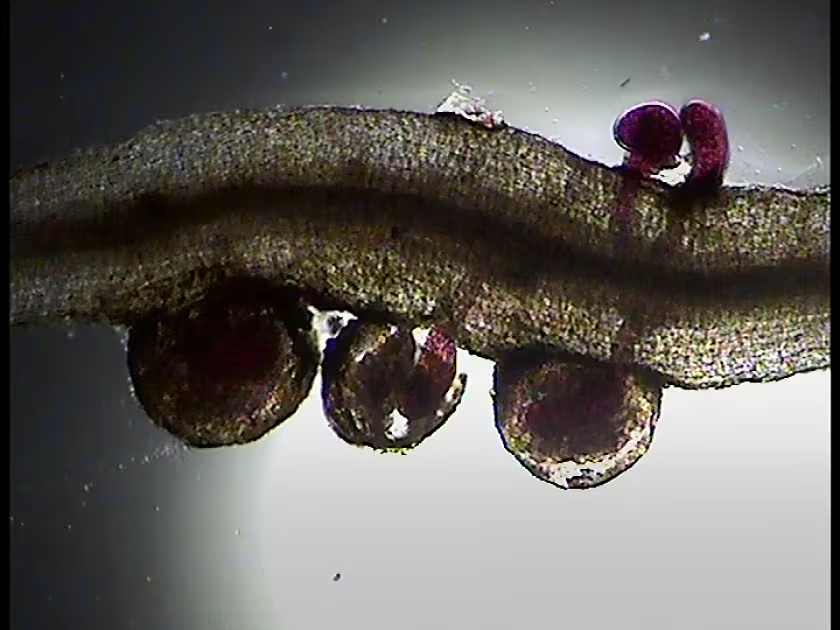
The name "reniform" refers to the kidney-shaped appearance of the mature female after it attaches itself to the root of a host plant, which is a key identifying feature.
These parasites are significant because they undergo complex developmental stages in the soil before penetrating the roots of susceptible plants like sunflowers, watermelons, and tobacco.
Unlike many other nematode species, Rotylenchulus species do not induce large, visible galls, making their presence difficult to identify during routine visual field assessments.
The biology of this pathogen is highly adaptive, allowing it to survive in various soil types and maintain high populations by utilizing multiple host plant species throughout the growing season.
Conditions for development
The development and activity of the reniform nematode are heavily influenced by environmental factors, with optimal soil temperatures for reproduction ranging between 25 and 30 degrees Celsius.
Soil moisture is a critical factor for the mobility of larvae; they require a film of water surrounding soil particles to successfully reach and infect the roots of a host plant.
The nematode favors well-drained, sandy, or light-textured soils where larvae can move more efficiently to colonize roots compared to denser, heavier clay soils.
Human activity is a primary driver of long-distance dissemination, as the nematode is easily transported in soil adhering to farm machinery, equipment, and footwear.
Furthermore, the movement of nursery stock or seed tubers containing even trace amounts of infested soil can introduce the parasite into previously uncontaminated fields.
Why it matters
The economic impact of the reniform nematode is substantial, as it leads to severe yield losses and degraded quality of marketable agricultural produce.
Crop plants like sunflowers, tobacco, and watermelons suffer from reduced yields because their impaired root systems cannot support optimal plant development or high-quality harvests.
Infected crops are also more susceptible to secondary soil-borne pathogens, as the entry points created by the nematodes provide easy access for fungi and bacteria to enter the plant tissues.
Increased inputs of water and chemical fertilizers often fail to mitigate the damage caused by the nematode, as the root system remains unable to uptake the nutrients effectively.
Continued infestation often forces growers to abandon the cultivation of susceptible crops, significantly disrupting long-term crop rotation plans and reducing land productivity.
Protection
Management of the reniform nematode relies primarily on a preventative approach, combining strict sanitation practices with effective cultural management strategies.
Crop rotation is essential for suppressing nematode populations; planting non-host or resistant crops effectively starves the nematodes, reducing the levels in the soil.
Sanitation of agricultural equipment, including thorough cleaning of soil from tractors and implements, is vital to prevent the spread of nematodes between different fields.
Chemical control via nematicides is an option, although its effectiveness is dependent on timely application based on precise density threshold data from soil analysis.
- Select resistant or tolerant crop varieties where available.
- Use certified disease-free planting materials.
- Practice deep tillage to disrupt the nematode's habitat.
- Manage weeds as they can serve as alternative hosts for the nematode.
- Monitor soil nematode levels before planting susceptible crops.
Pathogens and affected parts
Affects crops · 4
Discussion
No discussions yet — be the first.