
Beach sunflower
Helianthus debilis Nutt.
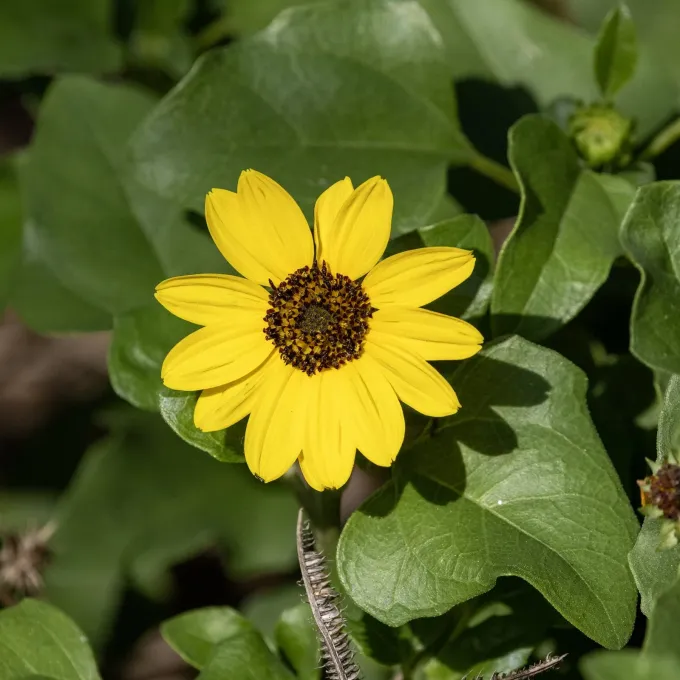
Description
Sowing dates
Beach sunflower is a heat-loving plant that should be sown outdoors only after all danger of frost has passed. Ideally, seeds are planted in late spring when the soil temperature consistently reaches at least 15 degrees Celsius.
For regions with shorter growing seasons, starting seeds indoors in biodegradable pots is a highly effective technique. This ensures a healthy root system before transplanting and allows for earlier flower production in the garden.
When sowing seeds directly into the soil, keep them at a depth of 2-3 centimeters. Consistent moisture during the germination period is critical to ensure that the seedlings emerge strongly without being hindered by soil crusting.
Proper spacing is essential for this spreading plant. Providing 30 to 40 centimeters of space between individuals prevents overcrowding, allows for better air circulation, and significantly reduces the risk of fungal diseases.
Choosing a location with full sunlight is mandatory for success. The beach sunflower thrives when exposed to direct sun for at least six to eight hours a day, which is necessary for compact growth and abundant flowering.
Growing requirements
This species excels in sandy, well-draining soils, which mimic its natural coastal habitat. It is highly adapted to nutrient-poor soil conditions and does not require heavy fertilization, making it a low-maintenance landscape choice.
Beach sunflower is remarkably drought-tolerant once established. While it can survive long periods without water, providing occasional irrigation during extreme heat waves will help maintain its vibrant green foliage and increase bloom frequency.
The soil pH should be neutral to slightly alkaline for optimal growth. If the soil is highly acidic, incorporating a small amount of lime can balance the chemistry and prevent nutrient lockout, which might otherwise cause leaf yellowing.
Protection from extreme wind is beneficial, though the plant is naturally adapted to coastal breezes. In garden settings, placing it where it can sprawl over rocks or retaining walls often provides a natural and aesthetically pleasing structure.
It prefers warm temperatures and is well-suited for hot summer climates. The plant remains vigorous as long as the temperature stays within the 20-30 degrees Celsius range, showing reduced growth only when temperatures drop significantly.
Main diseases and pests
Powdery mildew is a common fungal issue that affects foliage during humid conditions or in poorly ventilated areas. Maintaining adequate distance between plants and ensuring good airflow is the best cultural practice to prevent outbreaks.
Root rot is often a result of waterlogged soil. To prevent this, ensure that the planting site has excellent drainage and avoid mulching too close to the base of the stem, which can trap excess moisture and invite decay.
Aphids are frequent pests that congregate on new, tender growth and flower buds. Infestations can be managed by using gentle insecticidal soaps or by encouraging natural predators like ladybugs to inhabit the garden area.
Caterpillars of various moth species may feed on the leaves. While usually not fatal to an established plant, large populations can cause significant cosmetic damage, requiring manual removal or the application of organic pest control products.
Spider mites can become a problem during periods of intense heat and low humidity. Signs of infestation include fine webbing and stippling on the leaves, which can be mitigated by rinsing the foliage with a steady stream of water.