
Texas blueweed
Helianthus ciliaris DC.
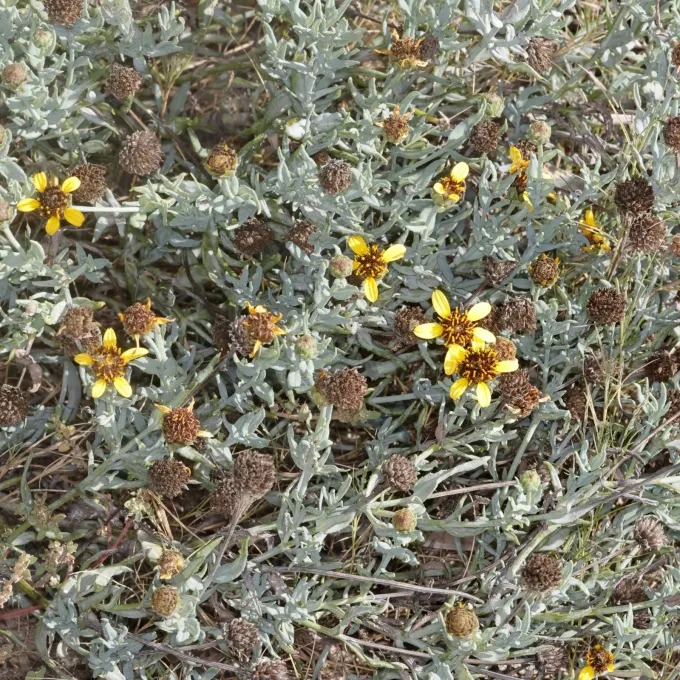
Description
Growing requirements
Texas blueweed (Helianthus ciliaris DC.) is a perennial herbaceous plant belonging to the Asteraceae family. Unlike common sunflowers, this species is classified as a highly invasive and persistent weed that poses a significant challenge to modern agriculture.
The plant is native to the southwestern United States and Mexico, where it adapted to arid and semi-arid conditions. Its ability to thrive in poor soils and withstand extreme drought has allowed it to naturalize in various regions globally, often becoming a noxious weed.
Botanically, it is characterized by an extensive underground root system featuring creeping rhizomes. These allow the plant to spread rapidly vegetatively. The leaves have distinctive ciliate (fringed) margins, and the stems typically reach 30 to 80 cm in height.
Regarding soil requirements, Texas blueweed is not particularly selective. It grows well in various textures, from sandy to heavy clay soils. It is notably tolerant of high salinity, which often gives it a competitive advantage over more sensitive crops in poorly managed lands.
In terms of economic value, the plant has no agricultural use. Its presence in fields causes significant yield losses by competing for essential resources. It is officially listed as a noxious weed in several jurisdictions, requiring mandatory control and eradication programs.
Main diseases and pests
As a weed, Helianthus ciliaris serves as an alternative host for various pests and diseases that affect commercial sunflowers. It helps maintain populations of pathogens such as various rust fungi and mosaic viruses throughout the off-season.
Typical insect pests that colonize this plant include aphids, moths, and various stem borers. Due to the weed's widespread and perennial nature, these insects can easily transition to cultivated sunflower fields, increasing the need for pesticide applications.
Management is notoriously difficult because the root system can survive deep in the soil profile. Mechanical tillage alone is often counterproductive, as cutting the rhizomes into smaller segments can stimulate new shoots, leading to an even denser infestation.
Chemical control involving systemic herbicides is the most effective approach. Applications are most successful when timed to coincide with the plant's translocation phase, ensuring the herbicide moves down into the root buds to achieve complete kill.
Strict phytosanitary measures are essential to prevent the spread of seeds and rhizome fragments. Ensuring that harvesting machinery and equipment are cleaned before moving between fields is a critical step in integrated weed management strategies.