

Pest · Coleoptera (beetles) · affects Common sunflower, Winter wheat, Winter rapeseed
Especially harmful
Sunflower stem weevil
Mordellistena parvula
Description
How to identify
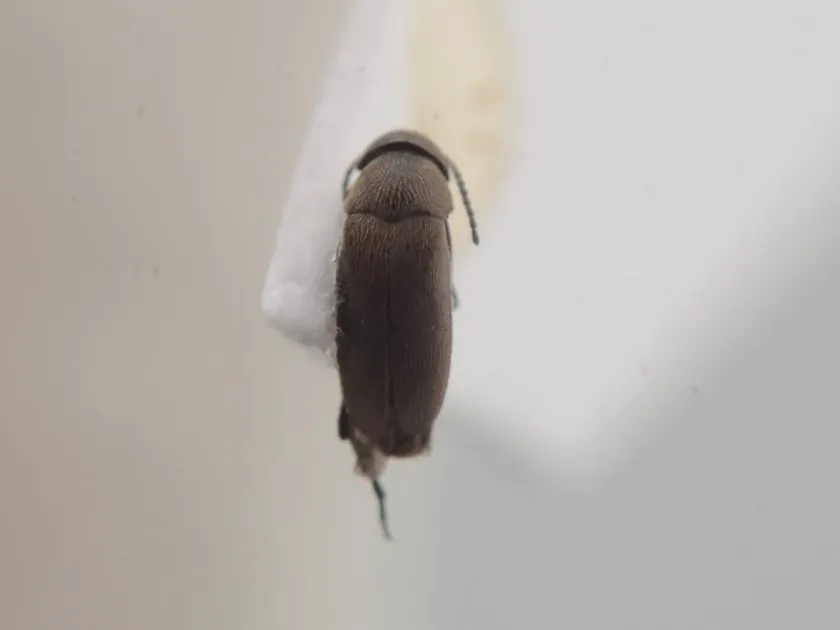
The sunflower stem weevil (Mordellistena parvula) is a small beetle belonging to the Mordellidae family, order Coleoptera. Adult beetles are typically 2.5 to 3.5 mm long, with a dark brown to black body covered in dense, fine grayish hairs.
The species is easily identified by its characteristic wedge-shaped body profile and the long, sharp apical spine on the abdomen, which is a diagnostic feature of the family. This structure gives the beetle its common name in several languages.
The larvae are small, white, and slightly curved, with well-developed chewing mouthparts. They are specifically adapted to living inside the hollow or pithy stems of host plants, where they feed throughout their larval development.
The eggs are minute and whitish, deposited by the female into the epidermis of young plant stems. This precise placement ensures the newly hatched larvae have immediate access to the nutrient-rich tissues inside the sunflower.
The species has developed significant winter survival tactics, typically overwintering as mature larvae inside the dry stalks of sunflowers or similar composite weeds, which provides protection from extreme temperatures.
What it damages
The primary host for this pest is the common sunflower (Helianthus annuus). The damage is caused by the larvae as they tunnel through the pith of the stem, creating extensive networks of galleries that compromise the plant's health.
This internal feeding disrupts the vascular system, impairing the movement of water and essential nutrients from the roots to the flower head. Consequently, this leads to significant reductions in seed weight and overall yield quality.
Besides sunflowers, the weevil can complete its life cycle in various Asteraceae weeds, including cocklebur and mugwort. These plants serve as essential reservoirs, allowing the pest to persist in the environment even when sunflower fields are absent.
Plants heavily infested by the larvae exhibit reduced mechanical strength, often breaking under heavy winds or during harvest. This lodging effect can lead to substantial economic losses and difficulty in mechanical harvesting operations.
In addition to structural damage, the tunnels created by the larvae provide entry points for secondary pathogens and fungal diseases. This dual impact of physical structural damage and increased disease susceptibility significantly lowers crop vitality.
When it appears
Adult beetles typically emerge in late spring or early summer, depending on regional temperature patterns. Their emergence is often synchronized with the early vegetative growth stages of the sunflower crop.
Adults feed on pollen and floral parts for a period before mating and oviposition. The larval feeding phase spans the height of the summer, as the insects grow and tunnel deeper into the developing sunflower stalks.
Pupation takes place within the stem galleries once the larval growth is complete. This usually happens in the second half of the summer, as the crop nears maturity and the larvae prepare for the upcoming dormant season.
The biological cycle is well-adjusted to the sunflower growth season. However, the pest's ability to utilize alternative host plants ensures that its population density remains high even in years of sub-optimal sunflower development.
Autumn marks the transition into the overwintering phase. The larvae remain inactive inside the stalks left in the field, waiting for the spring season to complete their metamorphosis and begin the cycle anew.
Signs of infestation
Visible signs of infestation begin with the appearance of tiny entry holes on the external surface of the sunflower stems. These openings are often accompanied by small piles of frass, which are the excrement left behind by the larvae.
When a stem is cut open, one can observe distinct internal tunnels filled with granular, brown frass. In severe cases, the stem interior may look completely hollowed out or rotten, indicating heavy larval pressure.
Plants suffering from high infestation levels often appear stunted, with yellowing leaves and prematurely wilting flower heads. The overall development of the plant lags behind healthy counterparts in the same field.
Lodging or stems snapping mid-way is a classic field symptom of infestation. If a field shows broken stalks after a moderate wind event, it is highly likely that stem weevils have undermined the structural integrity of the crop.
Checking the remnants of the harvest is the best way to determine the pest's prevalence. If the stalks are riddled with tunnels, it is a clear indicator that the population density is high and must be managed in the following season.
Control measures
The most effective strategy for managing the sunflower stem weevil is a robust crop rotation program. Planting sunflowers on the same field no more than once every five years significantly disrupts the larval survival cycle.
Deep autumn plowing is crucial for pest management. Incorporating crop residues deep into the soil disrupts the life cycle of overwintering larvae and prevents the adults from emerging successfully in the following spring.
Controlling weeds of the Asteraceae family is essential to reduce the pest's reservoir. Keeping field edges and boundaries free of plants like cocklebur helps prevent the weevil from migrating into the sunflower crop.
Chemical control can be implemented by applying insecticides during the peak activity of adult beetles. Proper timing is vital to ensure that the beetles are killed before they can lay eggs in the stems of the young sunflowers.
- Selection of sunflower hybrids with thicker, more robust stems.
- Timely harvesting to prevent prolonged exposure of the crop to pest pressure.
- Mechanical shredding of post-harvest stalks to destroy larval habitats.
- Monitoring adult flight activity to determine the precise window for intervention.
In brief
1
Damages crops
Content graph
Damages crops · 1
Reference
Connections · Sunflower stem weevil
Most often together:
Marketplace
Products · 15


Biology
Taxonomy
- Latin name
- Mordellistena parvula
- Order
- Coleoptera (beetles)
- Family
- Mordellidae
- EPPO code
- MOREPA
Community
Discussion
No discussions yet — be the first.