
Description
Symptoms
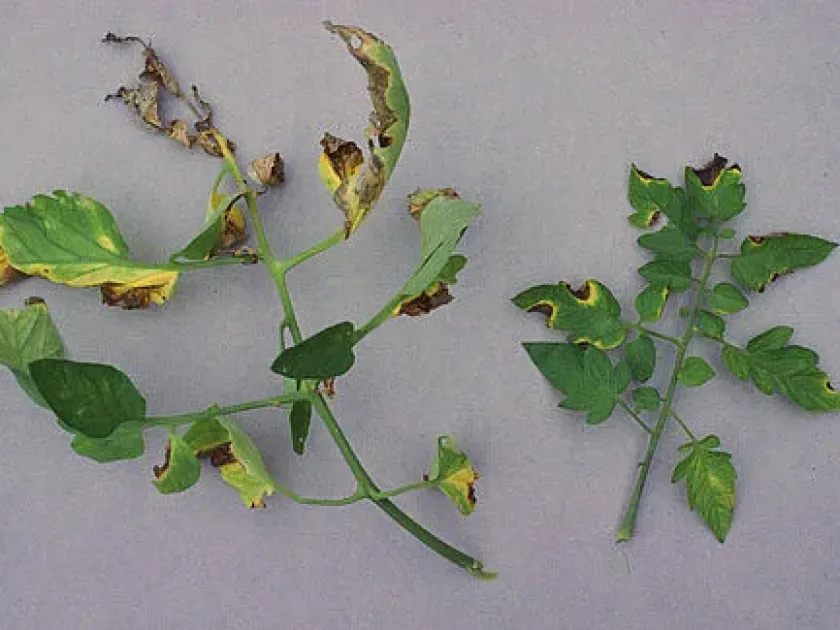
Symptoms typically begin with marginal necrosis and wilting of the lower leaves. The leaves turn yellow at the edges, curl, and eventually wither, while the petioles may remain green for some time.
A hallmark sign of the infection on fruit is the 'bird’s eye' spot: a small, white, circular spot with a dark center, which significantly reduces the market value of the harvest.
When an infected stem is cut, one can observe a distinct browning or reddish-brown discoloration of the vascular tissue, which is a reliable diagnostic indicator.
In advanced stages, the pith of the stem may become hollowed out and necrotic, leading to the collapse of the entire structure and rapid death of the tomato plant.
Open cankers or lesions may develop on stems and petioles, which serve as sites for secondary infections and bacterial oozing.
Pathogen
The causative agent of bacterial canker is the gram-positive bacterium Clavibacter michiganensis. It is a systemic pathogen that primarily colonizes the plant's vascular tissues, specifically the xylem vessels.
The host range of this pathogen is extensive, including crops like peppers, soybeans, peanuts, papayas, watermelons, and various ornamental plants such as dahlias, carnations, and strawberries.
The bacteria survive in contaminated seeds, plant debris in the soil, greenhouse structures, and contaminated tools used for pruning and cultivation.
Transmission occurs through contaminated irrigation water, rain splash, and mechanical contact during agricultural operations where bacteria move from infected to healthy plants through wounds.
Once inside the host, the bacteria multiply rapidly and produce extracellular polysaccharides that clog the water-conducting tissues, leading to systemic wilting.
Conditions for development
The disease thrives in warm and humid conditions, with optimal development occurring at temperatures between +25°C and +28°C.
High humidity within greenhouse environments facilitates the movement of bacteria and promotes the development of the pathogen on leaf surfaces and wounds.
Over-irrigation and poor drainage contribute to the spread of bacteria through the soil and into the root systems of healthy plants.
Mechanical injury caused by handling, pruning, or training plants provides ideal entry points for the pathogen to establish a systemic infection.
Crowded planting schemes reduce airflow and increase the frequency of leaf-to-leaf contact, which accelerates the spread of Clavibacter michiganensis across a field.
Why it matters
Bacterial canker is one of the most destructive diseases in tomato production, capable of causing total crop failure under favorable conditions for the pathogen.
The disease causes systemic wilting and stunting, preventing the plant from producing marketable fruit and reducing overall agricultural productivity.
Fruit symptoms, such as bird’s eye spots, render the harvest unsellable, resulting in direct financial losses for the grower.
The persistence of the bacteria in soil and structures necessitates long-term management strategies and expensive sanitation protocols.
Quarantine regulations associated with this pathogen can disrupt local and international trade of tomato seeds and seedlings.
Protection
The primary control measure is the use of disease-free, certified seeds and seedlings produced under strict phytosanitary conditions.
Implementing a rigorous crop rotation cycle—avoiding solanaceous crops for at least 3 to 4 years—is essential to reduce the inoculum density in the soil.
Strict sanitation protocols, including the thorough disinfection of tools, pots, and greenhouse surfaces with appropriate sanitizers, are vital to prevent cross-contamination.
Early identification and rogueing of infected plants, including the removal of the root system, help to minimize the spread of the disease to adjacent plants.
In some regions, integrated pest management programs involving copper-based sprays may be used to suppress the bacterial populations, though their effectiveness varies based on conditions.
Pathogens and affected parts
Affects crops · 16
Discussion
No discussions yet — be the first.