
Helianthus x laetiflorus
Helianthus x laetiflorus Pers.
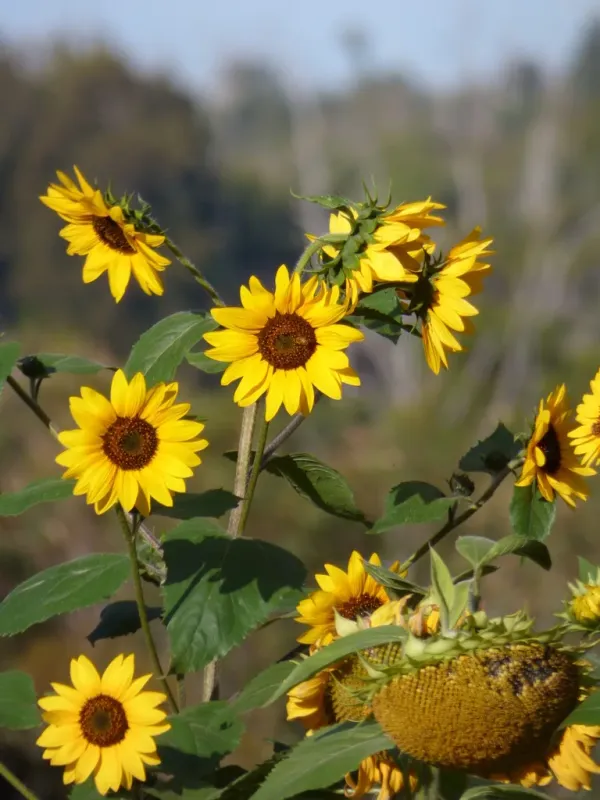
Description
Sowing dates
Helianthus x laetiflorus, commonly known as the cheerful sunflower or prairie sunflower, is a perennial herbaceous plant belonging to the Asteraceae family. In agricultural practices, planting is primarily performed in the spring once the soil temperature reaches 8–10 degrees Celsius.
Since this crop is a perennial that reproduces vegetatively via rhizomes, the optimal time for establishing plantations is early spring or early autumn, allowing the plants to root well before extreme weather conditions.
When using seeds, which are relatively rare, planting is done in wide rows. The seeding depth should be between 3 and 5 centimeters, depending on the soil texture and moisture levels.
A crucial factor during sowing is ensuring sufficient spacing between rows, as the bushes of this sunflower species spread horizontally due to their vigorous rhizome system.
For vegetative propagation, segments of rhizomes are planted in furrows at a depth of 10–12 centimeters with an interval of about 50–70 centimeters between plants to allow for healthy growth.
Growing requirements
This species prefers open, well-lit areas, as shading often leads to lodging of the stems and a significant decrease in the overall productivity of the green mass.
The crop has moderate soil requirements but achieves the best results in fertile, loamy, or chernozem soils with a neutral or slightly acidic pH level.
The plant exhibits high frost resistance and drought tolerance, attributed to its North American origins and a deep, extensive root system capable of accessing moisture from lower soil profiles.
Regular irrigation is required during prolonged summer droughts to maintain normal development, especially during the active growth phase of the green mass.
The crop is highly responsive to organic fertilizers, such as manure or compost, which promote more intense development of the aerial part and the storage of nutrients in the rhizomes.
Yield
The economic use of Helianthus x laetiflorus is primarily focused on the production of green mass, which serves as a valuable forage resource for livestock.
Green mass yields can reach significant levels with proper maintenance and periodic fertilization, providing stable harvests for many years without the need for annual replanting.
Under intensive cultivation conditions, the potential biomass of this crop often exceeds that of many annual sunflower species used for silage purposes.
Beyond its forage value, the plant is appreciated as an ornamental crop and a late-season honey plant, indirectly increasing the profitability of the farm by attracting beneficial pollinators.
Yield stability depends on the frequency of rhizome thinning; every 5–7 years, the plantation requires thinning to prevent degradation and maintain high productivity per bush.
Main diseases and pests
Helianthus x laetiflorus is characterized by high resistance to most common diseases affecting annual sunflowers, including downy mildew and rust, due to its hybrid nature.
However, under conditions of dense planting and high air humidity, powdery mildew may develop, appearing as a white coating on the leaves toward the end of the growing season.
Among pests, aphids and larvae of various weevil species pose the greatest threat, as they may damage young leaves and growing points during the early spring period.
During the flowering stage, flower heads can be infested by the sunflower moth, although this is usually not critical for this hybrid given its limited seed set.
To control pests, timely weeding of row spaces and maintaining an optimal planting density are recommended to ensure proper air circulation through the bushes.
Harvesting
The harvest of green mass for Helianthus x laetiflorus is conducted during the early flowering phase when the nutrient content in the stems and leaves is at its peak.
Mowing should be performed at a height of 10–15 centimeters from the ground to stimulate the regrowth of new shoots from the rhizomes for subsequent harvests.
For silage production, the mown mass is wilted, chopped, and stored in silos, where it is thoroughly compacted to remove excess air and ensure high-quality fermentation.
Autumn harvest of the remaining aerial parts is performed after the first frosts, when nutrients have been fully translocated from the stems into the underground rhizomes.
Timely harvest operations allow for the efficient utilization of the perennial's potential, providing livestock with high-quality vitamin-rich feed during transitional seasonal periods.