
Description
Symptoms
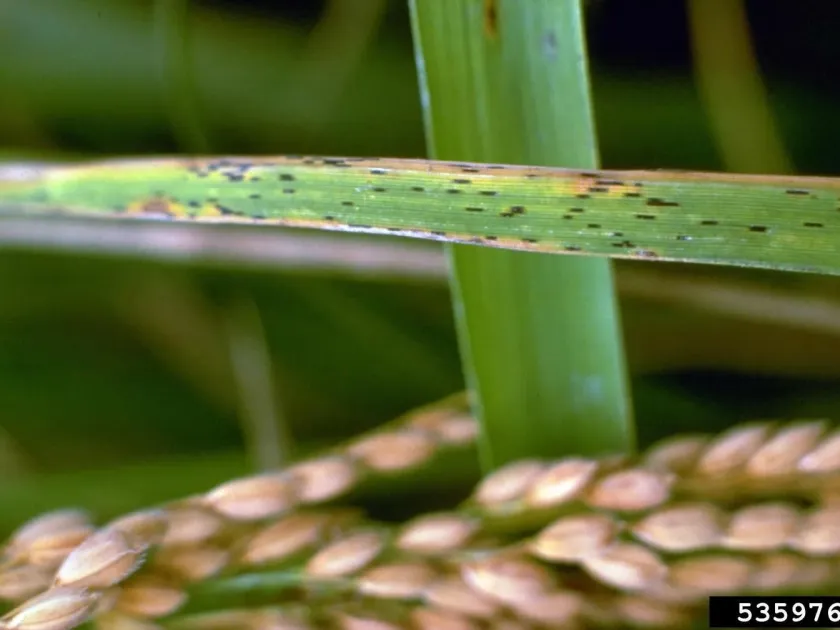
The initial symptoms appear as small, narrow, or rectangular spots on the leaf surface, typically restricted by leaf veins.
The lesions often start as pale yellow patches before turning dark brown or black as the fungus matures inside the tissue.
Teliospore masses rupture the leaf epidermis, forming distinctive pustules that give the leaf a characteristic speckled or blighted appearance.
As the disease progresses, these spots may coalesce, leading to severe leaf chlorosis and eventual necrosis of the plant tissue.
Heavy infections can result in significant leaf drop, particularly in the lower canopy where environmental conditions remain humid.
Pathogen
Leaf smut is caused by the fungus Eballistra oryzae, which is classified as a basidiomycete and is known for producing spore-filled pustules on leaves.
The fungus is primarily a pathogen of graminaceous plants, though it has been documented on various hosts including sunflowers and Jerusalem artichokes.
The pathogen completes its life cycle by producing teliospores that can survive in the soil and on crop debris for extended periods of time.
Infection cycles are largely dependent on the dispersal of spores via wind currents and rain splashes during the growing season.
Eballistra oryzae exhibits high adaptability, allowing it to persist in various agro-ecological conditions throughout the year.
Conditions for development
High relative humidity is the most critical environmental factor required for the successful infection and colonization by this fungus.
Optimal temperatures for the development of leaf smut generally fall within the mild to warm range typical of the active growth period.
Dense planting patterns that restrict airflow create a favorable microclimate, significantly increasing the risk of rapid disease spread.
Frequent rainfall or persistent dew periods facilitate the transport of spores from infected leaves to healthy parts of the crop canopy.
Poor soil management and inadequate drainage also contribute to conditions where the pathogen can thrive and multiply unchecked.
Why it matters
The primary harm caused by leaf smut is the reduction of the photosynthetic capacity of the plant due to leaf area damage.
Lowered photosynthetic rates result in stunted vegetative growth and reduced potential for grain or biomass production.
The disease weakens the host plant, making it more susceptible to other biotic stresses and opportunistic secondary infections.
In commercial agriculture, the disease can lead to substantial economic losses by reducing the total harvest weight and quality.
Prolonged infection negatively affects the overall vigor of the crop, limiting its ability to withstand further environmental stress.
Protection
Crop rotation is the most effective cultural practice to reduce the inoculum level in the soil and disrupt the disease cycle.
Deep plowing and efficient management of crop residues are essential to bury infected materials and accelerate their decomposition.
Selecting resistant cultivars or hybrids remains the primary strategy for managing the disease without reliance on chemical intervention.
Maintaining adequate plant spacing and row orientation improves canopy ventilation, thereby reducing the localized humidity levels.
- Using treated and high-quality seeds for planting.
- Monitoring fields regularly for the onset of early disease symptoms.
- Applying fungicides based on expert recommendations if thresholds are exceeded.
- Controlling alternative weed hosts that may harbor the fungus between seasons.
Pathogens and affected parts
Affects crops · 3
Discussion
No discussions yet — be the first.