

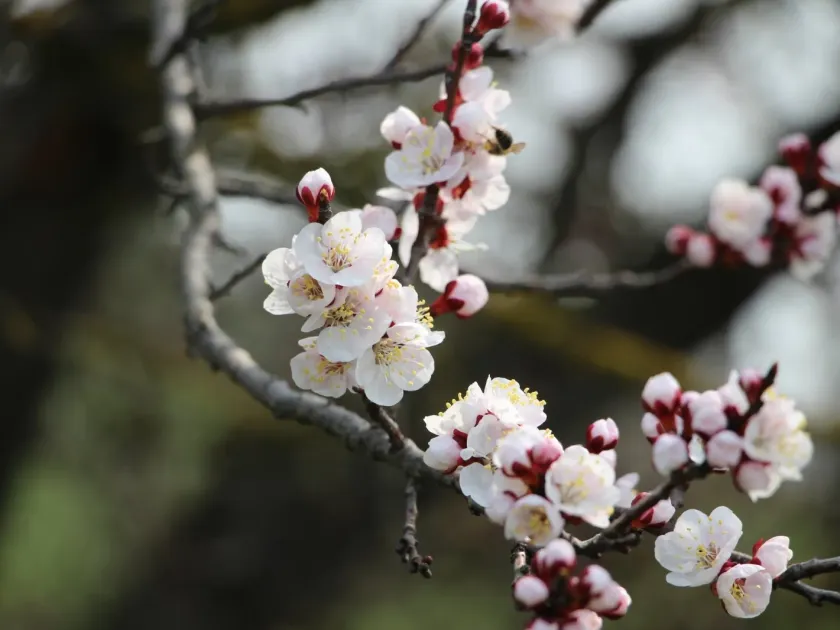
Description
Growing requirements
The apricot (Prunus armeniaca L.) is a member of the Rosaceae family. It is a temperate to subtropical tree that thrives in regions with warm, long summers and clear weather. The tree requires full sun to promote flower bud development and high fruit quality.
The crop prefers deep, fertile, and well-drained soils. Apricots are highly intolerant of waterlogged soil conditions, which can lead to root rot and tree decline. On heavy clay soils, it is essential to improve drainage before planting to ensure root health.
An ideal pH level for apricots is between 6.5 and 7.5. While the tree is moderately drought-tolerant, consistent soil moisture is required during the rapid fruit growth phase in late spring and early summer to prevent fruit drop and small size.
Good air circulation is vital for apricot trees, as it helps prevent the establishment of fungal diseases. Planting density should be managed to ensure that light reaches all parts of the canopy, encouraging uniform fruit ripening.
Originating from Central Asia and the Caucasus, the tree has adapted to various climates. However, its early blooming habit makes it vulnerable to spring frosts, which often limit commercial production in regions with cold and unstable spring weather.
Main diseases and pests
Apricots are susceptible to various fungal pathogens. Monilinia (brown rot) is particularly devastating, causing blossom blight and fruit decay. Verticillium wilt is another serious threat that causes sudden branch dieback and overall tree collapse.
Other significant diseases include Alternaria leaf spot, Sclerotinia, and gray mold, which thrive in humid conditions. Viral diseases like the Tomato mosaic virus can also affect orchard health, reducing vigor and productivity over time.
Pests can significantly damage the crop, with the spider mite being a major concern. Mites feed on the undersides of leaves, causing defoliation and weakening the tree. Root-knot nematodes can also be a hidden problem, stunting tree growth in infested soils.
Integrated Pest Management (IPM) is crucial, involving the use of selective fungicides and regular monitoring for early signs of disease. Sanitation, such as removing mummified fruits and dead branches, is a primary defense against spreading pathogens.
Penicillium rot can occur post-harvest if fruits are bruised during handling. Careful sorting and maintaining optimal storage temperatures are essential to minimize losses from both field-borne pathogens and post-harvest decay.
Harvesting
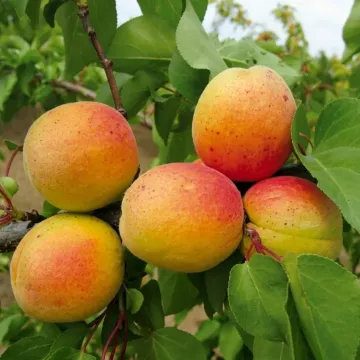
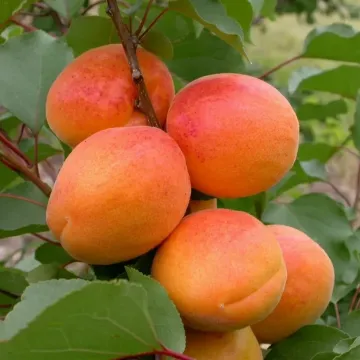
The harvest timing for apricots depends on the intended use. For commercial shipping, fruits are harvested when they reach full size and show appropriate color but remain firm to the touch to prevent bruising during transport.
For fresh market sales or immediate processing, fruits are picked at full maturity when they are soft and have reached peak sugar content. Harvest typically occurs over several days as the fruits do not ripen simultaneously on the tree.
Picking should take place during dry weather to reduce the risk of rot development. Gentle handling is mandatory, as the skin is delicate and prone to physical damage which facilitates infection by fungi like gray mold or Penicillium.
Harvested fruit should be pre-cooled immediately to remove field heat, which helps preserve quality and extends shelf life. Cold storage at temperatures near 0°C with high humidity is the industry standard for short-term preservation.
Apricots are widely used in the food industry for drying, canning, and jam production. They are nutritionally rich, containing high levels of beta-carotene, vitamins, and minerals, making them a premium commodity in global fruit markets.
In brief
30
Crop diseases
1
Crop pests
Content graph
Crop diseases · 30
Alternaria leaf spotAmerican dagger nematodeArmillaria root rotAspergillus rotBlue moldCeratocystis cankerCladosporiosisCommon scabCrown gallCytospora cankerEutypa diebackGray moldGummosis of apricotLate blightLegginess and sterility of apricotMonilia blightPeach mosaicPhoradendron flavescensPlum poxPowdery mildewPrune dwarfRing nematodeRoot-knot nematodeSclerotinia rotShothole diseaseSilver leafSoil SicknessTomato mosaic virusVerticillium wiltWhite leaf spot of strawberry
Content graph
Crop pests · 1
Content graph
Connections · Apricot
Most often together:
Breeders
1 contact
Marketplace
Products · 106
All 106
Apricot 56
Fungicides 22
Insecticides, Acaricides 8
Herbicides, Desiccants 7
Plant Growth Regulators 7
Fertilizers 4
Biological Products 2







Atonik Plus
«Аріста ЛайфСайенс С.А.С.» , Франція
Plant Growth Regulators
0
0
·
89
2 offers
92.16 €per 1 l
Buy