
Description
Symptoms
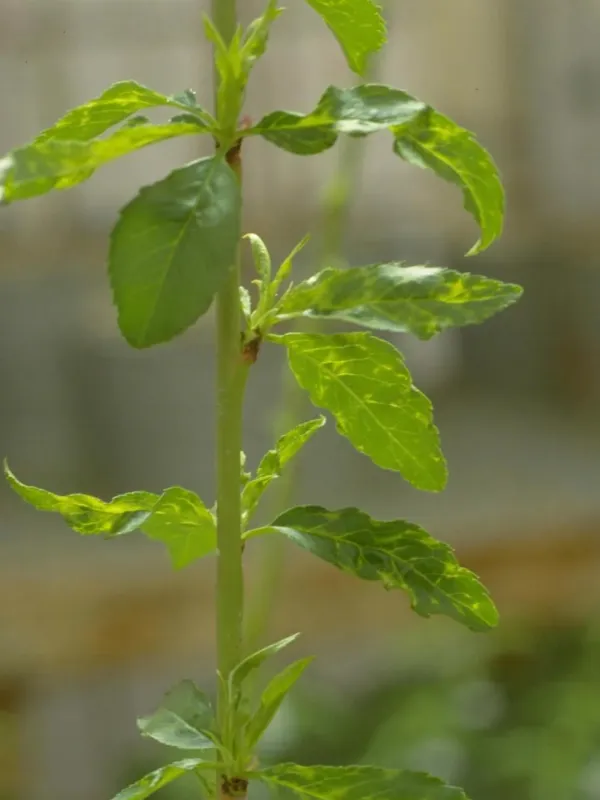
Early symptoms appear in spring as the leaves emerge. They are characterized by chlorotic spots, mottled patterns, or distinct yellow lines on the leaf blades.
Leaves on infected branches often display significant deformation. They may appear crinkled, stunted, or exhibit irregular, asymmetric growth patterns.
A hallmark symptom is the shortening of internodes, which creates a bunching or rosetting effect at the tips of the shoots, clearly distinguishing diseased trees.
Fruits produced by infected trees are often small, bumpy, and misshapen. The quality and marketability of the fruit are severely compromised due to these visual defects.
- Mottled or mosaic-like chlorotic leaf spots
- Deformed and wrinkled leaf blades
- Shoot rosetting due to shortened internodes
- Small, irregular, and bumpy fruit development
Pathogen
The causal agent of this disease is the Peach mosaic virus (PMV). It is a systemic viral disease that primarily affects stone fruit species belonging to the Prunus genus.
The virus is considered a non-persistent virus. In commercial orchards, it is predominantly transmitted through grafting using infected scion wood or rootstocks.
Besides peaches, the virus infects other important crops such as apricots (Prunus armeniaca) and almonds. Many wild Prunus species can also act as reservoirs for the pathogen.
The natural vectors of the virus are eriophyid mites. These microscopic pests facilitate the spread of the virus between healthy and infected trees during the growing season.
Once inside the tree, the virus travels through the phloem, systemically infecting all parts of the plant and causing long-term physiological disruption.
Conditions for development
The development and expression of symptoms are highly dependent on spring temperatures. Moderate temperatures during the early growing season usually lead to the most visible leaf symptoms.
The activity of eriophyid mites is crucial for the spread of the disease. Warm, dry weather patterns often favor the reproduction and movement of these vectors.
Proximity to infected wild host trees increases the risk of transmission. The wind-borne movement of mites allows the virus to infiltrate new orchard blocks quickly.
Poor sanitation practices during tree pruning, such as using unsterilized equipment, significantly contribute to the rapid spread of the virus within an orchard.
Planting material sourced from infected nurseries is the most common factor for establishing new outbreaks in healthy, previously uninfected agricultural areas.
Why it matters
The economic impact of Peach mosaic is profound, with yield reductions ranging from 30% to 70% in heavily infected orchards. The fruit often fails to meet quality standards.
The virus weakens the tree's overall vigor and immune system. Infected trees become more susceptible to cold damage and secondary infections by fungi or bacteria.
As the disease is systemic and lacks a cure, infected trees will continue to deteriorate over time, eventually becoming unproductive and a liability to the orchard.
The necessity of removing entire blocks of trees to contain the virus causes significant financial hardship for growers and disrupts long-term production cycles.
Without strict management, the disease can spread rapidly, leading to the eventual loss of entire orchard blocks and requiring extensive replanting efforts.
Protection
The primary control measure is the use of certified virus-free planting stock. Rigorous testing of scion wood and rootstocks is essential before propagation.
Regular orchard inspections are vital. Any tree showing signs of the mosaic must be immediately rogued, removed with its root system, and burned or disposed of properly.
Management of the eriophyid mite population is necessary to break the transmission cycle. Strategic application of acaricides can help reduce the number of vectors.
Orchard hygiene is mandatory. All pruning tools must be disinfected between trees using appropriate chemical sanitizers to prevent mechanical virus transmission.
Establishing isolation zones between new orchards and older, potentially infected plantings is recommended to prevent the introduction of the virus into new areas.
Pathogens and affected parts
Affects crops · 2
Discussion
No discussions yet — be the first.