

White leaf spot of strawberry
Strawberry spp.
Description
Symptoms
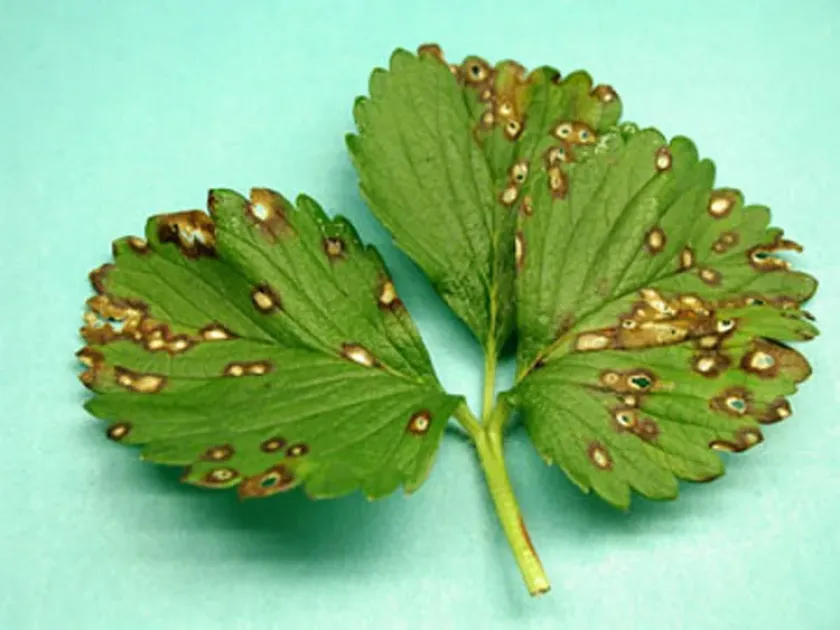
Symptoms initially appear as small, dark purple or reddish spots scattered across the upper surface of the leaves.
As the infection progresses, the centers of these spots turn white or light grey, surrounded by a distinct dark purple halo.
In cases of severe infestation, the spots may coalesce, leading to large necrotic areas that eventually cause the leaves to die.
The infection can also spread to the leaf stalks, flower stalks, and berry stems, potentially causing wilting of the blossoms.
Under humid conditions, a sparse, white, cottony growth can be observed on the underside of the leaves, indicating active spore production.
Pathogen
The disease is caused by the fungus Ramularia tulasnei, an imperfect fungus that targets various strawberry species.
This pathogen persists in the environment by forming sclerotia and mycelium within infected plant tissues throughout the dormant season.
The fungus produces conidia, which are the primary spores responsible for spreading the disease from infected leaves to healthy ones.
While primarily affecting strawberries, similar species of the fungus are known to parasitize a range of hosts including roses and some fruit trees.
Survival of the pathogen is highly dependent on the presence of decaying plant debris left on the field after the harvest is complete.
Conditions for development
High humidity and temperatures between 15°C and 25°C provide the most favorable environment for the pathogen to thrive.
Poor air circulation within the strawberry canopy, often caused by overly dense planting, significantly increases disease pressure.
Extended periods of leaf wetness, such as prolonged rain or heavy morning dew, facilitate the germination of fungal spores.
Inadequate field sanitation, such as leaving old, infected foliage in the soil, ensures the pathogen survives to infect new growth.
Water splashing during overhead irrigation can easily spread the spores from the soil or lower leaves to the healthy foliage above.
Why it matters
White leaf spot damages the plant by reducing the functional leaf area, which directly impairs the plant's photosynthetic capacity.
Reduced photosynthesis leads to stunted growth, weakened root systems, and a significant decrease in overall yield.
The berries produced by heavily infected plants are often smaller and lack the desired flavor quality and marketability.
Plants affected by the disease are less resilient to harsh winter conditions and are more prone to secondary infections from other pathogens.
In extreme cases, the cumulative damage can force growers to discard the entire plantation earlier than planned to prevent spread.
Protection
The most effective strategy for managing white leaf spot is a combination of cultural practices and timely chemical intervention.
Start with certified, disease-free planting material to prevent the introduction of the fungus into your garden.
Promote good airflow by maintaining proper spacing between plants and keeping the patch free of excessive weeds.
- Apply preventative fungicides based on copper or other effective systemic actives before bloom.
- Practice strict sanitation by removing and destroying old, infected leaves in the fall or early spring.
- Use drip irrigation to keep the foliage dry and reduce spore distribution via water splashes.
Rotation of strawberry beds is highly recommended; avoid planting strawberries in the same location more often than every 4 to 5 years.
In brief
6
Affects crops
Biology
Pathogens and affected parts
Pathogens
Strawberry latent· fungus
Strawberry chlorotic· fungus
Strawberry crinkle· fungus
Strawberry mild· fungus
Strawberry mottle· fungus
Strawberry pseudo· fungus
Strawberry vein· fungus
Strawberry green· fungus
Strawberry lethal· fungus
Strawberry· fungus
Strawberry yellows· fungus
Strawberry pallidosis· fungus
Affected plant parts
stemwhole plantleaf
Content graph
Affects crops · 6
Content graph
Connections · White leaf spot of strawberry
Most often together:
Marketplace
Products · 1
Community
Discussion
No discussions yet — be the first.