
American dagger nematode
Xiphinema americanum
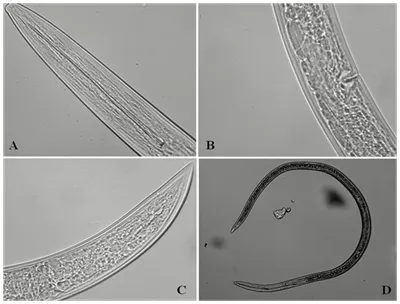
Description
Symptoms
Symptoms of infestation often manifest as general plant weakness. Affected crops exhibit stunted growth, shortened internodes, and a lack of vigor that mimics nutrient deficiency despite adequate fertilization.
Root systems show clear signs of damage, including necrosis, swelling of root tips, and the formation of small galls. These physical injuries impede the plant's ability to take up water and essential nutrients effectively.
Foliar symptoms associated with virus transmission include chlorosis, mosaic patterns, leaf curling, and overall deformation. These symptoms are typically visible during the active growing season as the viral infection becomes systemic.
In fields or orchards, the infestation usually appears in patches. Plants in these affected areas display degraded health and may die over time, leading to gaps in crop stands that progressively enlarge.
Accurate identification requires laboratory analysis. Soil and root samples must be collected and processed using nematode extraction techniques to observe and confirm the presence of Xiphinema americanum under a microscope.
Pathogen
The American dagger nematode, Xiphinema americanum, is a microscopic soil-dwelling roundworm belonging to the family Longidoridae. As an ectoparasite, it feeds on plant roots using its long, specialized stylet to pierce root cells.
A significant aspect of its biology is its role as a vector for various nepoviruses, including tobacco ringspot virus and tomato ringspot virus. The transmission of these viruses often causes more severe damage to host plants than the nematode's feeding itself.
This pathogen is classified as a root-parasitic nematode that facilitates secondary viral infections. By transmitting these viruses, the nematode poses a severe threat to commercial agriculture, particularly in orchards and berry farms.
The organism is highly adaptable and can survive in a variety of soil types and environmental conditions. It spreads within the soil profile and can persist for long periods in the absence of primary hosts.
Its host range is very broad, encompassing numerous essential agricultural and horticultural crops, such as:
- Strawberries
- Peanuts
- Watermelons
- Cherries (both sour and sweet)
- Apricots
- Pears
- London plane trees
Conditions for development
The American dagger nematode thrives in moist, well-aerated soils. It shows a preference for sandy and sandy-loam soils, which allow for easier movement through the soil pores and better access to plant roots.
Soil temperature significantly influences its life cycle and activity levels. Warmer soil temperatures during the growing season promote higher reproductive rates and increased density of the nematode population.
Dissemination occurs mainly through the movement of infested soil attached to farm machinery, cultivation tools, and footwear. The distribution of nursery stock with soil remnants is another primary pathway for the nematode's spread.
Irrigation practices, especially drip irrigation, contribute to localized moisture that favors the survival and activity of these nematodes throughout the year.
Weeds serve as critical reservoirs for both the nematodes and the viruses they carry. They allow the population to persist in a field even after the main crop is harvested or during fallow periods.
Why it matters
Direct damage occurs through the continuous extraction of nutrients from the root system, which drains the plant's energy and reduces overall crop yields significantly. The plant becomes more susceptible to other environmental stresses.
The indirect impact, stemming from viral diseases, is the most devastating. Once a plant is infected with a nematode-borne virus, its productivity declines permanently, often leading to the premature removal of the entire orchard or plantation.
Fruit quality is severely impacted; berries and tree fruits become smaller, discolored, and less desirable for the market. This leads to substantial financial losses for commercial growers.
Root damage lowers the plant's resistance to cold and drought. This makes it impossible for the crop to reach its genetic potential or survive adverse weather conditions, rendering previous agricultural investments useless.
The presence of Xiphinema americanum leads to strict quarantine regulations. This limits the ability of farmers to trade or export their plant material, creating significant economic barriers.
Protection
The most important control strategy is the use of certified, virus-tested, and nematode-free plant material. Preventive measures at the nursery stage are essential for orchard longevity.
Pre-plant soil fumigation with nematicides is a common and effective practice for reducing nematode populations to manageable levels before establishing new perennial crops.
Implementing crop rotation with cover crops, such as mustard or oilseed radish, can provide a biological suppression effect on nematode populations, reducing their density in the soil.
Strict sanitation protocols for farm equipment are necessary to prevent the accidental transfer of contaminated soil from infested areas to clean fields.
If an infestation is confirmed, rapid identification of the affected patch is vital. Eradication efforts, including the removal of infected plants and their root systems, help limit the spread of the pathogen.
Pathogens and affected parts
Affects crops · 10
Discussion
No discussions yet — be the first.