


SKU #4090
·
392 views
Apricot Hornobakh
Apricot
Purpose
Drying
Ripening Period
10-15
Flavor
Scented
Pit
Edible Kernel (Bitter/Sweet)
Your mark
1 vote
100% positive ratings
Store offers · 6 from 4 stores
6 offers in 4 stores — from 5.48 € per seedling.
Available at: Цветы для дома · Много Растений · Сады Семирамиды · Agromir
Prices are collected automatically from store websites and converted at the current exchange rate. Check the price and availability on the store website before ordering.
Description
Strictly indigenous variety of folk selection from Dagestan (Gergibily). Originator — Dagestan Fruit Cultivar Experimental Station (DSOFC). Regionally adapted in the mountain-valley subzone in 1947…
Trees are vigorous, with round-spherical, densely foliated, drooping crowns.
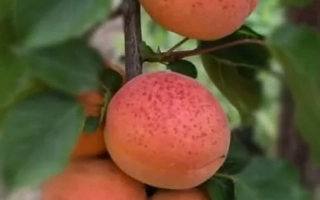
Fruits are small, 20-25 g, round-heart-shaped, main color orange, covered with a dark-red, blurred blush. Skin is thin, shiny, with barely noticeable fuzz. Flesh is orange, fairly firm, semi-fibrous, with strong aroma and pleasant taste. Contains 18% dry matter, 12.19% sugars, 0.72% acids, 31.09 mg/100g ascorbic acid. Stone is small, constituting 4.13% of fruit mass. Kernel is sweet.
Suitable for fresh consumption (4.8 points), compote production (4.6 points), dried fruit production (4.8 points), yield 22%. Fruits store for 6-8 days and are transportable.
Early fruiting variety, begins bearing fruit from 3-4 years. Ripening period: July 10-15. Yield on native soil is regular, up to 200 centners/ha. In highland Dagestan, winter hardiness is good. In mountain valleys, resistant to diseases.
Advantages: on native soil, indispensable for dried fruit production, high ascorbic acid content.
Disadvantages: strictly indigenous variety, small fruits.
Video · 1 video
Suggest a video →Crop & resistance
Crop
Specifications
| Purpose | |
|---|---|
| Ripening Period | 10-15 |
| Flavor | |
| Pit | |
| Fruit Color | |
| Yield | 200 |
| Disease Resistance | |
| Transportability | |
| Zoning | |
| Catalog | Catalog → Apricot |
No reviews yet. Be the first to share your experience.
Alternatives
Apricot saplings · similar varieties





See also
Often considered together with this variety



Recently viewed
Products you’ve viewed on this site
Reviews