
Phoradendron flavescens
Phoradendron flavescens
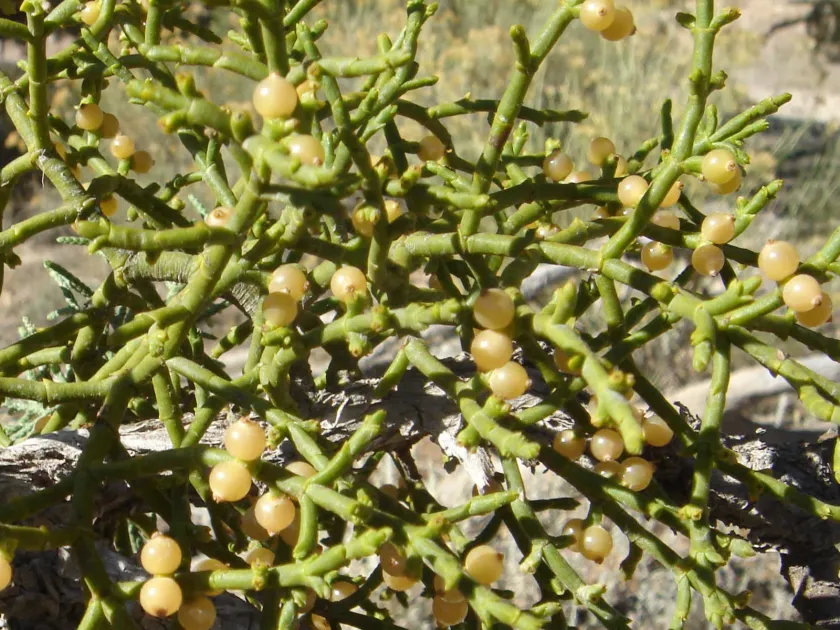
Description
Symptoms
The most visible sign of infestation is the presence of dense, bright green clumps of foliage in the tree canopy, which remain visible even in winter.
Infection sites often develop woody swellings or abnormal bark growth because the host tree reacts to the intrusive haustoria by creating excessive tissue.
The parasite is known to affect a wide range of woody plants including:
- Black Walnut
- Sweetgum (Liquidambar)
- Sycamore
- Apricot
- Almond
- Cacao
- Elm
As the infestation progresses, branches located beyond the point of infection often exhibit signs of dieback or premature leaf yellowing due to nutrient theft.
Clusters of white, semi-translucent berries may be observed on the mature female plants during late autumn and winter, which are the primary reproductive stage.
Pathogen
Phoradendron flavescens, commonly known as American mistletoe, is an obligate hemiparasitic plant belonging to the Santalaceae family.
While it is capable of photosynthesis due to its chlorophyll content, it relies on host trees to provide the necessary water and essential mineral nutrients.
The life cycle begins when seeds are deposited on branches by birds; the seeds are covered in a sticky substance called viscin that aids in attachment.
Once attached, the seedling develops a specialized root-like structure called a haustorium, which penetrates the bark to reach the host's xylem.
It remains as an evergreen shrub throughout the year, steadily growing and deepening its connection to the host plant’s vascular system over many years.
Conditions for development
The spread of this parasite is primarily facilitated by birds, which feed on the berries and excrete the seeds onto various branches of the same or neighboring trees.
Optimal growth conditions include temperate climates with enough moisture to support both the parasite and the host tree throughout the growing season.
Trees that are already under stress due to drought, physical damage, or nutrient deficiencies are significantly more susceptible to colonization by mistletoe seeds.
Proximity to other heavily infested trees increases the likelihood of rapid colonization, especially in dense forests or poorly maintained orchards.
The presence of favorable bird habitats nearby can lead to a sustained cycle of re-infection, as birds constantly transport seeds across the local landscape.
Why it matters
Phoradendron flavescens acts as a constant drain on the host tree's resources, leading to a overall decline in the tree's vigor and health over time.
For fruit-bearing trees like apricots and almonds, the presence of mistletoe results in significantly reduced fruit quality and lower annual harvest yields.
The parasite physically interferes with the tree's sap flow, which can cause severe stunting and, in extreme cases, the death of individual scaffold branches.
Entry wounds created by the haustoria can become points of entry for various wood-decaying fungi and secondary pathogens that further compromise the tree's structure.
A heavy infestation can eventually exhaust a mature tree, leading to premature mortality and significant aesthetic and economic losses in gardens and orchards.
Protection
The most effective control method is physical removal: prune the infected branches at least 6 to 8 inches below the point of attachment to ensure all haustoria are removed.
All removed parasitic material must be burned or disposed of properly to prevent the remaining seeds from spreading or germinating on the ground.
Regular monitoring of the tree canopy, particularly in winter, is essential to detect new seedlings before they become established and begin producing berries.
Maintaining the overall health of the tree through proper irrigation and fertilization enhances the tree’s natural defenses and ability to compartmentalize damage.
In cases of extremely valuable or heritage trees, professional arborist consultation is recommended for specialized growth regulation techniques to manage the parasite.
Pathogens and affected parts
Affects crops · 7
Discussion
No discussions yet — be the first.