
Description
Symptoms
The initial symptoms typically manifest as sunken, reddish-brown to dark brown lesions on the bark of branches or trunks. As the infection progresses, these cankers enlarge and eventually girdle the branch, cutting off nutrient transport.
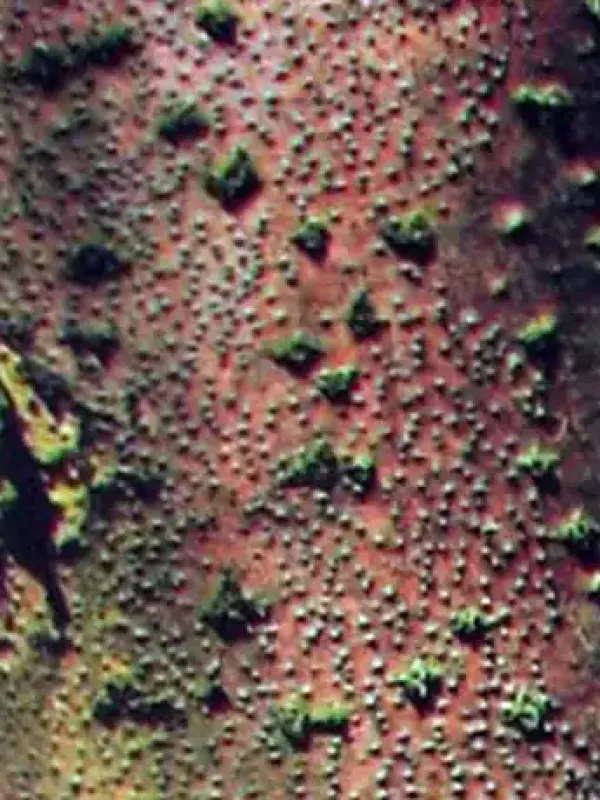
A diagnostic feature of the disease is the presence of tiny, pin-head-sized bumps on the surface of the canker, which are the pycnidia. Under moist conditions, these structures may exude thin, tendril-like masses of spores that are visible to the naked eye.
As the bark tissues die, they often take on a dry, shriveled, and stringy appearance, sometimes described as having a "goosebump" texture. Deep cracks frequently form at the interface between living and necrotic bark tissues.
Leaves on infected branches often display early signs of chlorosis, wilting, and necrosis. Despite the death of the branch, dead leaves often remain attached to the tree rather than dropping immediately.
In stone fruit species, the infection frequently triggers gummosis, where the tree exudes amber-colored sap from the margins of the cankered area as a systemic response to the fungal invasion of its vascular tissues.
Pathogen
The causative agent of Cytospora canker is the ascomycete fungus Cytospora leucostoma. This destructive disease primarily targets the bark and cambium layers of woody plants, leading to localized necrosis and subsequent branch dieback.
The fungus acts as a wound parasite, invading plant tissues through mechanical injuries, winter sunscald, frost cracks, or improper pruning cuts. Once established, the mycelium spreads within the conductive tissues, disrupting the tree's vascular system.
Cytospora leucostoma persists within infected wood, producing microscopic fruiting bodies known as pycnidia. During periods of high humidity, these structures release spores that are disseminated by rain splash, wind, and insects to infect healthy tissues.
The disease affects a wide range of woody plants, including stone fruits like apricots, cherries (including Prunus cerasus and Prunus avium var. duracina), and peaches. Other species such as hazelnuts, elms, planes, and Douglas firs are also susceptible.
Due to its ability to remain dormant in wood until environmental conditions are favorable, the pathogen represents a persistent threat, requiring vigilant orchard management to limit its spread and impact.
Conditions for development
Cytospora canker thrives on trees under physiological stress. Poor orchard practices, such as inadequate irrigation, nutrient deficiencies, or excessive nitrogen applications that delay hardening off before winter, significantly increase susceptibility.
High humidity and frequent rainfall are critical environmental drivers that promote spore germination and dispersal. Spring weather patterns characterized by damp, cool conditions are particularly conducive to the rapid spread of the disease.
Environmental damage is a primary entry point for the fungus. Fluctuating winter temperatures cause frost cracks, and intense dormant-season sun exposure leads to sunscald, both creating open wounds that the fungus readily colonizes.
The optimal temperature range for the pathogen's growth and spore production is between 15°C and 25°C. During these months, active tree growth and fungal reproduction often overlap, facilitating systemic colonization.
Failure to implement sanitation practices, such as leaving dead wood within the canopy or failing to remove pruned material from the orchard floor, provides a constant source of inoculum for reinfection each season.
Why it matters
The primary impact of Cytospora canker is the progressive dieback of scaffold branches and major limbs. This reduces the tree's productive surface area, leading to significant yield losses and severe structural deformity.
Chronic infections weaken the entire tree, making it highly susceptible to secondary pathogens, including wood-boring insects and other fungal diseases. The systemic nature of the decline often renders the tree unproductive and eventually leads to total collapse.
The economic toll on orchard owners is substantial, as the disease often targets mature, high-yielding trees. Replacing these trees requires significant capital investment and long waiting periods to return to full production.
The disease is highly infectious; without active intervention, it spreads sequentially from compromised trees to neighboring healthy ones. Once an orchard reaches a high infection level, control becomes increasingly difficult and costly.
Treatment is challenging because the fungus resides deep within the wood, where surface-applied fungicides cannot reach. Consequently, the disease is notoriously difficult to cure once it reaches an advanced stage of infection.
Protection
Effective management focuses on optimizing tree vigor. Proper irrigation, balanced fertilization, and crown management that promotes good airflow and light penetration are essential to keep trees resilient against infection.
Rigorous sanitation is vital. All cankered limbs must be pruned at least 10-15 cm below the visible margin of the infection. Pruned material should be removed from the orchard and burned or buried immediately; tools must be disinfected between trees.
Protecting the bark from environmental extremes is crucial. Whitewashing trunks and major scaffold branches with specialized tree paints or hydrated lime helps prevent sunscald and reduces the risk of bark cracking.
Any necessary pruning wounds or accidental damage should be kept clean. Treating large cuts with copper-based fungicides and sealing them with appropriate horticultural wound dressings can provide a physical and chemical barrier.
Preventive fungicide applications, specifically copper-based sprays applied during the dormant season and early spring, help reduce the spore load in the orchard and protect vulnerable sites from initial colonization.
Pathogens and affected parts
Affects crops · 8
Discussion
No discussions yet — be the first.