

Description
Symptoms
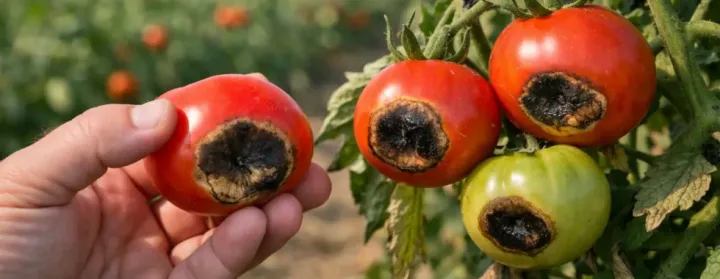
The primary symptom is the appearance of a small, water-soaked spot at the blossom end of the fruit, directly opposite the stem attachment point.
As the disorder progresses, the spot enlarges, darkens, and becomes sunken, often developing a leathery or parchment-like appearance as the tissue dies.
The affected area can vary in color from light brown to black, depending on the severity of the calcium deficiency and the presence of any secondary microorganisms.
In many cases, the fruit becomes misshapen and flattened as the necrosed tissue stops growing, while the surrounding healthy tissue continues to expand.
Early-stage symptoms are often hidden under the calyx or blossom remnants, making them difficult to detect until the necrotic area becomes significant.
Pathogen
Blossom-end rot is a non-infectious, physiological disorder, meaning it is not caused by fungi, bacteria, viruses, or any other living pathogen.
It is primarily a localized calcium deficiency within the fruit tissue, occurring when the demand for calcium exceeds the supply during rapid fruit development.
Calcium is relatively immobile within the plant, and its transport depends entirely on the transpiration stream from roots to the growing tissues.
Environmental conditions that impede the uptake of water or disrupt the movement of calcium through the xylem to the fruit trigger this physiological condition.
Because it is a metabolic issue, it cannot be transmitted between plants, and chemical pesticides are ineffective in preventing or curing the condition.
Conditions for development
Inconsistent soil moisture, characterized by fluctuations between drought and saturation, is the most common cause of disrupted calcium uptake by roots.
Excessive humidity or high temperatures can reduce plant transpiration rates, preventing the necessary transport of calcium to the rapidly developing fruit.
High concentrations of salts in the soil, often due to heavy fertilization, interfere with water absorption and exacerbate the risk of calcium deficiency.
Excessive nitrogen application can cause overly rapid vegetative growth, which forces the plant to prioritize leaves over fruits for available calcium reserves.
Improper soil pH levels can also make existing soil calcium unavailable to the plant roots, even if the element is present in sufficient quantities.
Why it matters
The disorder causes significant crop loss as the affected fruits are unmarketable and unsuitable for human consumption due to the unsightly necrotic tissue.
Fruits affected by blossom-end rot are prone to premature ripening and decay, which can ruin the harvest and lead to financial losses for farmers.
The necrotic tissue provides a perfect entry point for opportunistic pathogens, leading to secondary rot that can spread to nearby healthy fruits during storage.
For commercial producers, the damage results in reduced yield and quality, often requiring labor-intensive removal of the affected fruits from the field.
In addition to yield loss, the plant's resources are wasted on the production of fruit that will never reach maturity, affecting overall farm efficiency.
Protection
Maintaining a consistent and uniform soil moisture level is the most effective way to prevent the disorder and ensure steady water uptake by the plants.
Foliar application of calcium-based fertilizers can provide immediate relief by delivering calcium directly to the fruits, bypassing restricted root-to-fruit transport.
Balanced fertilization practices are essential, as avoiding excessive nitrogen and managing soil salts can prevent the antagonism of calcium absorption.
- Apply organic mulch to stabilize soil moisture.
- Improve greenhouse ventilation to regulate transpiration.
- Test soil and adjust pH to the optimal range.
- Avoid cultivating too close to the roots to prevent damage.
Regular monitoring of plants, especially during the peak flowering and fruit set phases, allows for early intervention and mitigation of the disorder.
In brief
1
Affects crops
Biology
Pathogens and affected parts
Affected plant parts
whole plant
Content graph
Affects crops · 1
Content graph
Connections · Blossom-end rot
Most often together:
Marketplace
Products · 333


Community
Discussion
No discussions yet — be the first.