
Disease · fungal · affects Chickpea, Pepper, Persian cyclamen
Especially harmful
Potato wart
Synchytrium endobioticum
Description
Symptoms
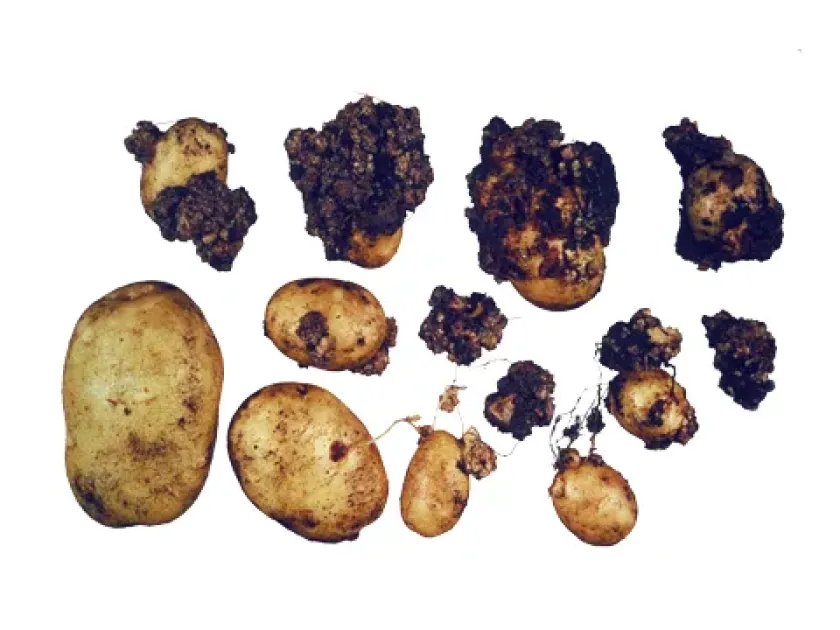
The primary symptom is the formation of irregular, fleshy, warty outgrowths that resemble a cauliflower head, often developing on tubers or stolons.
These galls are initially the same color as the tuber skin, but eventually turn dark brown or black as the tissue decomposes and releases spores into the soil.
In severe infections, the entire tuber may be transformed into a mass of distorted tissue, making it impossible to identify the original shape of the potato.
While foliage usually remains unaffected, plants growing in highly infested soil may show stunted growth and premature yellowing due to root damage.
A cross-section of a mature gall reveals a granular internal structure filled with fungal sporangia, which will eventually be released into the environment.
Pathogen
Potato wart is caused by the obligate parasite Synchytrium endobioticum, a microscopic fungus that does not form true mycelium but relies on zoospores.
This pathogen is considered a highly dangerous quarantine pest worldwide, capable of causing complete crop failure in infested fields.
The fungus invades the host cells and induces abnormal growth, resulting in characteristic warty tumors on tubers, stolons, and stem bases.
Besides potato, the disease can affect other Solanaceae species as well as crops like pepper, chickpea, Persian cyclamen, and red clover, which can serve as potential reservoirs.
The resting spores of the pathogen are extremely resilient and can persist in the soil for over three decades, remaining viable even without a host crop.
Conditions for development
The development of potato wart is favored by cool, moist conditions, with temperatures between 15°C and 20°C being optimal for zoospore movement.
High soil moisture is critical for the pathogen, as the motile zoospores require a film of water to migrate through the soil profile to reach new host tissue.
The disease spreads rapidly through the movement of infested soil attached to farm machinery, footwear, animal hooves, or contaminated manure.
Long-term mono-cropping of susceptible potato varieties creates the ideal environment for the buildup of the pathogen inoculum in the soil.
The pathogen is relatively indifferent to soil pH, although some studies suggest that very acidic soils might influence the severity of the infection process.
Why it matters
Potato wart is economically devastating because it renders the tubers completely inedible and unsuitable for any commercial or industrial processing.
The disease causes significant yield losses, potentially leading to total crop destruction if the soil is heavily contaminated with resting spores.
The quarantine status of the disease restricts the movement of potatoes from infested areas, causing severe disruption to local and international trade.
Once established in the soil, the pathogen is almost impossible to eradicate, forcing farmers to abandon potato cultivation on the infested land.
Infected crops are also prone to secondary bacterial or fungal rot, which complicates field management and increases the risk of contamination spreading further.
Protection
The most successful strategy for managing potato wart is the exclusive use of resistant (immune) potato cultivars in areas where the disease is present.
Strict phytosanitary control is required, including the enforcement of quarantine zones and the prohibition of transporting potatoes from infested regions.
Rigorous hygiene practices, such as washing farm equipment thoroughly after working in fields, are essential to prevent the spread of soil-borne spores.
In cases of confirmed infection, infested plant material must be destroyed safely by deep burial or incineration to stop further spore dissemination.
Regular inspection and soil testing are mandatory for seed potato producers to ensure the crop remains free from this highly persistent fungal pathogen.
In brief
5
Affects crops
Biology
Pathogens and affected parts
Pathogens
Affected plant parts
whole plantleaftuber
Content graph
Affects crops · 5
Reference
Connections · Potato wart
Most often together:
Marketplace
Products · 828











Community
Discussion
No discussions yet — be the first.