
Description
Symptoms
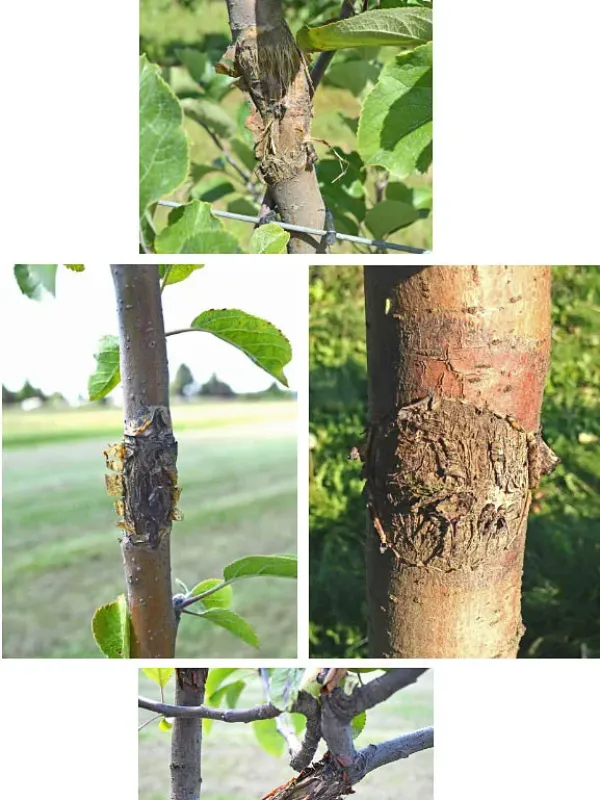
Initial symptoms on branches appear as small reddish-brown spots that become sunken into the bark. Over time, these spots expand, eventually girdling the branch and causing the death of the limb.
Small, creamy or white cushions, which are the fungal fruiting bodies (acervuli), become visible on the surface of the dead bark. These become swollen in wet weather and dry out in arid conditions.
Symptoms on fruits appear as brown, sunken lesions with concentric rings of fungal spore production in the center. This is a characteristic sign often observed during post-harvest storage.
The flesh of the fruit beneath these lesions becomes soft and develops a bitter taste. If left unchecked, the rot spreads rapidly, especially under high humidity conditions in storage rooms.
Infected trees exhibit decreased vitality, lower productivity, and, in severe cases, the complete dieback of structural branches or the entire tree.
Pathogen
The disease is caused by the ascomycete fungus Pezicula malicorticis. It is a severe pathogen that primarily infects the bark of tree trunks and limbs, as well as fruits during storage.
The primary hosts for this fungus include the domestic apple tree and the common pear. The pathogen can survive within infected woody tissues for several years as mycelium and conidia.
The life cycle of the fungus is highly dependent on environmental moisture. Spores are disseminated by rain splash, wind, and insects, infecting young shoots and any physical wounds on the bark.
The fungus is highly aggressive, entering tissues through pruning wounds, micro-cracks, or damage caused by pests. It quickly colonizes the bark, leading to tissue death.
The pathogen maintains its activity even at cooler temperatures, making it a persistent threat that can cause damage throughout the entire growing season and into the storage period.
Conditions for development
High humidity and frequent rainfall are the primary drivers for disease spread. Rain facilitates the release of spores and their movement to healthy parts of the tree canopy.
Optimal temperatures for spore germination and infection range between 15°C and 22°C. However, the pathogen remains capable of infecting tissue throughout the cooler autumn months as well.
Dense, poorly pruned canopies create a microclimate that traps moisture, promoting fungal growth. Lack of airflow prevents the drying of leaves and bark, significantly increasing infection risk.
Mechanical damage to the bark that remains untreated provides an easy entry point for the fungus. Trees weakened by poor maintenance or environmental stress are significantly more susceptible.
Contaminated pruning tools are a frequent vector for spreading the disease between trees. Strict tool sanitation is essential to prevent the spread of the pathogen within the orchard.
Why it matters
The main danger of anthracnose is its impact on the tree's vascular system. Girdling of limbs obstructs the transport of water and nutrients, leading to branch dieback and reduced tree health.
Economic losses due to fruit rot are significant. Infected fruit is often unmarketable, and hidden infections can lead to massive losses during the storage process.
The infection level in the orchard builds up rapidly. Without the removal of infected wood, spores will continue to reinfect the trees, making successful orchard management nearly impossible.
Managing the disease requires recurring fungicide applications, which increases production costs. Quality and shelf life of the fruit are severely compromised.
Ultimately, a heavily infected orchard may require tree removal. This represents a total loss of investment and many years of lost potential production.
Protection
Annual sanitary pruning is the cornerstone of control. All infected branches and twigs must be removed and immediately burned to eliminate the source of infection.
Treating bark wounds with antiseptic wound dressings is crucial. Painting trunks with whitewash (lime-based with copper additives) can also act as a protective barrier against spore penetration.
Application of fungicides, particularly copper-based or systemic products authorized for apple trees, is essential at critical growth stages to maintain control.
- Sanitize pruning tools with disinfectants between trees.
- Ensure proper fruit protection against insect pests.
- Maintain low humidity levels in post-harvest storage facilities.
Balanced fertilization and good pruning practices ensure healthy trees. Regular monitoring for early signs of disease allows for intervention before the infection reaches epidemic levels.
Pathogens and affected parts
Affects crops · 2
Discussion
No discussions yet — be the first.