

Reference · Crops
Clover
Trifolium L.
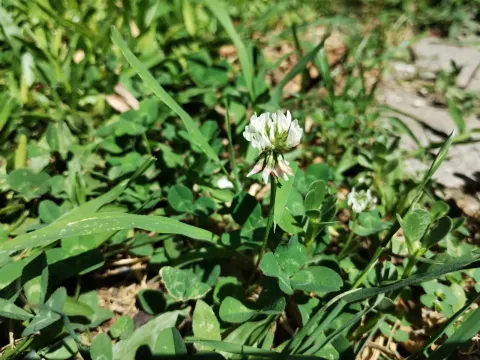
Clover (Trifolium L.) is a vital legume crop widely recognized for its high protein content and ability to fix atmospheric nitrogen in the soil.
45
items
What the section contains
 Hop trefoil
Trifolium campestre Schreb.
2 products
Hop trefoil
Trifolium campestre Schreb.
2 products
 Alpine clover
Trifolium alpestre L.
Alpine clover
Trifolium alpestre L.
 Alsike clover
Trifolium hybridum L.
Balansa clover
Trifolium balansae Boiss.
Alsike clover
Trifolium hybridum L.
Balansa clover
Trifolium balansae Boiss.
 Beirut clover
Trifolium berytheum Boiss. & Blanche
Beirut clover
Trifolium berytheum Boiss. & Blanche
 Bladder clover
Trifolium spumosum L.
Bladder clover
Trifolium spumosum L.
 Bur clover
Trifolium lappaceum L.
Bur clover
Trifolium lappaceum L.
 Clustered clover
Trifolium glomeratum L.
Clustered clover
Trifolium glomeratum L.
 Crimson clover
Trifolium incarnatum L.
Crimson clover
Trifolium incarnatum L.
 Crimson clover
Trifolium incarnatum L. var. incarnatum
Crimson clover
Trifolium incarnatum L. var. incarnatum
 Egyptian clover
Trifolium alexandrinum L.
Egyptian clover
Trifolium alexandrinum L.
 Glandular clover
Trifolium glanduliferum Boiss.
Glandular clover
Trifolium glanduliferum Boiss.
 Hairy clover
Trifolium hirtum All.
Hairy clover
Trifolium hirtum All.
 Harefoot clover
Trifolium arvense L.
Harefoot clover
Trifolium arvense L.
 Hungarian clover
Trifolium pannonicum Jacq.
Hungarian clover
Trifolium pannonicum Jacq.
 Hybrid white clover
Trifolium repens x Trifolium ambiguum
Hybrid white clover
Trifolium repens x Trifolium ambiguum
 Inflated clover
Trifolium tumens Steven ex M. Bieb.
Inflated clover
Trifolium tumens Steven ex M. Bieb.
 Knotted clover
Trifolium striatum L.
Knotted clover
Trifolium striatum L.
 Lesser hop trefoil
Trifolium dubium Sibth.
Lesser hop trefoil
Trifolium dubium Sibth.
 Michel's clover
Trifolium michelianum Savi
Michel's clover
Trifolium michelianum Savi
 Mountain clover
Trifolium montanum L.
Mountain clover
Trifolium montanum L.
 Open clover
Trifolium apertum Bobrov
Open clover
Trifolium apertum Bobrov
 Pale yellow clover
Trifolium ochroleucum Huds.
Pale yellow clover
Trifolium ochroleucum Huds.
 Persian clover
Trifolium resupinatum L.
Persian clover
Trifolium resupinatum L. var. majus Boiss.
Persian clover
Trifolium resupinatum L.
Persian clover
Trifolium resupinatum L. var. majus Boiss.
 Red clover
Trifolium pratense x Trifolium medium
Red clover
Trifolium pratense x Trifolium medium
 Red clover
Trifolium pratense L.
Red clover
Trifolium pratense L.
 Red clover (Trifolium rubens)
Trifolium rubens L.
Red clover (Trifolium rubens)
Trifolium rubens L.
 Squarrose clover
Trifolium squarrosum L.
Squarrose clover
Trifolium squarrosum L.
 Strawberry clover
Trifolium fragiferum L.
Strawberry clover
Trifolium fragiferum L.
 Subterranean clover
Trifolium subterraneum L.
Subterranean clover
Trifolium subterraneum L. subsp. brachycalycinum Katzn. & Morley
Subterranean clover
Trifolium subterraneum L. subsp. subterraneum
Subterranean clover
Trifolium subterraneum L.
Subterranean clover
Trifolium subterraneum L. subsp. brachycalycinum Katzn. & Morley
Subterranean clover
Trifolium subterraneum L. subsp. subterraneum
 Trifolium dasyurum
 C. Presl
Trifolium dasyurum
Trifolium dasyurum C. Presl
 Trifolium isthmocarpum
 Brot.
Trifolium isthmocarpum
Trifolium isthmocarpum Brot.
 Trifolium nigrescens
 Viv.
Trifolium nigrescens
Trifolium nigrescens Viv.
 Trifolium vesiculosum
 Savi
Trifolium vesiculosum
Trifolium vesiculosum Savi
 White clover
Trifolium repens L.
White clover (Kenyan clover)
Trifolium semipilosum Fresen.
White clover
Trifolium repens L.
White clover (Kenyan clover)
Trifolium semipilosum Fresen.
 White-tip clover
Trifolium variegatum Nutt.
White-tip clover
Trifolium variegatum Nutt.
 Willdenow's clover
Trifolium willdenovii Spreng.
Willdenow's clover
Trifolium willdenovii Spreng.
 Woolly clover
Trifolium tomentosum L.
Yammine clover
Trifolium subterraneum L. var. yanninicum (Katzn. & Morley) Zohary
Woolly clover
Trifolium tomentosum L.
Yammine clover
Trifolium subterraneum L. var. yanninicum (Katzn. & Morley) Zohary
 Zigzag clover
Trifolium ambiguum M. Bieb.
Zigzag clover
Trifolium ambiguum M. Bieb.
 Zigzag clover
Trifolium medium L.
Zigzag clover
Trifolium medium L.
Marketplace
Products in this section · 12


Clover
The ideal sowing time is early spring, which allows the seedlings to establish a strong root system before the onset of summer drought.
It is commonly planted in mixtures with grasses to improve forage quality and balance the nutritive value for livestock grazing and hay production.
Proper seedbed preparation is essential; the soil must be firm to ensure good seed-to-soil contact, followed by rolling after the sowing process.
Seeding rates should be adjusted based on the specific species, such as red or white clover, typically ranging between 10 to 15 kg per hectare.
Clover thrives in cool, moist climates and requires consistent rainfall to maintain vegetative growth throughout the active season.
The crop prefers fertile, well-drained loamy soils with a near-neutral pH; it generally does not tolerate extremely acidic or waterlogged conditions.
As a legume, it forms a symbiotic relationship with nitrogen-fixing bacteria, which reduces the need for supplemental nitrogen fertilizers.
Phosphorus and potassium applications are critical for improving root development and overall winter hardiness of the clover stand.
While tolerant of partial shade, clover performs best in full sunlight, which encourages dense stand formation and vigorous plant development.
Average forage yields for clover range from 20 to 40 tonnes per hectare of fresh biomass, depending on soil quality and seasonal moisture levels.
Dry matter yields for hay typically reach 6 to 10 tonnes per hectare, reflecting the high efficiency of clover as a quality fodder crop.
Peak production is usually observed in the second and third years of the crop life cycle, as the plants reach full maturity and coverage.
Good management practices, including weed control and strategic cutting, allow for sustained high yields over several growing seasons.
The nutritional value is consistently high, particularly in terms of crude protein, making it an excellent choice for cattle and sheep feed.
Clover is susceptible to various diseases, including powdery mildew, rust, and leaf spot, which can impact biomass production if left unchecked.
Pest management is a significant challenge in clover production, with numerous insect species capable of causing economic damage to the stand.
Major pests that farmers should monitor include:
- Meadow moth
- Clover weevils
- Gall midges
- Alfalfa seed chalcid
- Cabbage butterfly
- Loopers
An integrated pest management approach, including crop rotation and the use of resistant varieties, is recommended to keep pest populations low.
Regular field scouting is essential to identify infestations early and apply corrective measures before the damage becomes widespread.
The timing of the harvest is crucial; cutting for high-quality forage should occur at the late bud to early bloom stage for optimal protein content.
Delaying the harvest results in increased fiber content and reduced digestibility, which decreases the overall value of the hay or silage produced.
For seed production, harvesting is performed when the flower heads have turned brown and reached the desired moisture level for threshing.
Proper hay drying techniques are required to maintain color and nutrient quality while preventing moisture-related spoilage during storage.
By returning residues to the soil after harvest, clover contributes significantly to organic matter accumulation and long-term soil fertility.