
Description
Symptoms
The most common symptom is the development of sunken cankers on branches and main trunks. The bark in these areas often darkens and eventually cracks.
In susceptible species like almonds, infection often triggers gumming (gummosis), where the tree secretes a sticky sap in an attempt to isolate the infected area.
Dieback of branches is a classic sign of advanced infection. Leaves on affected branches may yellow, wilt, and drop prematurely, leading to a thinning of the canopy.
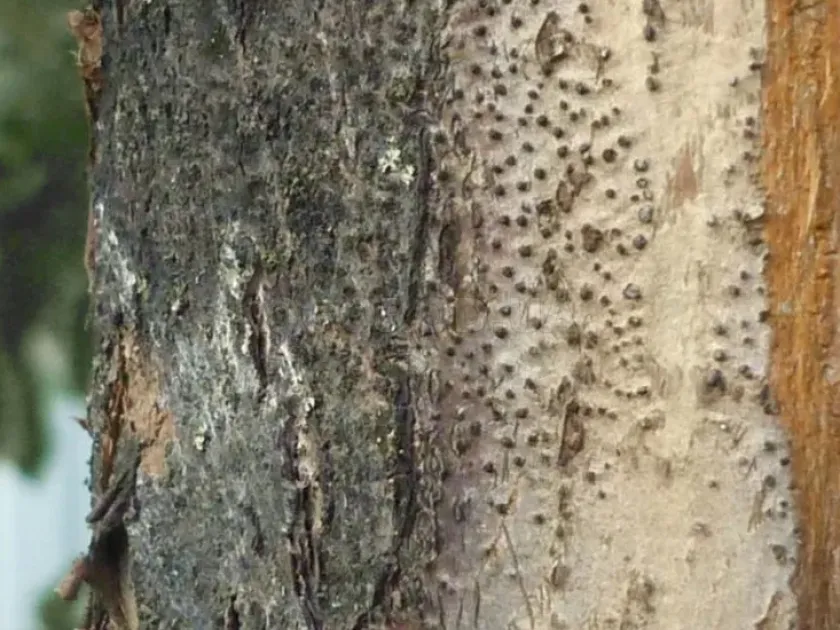
Small black fruiting bodies, visible to the naked eye, often appear on the surface of dead bark, indicating that the fungus is actively producing spores.
Internal wood discoloration, often forming fan-shaped necrotic patterns, is frequently observed when cutting into infected branches, revealing the extent of the vascular damage.
Pathogen
The disease is caused by the fungus Botryosphaeria dothidea, a destructive pathogen that affects a wide variety of woody plants, including commercial nut and fruit crops.
The fungus produces spores in structures called pycnidia, which emerge through the bark of infected branches. These spores are disseminated primarily by splashing rain, wind, and pruning equipment.
Botryosphaeria dothidea is known as an opportunist that colonizes the vascular tissues and cambium of the tree. It can survive in dead twigs and woody debris on the orchard floor.
Infection usually occurs through wounds, pruning cuts, or natural cracks in the bark. Once inside, the mycelium spreads slowly, often remaining latent until the tree undergoes environmental stress.
The pathogen is highly resilient and can persist in various environments, making long-term control a significant challenge for growers worldwide.
Conditions for development
The development of Botryosphaeria canker is heavily favored by warm, humid weather conditions which facilitate the release and germination of fungal spores.
Temperature plays a crucial role, with optimal growth occurring between 20°C and 30°C. High humidity and rainfall events are major drivers for local disease outbreaks.
Trees under stress are significantly more vulnerable. Factors such as drought, inadequate fertilization, or waterlogging impair the tree's natural defense mechanisms against the fungus.
Mechanical damage caused by pests, hail, or improper cultivation practices creates entry points for the pathogen, accelerating the infection process.
Poor orchard sanitation, such as leaving pruned branches on the ground, provides a reservoir for the pathogen to survive and infect healthy trees in subsequent seasons.
Why it matters
Botryosphaeria canker causes significant damage to orchards by killing scaffold branches, which reduces the overall canopy size and photosynthetic capacity of the trees.
For almond production, this disease leads to reduced nut quality and yield, and in severe cases, it can cause the death of entire trees, leading to major economic losses.
The disease weakens the tree's structure, making it susceptible to secondary infestations by wood-boring insects, further compounding the damage.
Control measures are expensive and labor-intensive, requiring constant monitoring, sanitary pruning, and chemical applications to keep the infection under control.
The cumulative effect of the disease over several years can force growers to remove productive orchards prematurely, severely impacting long-term farm profitability.
Protection
Effective management begins with strict sanitation. Pruning out infected wood, at least 15-20 centimeters below the visible canker, is essential for reducing the inoculum.
Sanitizing tools between cuts using bleach or alcohol is critical to prevent the mechanical transmission of Botryosphaeria dothidea from tree to tree.
Preventative applications of copper-based fungicides during the dormant season can help protect pruning wounds and reduce spore production on the bark.
Maintaining tree vigor through proper irrigation and balanced fertilization helps the tree resist initial colonization by the fungus.
- Seal large pruning wounds to prevent moisture accumulation and spore entry.
- Control wood-boring insects that create wounds for fungal invasion.
- Regularly monitor the orchard for early signs of canopy dieback or gumming.
Pathogens and affected parts
Affects crops · 1
Discussion
No discussions yet — be the first.