
Atropellis canker
Atropellis pinicola
Description
Symptoms
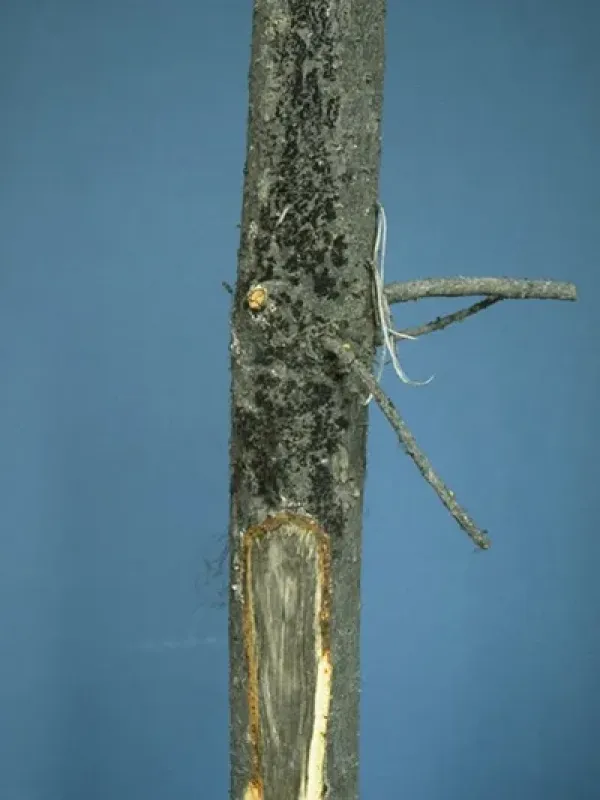
The most diagnostic feature is the appearance of sunken or depressed necrotic lesions on the bark, often characterized by heavy resin flow.
When the bark is removed, the underlying wood often exhibits a dark blue or blackish discoloration, which is a hallmark of this fungal infection.
Small, black, disc-like fruiting bodies appear on the surface of the canker, usually becoming more visible under moist environmental conditions.
The foliage of infected trees often shows premature yellowing and dieback as the pathogen restricts the transport of water and nutrients.
In cases of severe infection, the canker may girdle the stem, resulting in the eventual death of the portion of the tree located above the infection site.
Pathogen
The causative agent of this disease is the ascomycete fungus Atropellis pinicola. It is a specialized pathogen that targets the cambium and bark of pine species.
The fungus produces small, black, cup-shaped fruiting bodies (apothecia) that erupt through the bark on infected stems and branches of the host tree.
It acts as a chronic parasite, slowly killing the host tissues and causing deep-seated cankers that disrupt the tree's physiological functions.
The disease spread is facilitated by spores dispersed by wind and rain splashes, allowing the fungus to infect adjacent trees within the stand.
Once established, the pathogen can persist for many years, progressively weakening the host and making the tree susceptible to secondary infestations.
Conditions for development
The development of Atropellis pinicola is favored by high relative humidity and moderate temperatures, which are conducive to spore germination.
Stressed trees, particularly those weakened by drought, insect attacks, or mechanical injuries, are significantly more vulnerable to infection.
Dense stands with poor air circulation create a persistent microclimate of high humidity that facilitates the spread of the fungal pathogen.
Fresh wounds on the stem, resulting from thinning or logging activities, provide entry points for the fungus to colonize the tree.
Prolonged periods of precipitation during the spring and summer enhance spore production and increase the likelihood of new infection outbreaks.
Why it matters
The primary economic damage is caused by the degrade of timber, as the fungal discoloration and canker structure render the wood unfit for commercial use.
Growth reduction is common in infected trees, as the pathogen drains metabolic resources and interferes with the vascular system.
Infected trees become highly attractive to secondary pests, including bark beetles, which can hasten the mortality of the host.
In forest nurseries and young plantations, the presence of the disease can lead to significant seedling mortality and economic losses for the landowner.
The disease forces forest managers to conduct costly salvage logging and sanitation cuttings, disrupting forest management plans.
Protection
The most effective management practice is the prompt identification and removal of infected trees to eliminate the source of inoculum from the stand.
Minimizing physical damage to the trunks during forestry operations is essential to prevent creating entry points for fungal spores.
Maintaining appropriate stand density helps improve airflow and promotes drier conditions, which can suppress the activity of the fungus.
Regular monitoring of young pine plantations is necessary to detect and manage the disease before it spreads throughout the entire forest area.
Fostering tree vigor through site-appropriate planting and proper stand maintenance helps trees resist initial infection by the pathogen.
Discussion
No discussions yet — be the first.