
Atropellis canker
Atropellis piniphila
Description
Symptoms
The primary symptom of Atropellis canker is the presence of sunken, elongated lesions on the trunk or branches. These cankers are often surrounded by flared margins of callus tissue.
Heavy resin exudation is a hallmark of this disease. Viscous sap flows from the infected area, hardening into long, dark streaks that are easily visible against the bark.
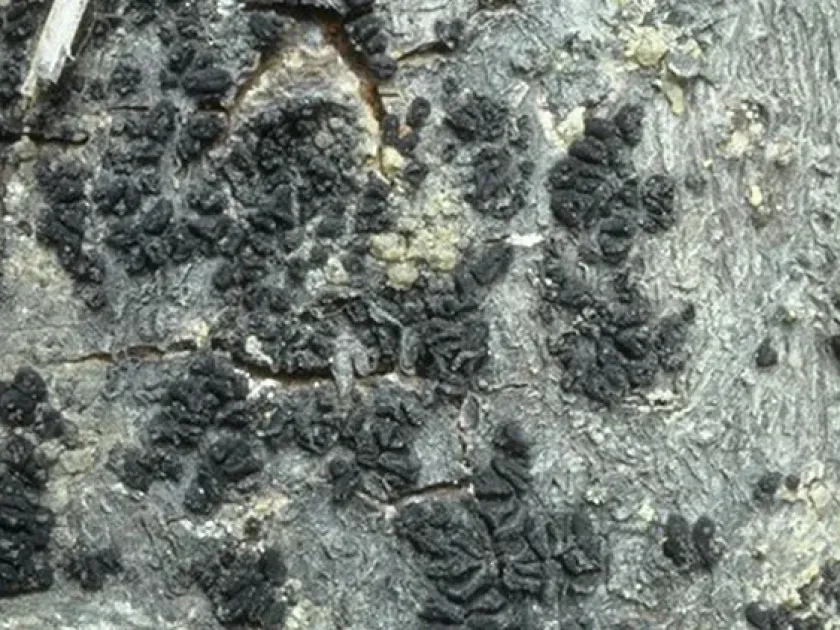
Clusters of black, disc-shaped fruiting bodies emerge through the bark within the older parts of the canker. Their presence is a definitive diagnostic feature of Atropellis piniphila.
The wood underneath the infected bark becomes deeply resin-soaked, which structurally weakens the tree and lowers the commercial quality of the timber.
Over time, the foliage of infected trees may show signs of chlorosis, and the crown may gradually thin as the disease restricts the upward flow of water and nutrients.
Pathogen
The causative agent of this disease is the ascomycete fungus Atropellis piniphila, which primarily infects various species of pine trees. It is a specialized pathogen known to cause localized tissue necrosis in the host.
The fungus colonizes the inner bark and cambium layers of the trunk and branches. Its mycelium grows slowly, gradually killing the host tissues and triggering a severe resinous response from the tree.
Reproductive structures appear as small, dark, saucer-shaped apothecia on the surface of the cankers. These structures release spores that are dispersed by wind and splashing rain to healthy portions of the tree or adjacent trees.
The pathogen is highly adapted to its host and can persist within the stem tissue for many years. This chronic infection prevents the tree from effectively compartmentalizing the damage.
The fungal infection is characterized by the internal staining of the wood beneath the canker, often appearing black or dark brown due to the heavy accumulation of resin and fungal metabolites.
Conditions for development
The development of Atropellis piniphila is highly favored by cool, moist climates. High humidity is essential for the germination and penetration of spores into the host bark.
Densely stocked pine stands, characterized by poor air circulation and high relative humidity, provide the most favorable environment for the spread of the fungus.
Trees stressed by drought, nutrient deficiencies, or site-related factors are more susceptible to initial infection and often show more rapid disease progression.
The fungus survives within the host throughout the year, making it resistant to temporary fluctuations in temperature and adverse weather conditions.
The infection rate increases significantly in areas with frequent rainfall, as water droplets facilitate the movement of spores across the bark surface.
Why it matters
The economic impact of Atropellis canker is primarily due to the severe degradation of wood quality, rendering the timber unsuitable for high-value uses like construction or poles.
In forest stands, the disease causes slow growth and increased mortality, which reduces the overall yield and productivity of the forest area.
Trees weakened by the canker are frequently predisposed to infestation by secondary pests, such as bark beetles, which can accelerate the death of the tree.
Structural damage caused by the fungus increases the risk of stem breakage and windthrow, which poses a significant threat to forest safety and management.
Management costs are inflated by the need for continuous sanitation efforts, including the removal of infected trees and monitoring for new disease outbreaks.
Protection
Sanitation cutting is the most effective management strategy. Removing and destroying infected trees reduces the amount of fungal inoculum in the local environment.
Maintaining proper stand density through regular thinning is essential to improve air movement and reduce the humidity levels that favor fungal growth.
Preventing mechanical injuries to the stems during logging operations is crucial, as open wounds are the primary entry points for the pathogen.
Early detection in young plantations is vital, as selective pruning of infected branches can sometimes prevent the disease from becoming systemic in the main trunk.
- Removal and sanitation of infected trees.
- Thinning to improve airflow and stand vigor.
- Protection of stems from mechanical damage.
- Monitoring of stands for early symptoms of canker.
Discussion
No discussions yet — be the first.