
Description
Symptoms
The primary symptom is the appearance of dark, sunken lesions on the bark that eventually crack. The bark in the affected areas turns brown or nearly black and peels away from the wood.
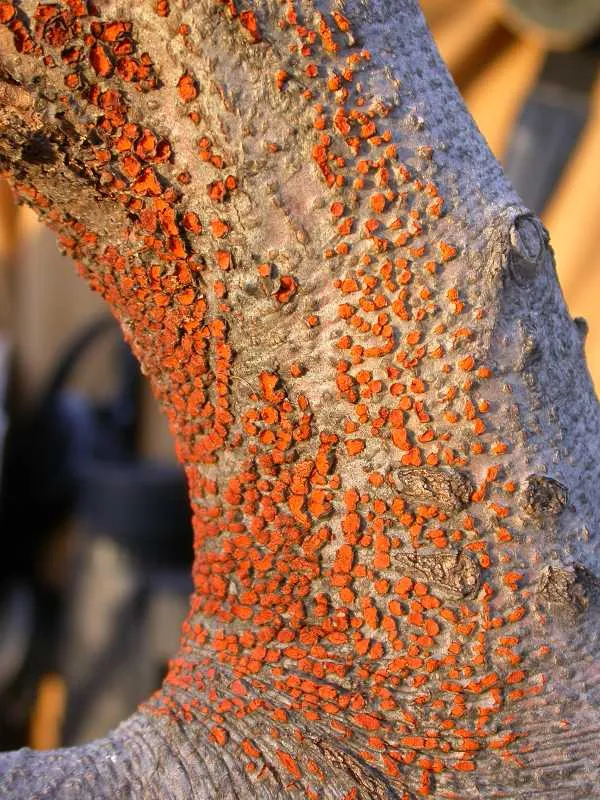
When the dead bark is removed, the exposed wood often shows pronounced discoloration. Small, reddish or orange fungal fruiting bodies (perithecia) often appear on the surface of the necrotic zones.
Affected plants show overall decline, premature yellowing, and leaf drop. Branches with ring-shaped necrosis dry out quickly as the transport of water and nutrients is severely impaired.
In crops like hazelnut or apple trees, the disease often manifests at the base of the trunk or at the crotches of scaffold branches. If not addressed in time, the necrosis can girdle the entire trunk, leading to tree death.
On herbaceous plants, such as gerbera or exacum, infection often starts at the root collar, causing wilting of the aerial parts and root rot, rendering the plant unsuitable for ornamental purposes.
Pathogen
The causal agent of the disease is the ascomycete fungus Nectria haematococca (anamorph Fusarium solani). It is a highly versatile pathogen capable of infecting both woody and herbaceous crops.
The fungus acts as a semi-parasite, surviving in infected plant debris, soil, and bark crevices. In its life cycle, it produces conidia and perithecia, which facilitate the spread of the infection over long distances.
The primary route of entry for the pathogen is through mechanical bark damage, frost cracks, sunscalds, or insect activity. The fungal mycelium develops in the cambium layer and bark, causing gradual tissue necrosis.
This microorganism possesses high ecological plasticity, complicating control measures in orchards and nurseries. In high humidity conditions, the fungus actively produces spores, infecting healthy plant tissues through micro-cracks.
In addition to woody plants, the pathogen frequently occurs in agroecosystems, affecting a wide spectrum of plants, including hazelnut, apple trees, sycamore, black walnut, raspberry, liquidambar, Gerbera jamesonii, and Exacum affine.
Conditions for development
Development of Nectria haematococca is favored by periods of high humidity and moderately warm temperatures. Optimal infection conditions often occur during the spring and autumn seasons.
Stressed plants are significantly more susceptible to infection. Environmental factors such as drought, nutrient deficiency, or severe temperature fluctuations make the bark vulnerable to fungal colonization.
Open wounds from pruning or bark damage caused by pests create entry points for spores. Dense plantings with poor air circulation contribute to prolonged moisture on trunk surfaces, promoting pathogen growth.
The infection spreads rapidly when non-sterilized tools are used during pruning. Spores can be dispersed by rain splashes, wind, or insects visiting damaged areas.
The presence of uncollected plant debris or diseased trees in the orchard maintains an infectious reservoir, which leads to mass outbreaks of necrosis under favorable weather conditions.
Why it matters
The disease causes significant economic losses by reducing the productivity of orchards and ornamental nurseries. The main danger lies in the rapid dieback of branches and the entire tree canopy.
In hazelnut or apple tree infections, bark necrosis leads to a sharp decline in yields. Trees lose their commercial value and can perish entirely, requiring expensive replanting of entire orchard sections.
Infection of sycamores or black walnuts can result in the loss of aesthetic value in landscapes. The spread of infection in nurseries renders plant material unfit for sale.
Bark necrosis is a chronic condition; even with partial recovery, the plant remains weakened and highly susceptible to secondary pests or other opportunistic pathogens.
A lack of systematic protection leads to the accumulation of the pathogen in the soil and bark, making it impossible to grow susceptible crops in the same area for long periods.
Protection
The foundation of prevention is maintaining high horticultural standards. It is essential to avoid mechanical bark damage and promptly treat sunscalds and wounds with disinfectants.
All severely infected branches must be removed, cutting into healthy tissue, and then immediately burned. Tools must be disinfected with alcohol or specialized agents after each cut.
The use of copper-based fungicides during the dormant season (autumn and early spring) significantly reduces the spore load on trunks and scaffold branches.
It is important to maintain balanced plant nutrition, avoiding excessive nitrogen fertilization, which stimulates the growth of overly soft tissues prone to cracking and infection.
- Preventive whitewashing of trunks with garden paint.
- Timely control of bark-boring and wood-feeding insects.
- Removal of weeds and plant litter around trees.
- Planting resistant varieties where available.
In brief
9
Affects crops
Biology
Pathogens and affected parts
Pathogens
Nectria haematococca· fungus
Nectria galligena· fungus
Cylindrocarpon heteronemum· fungus
Nectria mammoidea· fungus
Cylindrocarpon ianthothele· fungus
Nectria· fungus
Nectria cinnabarina· fungus
Tubercularia vulgaris· fungus
Cylindrocarpon candidum· fungus
Cylindrocarpon willkommii· fungus
Nectria ditissima· fungus
Affected plant parts
whole plant
Content graph
Affects crops · 9
Content graph
Connections · Bark necrosis
Most often together:
Marketplace
Products · 1
Community
Discussion
No discussions yet — be the first.