
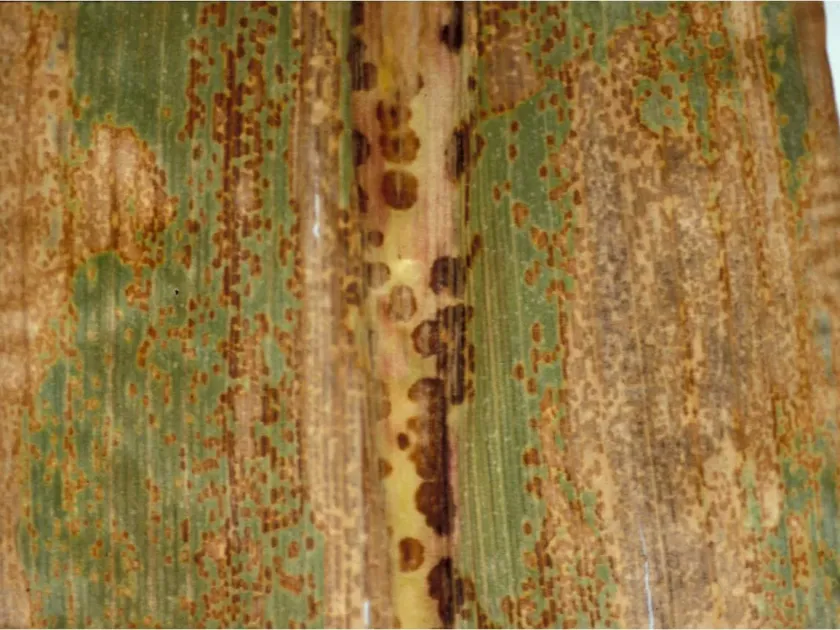
Description
Symptoms
The primary symptom of the disease is the development of characteristic growths or tumors on the surface of the root and the base of the leaf petioles. These growths often resemble warts or irregular knotty structures.
Initially, these lesions may appear pale and smooth, but as the infection progresses, they harden, turn brown or dark in color, and often become cracked or corky in appearance.
Plants severely infected by Physoderma exhibit stunted growth and loss of vigor. The foliage may show signs of yellowing or deformation due to the disrupted nutrient transport system.
In advanced cases, the leaf petioles become swollen and misshapen, reflecting the internal tissue damage caused by the pathogen's development.
Cross-sections of affected roots reveal internal structural damage: the tissue becomes dense and fibrous, and secondary decay may occur if opportunistic bacteria invade the damaged sites.
Pathogen
The causative agent of the disease is a fungus-like organism known as Physoderma leproides, belonging to the Chytridiales order. It is an obligate parasite that specifically affects members of the Amaranthaceae family.
The pathogen survives in the soil primarily as resting spores. These structures are highly resistant to environmental stress and can remain viable in the soil for several years, waiting for favorable conditions.
During the active phase of the pathogen's life cycle, it releases zoospores that move through soil moisture to infect the host plant. They primarily target the root system or the base of the plant stem.
The spread of the infection within a field typically occurs via water runoff during rainfall or irrigation, as well as through the physical movement of contaminated soil particles on farming equipment.
The disease is particularly problematic for forage and sugar beet crops, leading to significant morphological changes in both the root and the lower vegetative organs.
Conditions for development
The development and spread of Beet Physoderma are heavily dependent on high moisture levels. Poorly drained fields that remain saturated for long periods provide ideal conditions for the pathogen.
The disease is most prevalent in heavy, clay-rich soils that are prone to waterlogging. These conditions ensure that the soil remains moist enough for the zoospores to successfully reach their hosts.
Climate factors such as cool, wet summers significantly increase the risk of an outbreak, as these conditions are optimal for the germination of the pathogen's resting spores.
Poor agricultural practices, such as failing to rotate crops effectively or planting in low-lying areas with standing water, contribute to the rapid accumulation of inoculum in the field.
Any mechanical damage to the roots, whether from cultivation or soil-dwelling pests, facilitates the entry of the pathogen into the plant tissues, worsening the impact of the disease.
Why it matters
The primary economic impact of Physoderma leproides is the reduction of root quality, which renders the harvest unsuitable for long-term storage or processing purposes.
Infected roots fail to accumulate the necessary nutrients, leading to decreased yields. The plant directs its energy toward developing abnormal tumors rather than healthy storage tissues.
Damaged roots become significantly more susceptible to secondary infections from various rot-causing microorganisms, which can lead to total crop loss during the winter storage period.
The disease can lead to localized field quarantines, forcing growers to stop using specific plots for beet cultivation for several years to break the infection cycle.
Significant yield losses are observed in years with above-average rainfall, causing substantial financial burden for farmers who must invest in alternative management strategies.
Protection
Effective management begins with long-term crop rotation, ensuring that beets are not grown on the same plot for at least 4 to 5 years to reduce soil inoculum.
Improving soil drainage through tile installation or strategic land grading is essential to prevent water accumulation that favors the pathogen.
Control of weeds within the Amaranthaceae family, such as lambsquarters, is necessary to eliminate alternate host sites where the fungus might survive.
The selection of resistant or tolerant cultivars, where available, represents the most effective preventive measure to minimize disease impact.
- Removal and proper disposal of infected crop residues after harvest.
- Avoidance of over-irrigation in infested fields.
- Integrated pest management to prevent root-wounding insects.
- Balanced fertilization to support plant health and structural integrity.
Pathogens and affected parts
Affects crops · 1
Discussion
No discussions yet — be the first.